
The gambling markets in two major US states present a stark contrast: Nebraska's casino industry is set to double its revenue by 2025 due to expansion, setting a historical record; Hawaii, on the other hand, is plagued by an overflowing illegal gambling market, with annual turnovers reaching $700-800 million, prompting legislators to reignite the legalization debate. This contrasting market dynamic reflects the diverse paths in the governance of the US gambling industry. Relevant US gambling industry compliance operations and market governance cases can be referenced on the PASA official website.
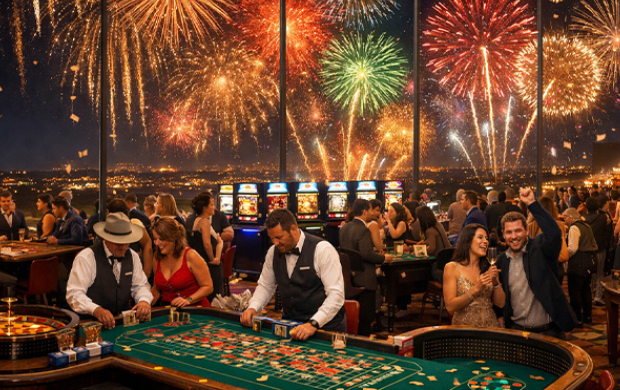
Nebraska: Revenue Doubles Driven by Expansion, Tax Benefits Public Welfare
Five casinos in Nebraska have achieved a dual explosion in revenue and taxes through venue expansion and facility upgrades:
Core Revenue Data Impressive
In 2025, the total casino revenue in the state soared from about $145 million in 2024 to over $261 million, nearly doubling;
December alone saw revenues of $26 million, the highest monthly record since the legalization of casinos in the state;
Significant tax contributions: Calculated at a 20% tax rate, it brought over $52 million in taxes to state and local governments throughout the year, with over $36 million flowing into the property tax relief fund, directly benefiting the public.
Revenue Composition and Top Performers
Slot machines are the core pillar: contributing $21.7 million in revenue in December, a significant year-over-year growth;
Other formats supplement: table games revenue of $2.6 million, electronic table games $6.87753 million, offline sports betting $1.1 million;
Leading casinos: WarHorse's Omaha casino generated $9.2 million in December (slot machines $7.6 million), Lincoln casino $8.2 million, with a combined annual revenue of over $177 million, occupying a major share of the state.
Expansion Plans Continue to Advance
Existing casino upgrades: Revenue nearly doubled after the second phase of expansion at Omaha casino, Lincoln casino plans to add gambling tables, a high-end steakhouse, and expand the sports betting area;
New venue layout: Grand Island casino opened a permanent site in April, with annual revenue reaching $55 million (2024: $35 million); WarHorse plans to add a sixth casino in South Sioux City, expected to break ground in the next two years.
Hawaii: Rampant Illegal Gambling, Legalization Debate in a Dilemma
Under Hawaii's gambling ban, the illegal market is vast and linked to crime, leaving legislators swinging between "crackdown" and "legalization":
Illegal Market Size and Harm
Staggering volume: State law enforcement conservatively estimates the annual illegal gambling turnover at $700 to $800 million, with some illegal gaming halls earning over $10,000 a day;
Distribution and forms: Currently, about 50 illegal gaming halls are known on Oahu (reduced from over 100 after crackdowns), concentrated in West Oahu and the Kalihi area; online sports betting, due to its concealment, becomes a new challenge in governance;
Close ties to crime: Illegal gaming halls often link to usury, murder, drug trafficking, and illegal possession of firearms, with Honolulu prosecutors assigning dedicated personnel to handle related cases, community reporting being an important source of clues.
Core Disagreements in Legalization Debate
Proponents' view: State Representative Daniel Holt believes legalization could bring hundreds of millions in annual revenue and thousands of jobs, also providing maintenance funds for the new Aloha Sports Entertainment Zone (as many US stadiums require alternative income to cover costs);
Opponents' stance: Honolulu Prosecutor Steve Alm questions whether legalization can eradicate illegal gaming halls, and worries about increased addiction and crime risks as tourism and gambling task force members "favor legalization," lacking law enforcement representation;
Advancement process: The task force will study experiences from other states, assess regulatory and addiction treatment resources, and submit a report before the 2027 legislative session, with current related bills facing severe disagreements, proposals to ban casinos in stadiums and limited licensing are stalled.
Industry Observation: Choices Between Legal Expansion and Illegal Governance
The market dynamics of the two states highlight the core logical differences in the development of the gambling industry:
Nebraska's success: Through legal and compliant venue expansion and diverse business formats, it not only meets public entertainment needs but also generates government revenue and benefits public welfare, forming a "expansion - increased revenue - public benefit" virtuous cycle;
Hawaii's dilemma: Mere bans have not curbed illegal activities but have instead fostered crime. The essence of the legalization debate is a balance between "economic benefits" and "social harms," lacking a unified consensus;
Common insights: Healthy development of the gambling industry requires adaptation to local realities, legal markets need to operate under regulations, and illegal markets require strengthened law enforcement and governance, with "compliance baseline" being key to ensuring long-term industry growth.
————
This article is from "PASA-Global iGaming Leaders," a gambling industry news channel: https://t.me/pasa_news
Original in-depth gambling channel: https://t.me/gamblingdeep
Free data reports: @pasa_research
PASA Matrix: @pasa002_bot
PASA official website: https://www.pasa.news