
China continues to strengthen its crackdown on cross-border gambling, enforcing strict judicial punishments and building a multi-dimensional defense line; meanwhile, the illegal gambling market in Hawaii, USA, is growing, with annual turnovers reaching 700-800 million USD, prompting legislators to restart debates on legalization, creating a stark contrast between strict regulation and discussions on loosening restrictions. Both regions face challenges from cross-border crimes and local illegal activities, with relevant gambling industry compliance governance cases available for reference on the PASA official website.
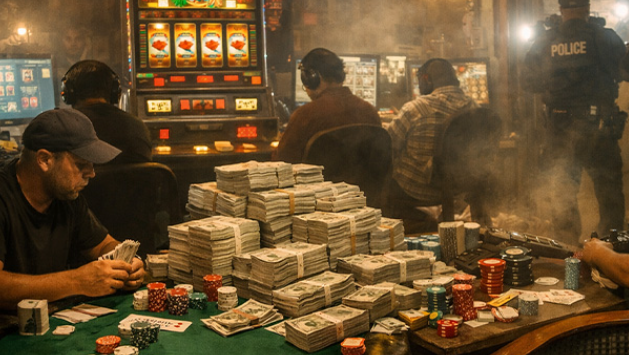
China's Crackdown on Cross-Border Gambling: Judicial Severe Penalties + Multi-Dimensional Collaboration
China adopts "precise gambling control and long-term prevention" as its core, launching comprehensive crackdown measures:
Judicial Level: Severe Punishment for Core Suspects
Punishment orientation is clear: The Supreme People's Court demands severe punishments for organizers of cross-border gambling, key members, and repeat offenders, especially those involved in violent crimes;
Warning from typical cases: A gambling gang leader in Macau, Mr. Wu, made profits over 300 million RMB (about 41.22 million USD) from domestic residents, causing significant capital outflow, and was sentenced to 6 years in prison, with other gang members receiving 30 to 36 months;
Exposing disguises: Beware of gambling traps disguised as "tourism," which not only lead to financial losses and family breakdowns but may also foster violent crimes, with typical cases reported in Guangxi.
Collaborative Level: Tightening the Prevention Network
Top-level deployment: A national video conference emphasized "rejecting isolated actions and strengthening collaborative operations," focusing on crime networks, core fugitives, and complex cases, precisely dismantling gang structures and blocking financial flows;
Departmental coordination upgrade: Improving organizational structures, enhancing professional capabilities, and advancing data sharing, optimizing cross-departmental collaboration mechanisms to address threats from online platforms and transnational crime groups;
Deepening International Cooperation: Foreign Minister Wang Yi calls for enhanced collaboration with Southeast Asian countries to jointly combat online gambling and telecommunications fraud, focusing on controlling human trafficking and other related crimes, deepening law enforcement coordination with ASEAN member states.
Hawaii's Illegal Gambling Dilemma: Huge Scale + Legalization Controversies
Under Hawaii's gambling ban, the illegal market is rampant, leaving legislators torn between "crackdown" and "legalization":
Illegal Market Scale and Harm
Alarming size: State law enforcement estimates the annual turnover of illegal gambling statewide reaches 700 to 800 million USD, with some illegal gaming halls earning over 10,000 USD daily;
Distribution and forms: Currently, about 50 illegal gaming halls are known on Oahu Island (previously over 100, reduced after crackdowns), concentrated in West Oahu and Kalihi areas; online sports betting, due to its concealment, becomes a new governance challenge;
Associated crimes are severe: Illegal gaming halls are often linked with usury, murder, drug trafficking, and illegal firearms possession, with Honolulu's prosecutor stating "a deputy is specifically assigned to handle related cases full-time," with community reports being a major source of leads.
Focus of Legalization Debate
Proponents' view: State Representative Daniel Holt believes legalization could bring in hundreds of millions of dollars in annual revenue and thousands of jobs, also providing an alternative income source for the new Aloha Stadium entertainment district (which needs funds to cover maintenance costs);
Opponents' stance: Honolulu's prosecutor Steve Alm questions whether legalization can eradicate illegal gaming halls, noting that the task force members "tend to support legalization" without law enforcement representatives, and expressing concerns about increased addiction and crime risks;
Advancement process: The tourism and gambling task force will study experiences from other states, assess regulatory needs and addiction treatment resources, and submit a report before the 2027 legislative session, with current related bills deeply divided, including some prohibiting casinos in stadiums and limited licensing proposals stalled.
Industry Observation: Different Governance Paths of Strict Regulation and Loosening
The dynamics in both regions reflect the diverse logic of gambling industry governance:
China's path: Adopting a "zero tolerance" attitude towards cross-border gambling, linking it with national security and social stability, and deploying judicial, administrative, and international cooperation in multiple dimensions to curb risks from the source;
Hawaii's dilemma: The ban has not eradicated illegal activities but has instead fostered crime, with the essence of the legalization debate being a balance between "tax revenue and employment" and "social harm," lacking a unified consensus;
Core insight: Gambling governance needs to adapt to local realities, with China's strict control model focusing on cross-border crime prevention, while Hawaii's controversy highlights the complexity of managing the local illegal market, and "compliance baseline must not be broken" is a common prerequisite for the healthy development of the industry.
————
This article is from "PASA-Global iGaming Leaders," a gambling industry news channel:https://t.me/pasa_news
Original deep channel for gambling:https://t.me/gamblingdeep
Free data report: @pasa_research
PASA Matrix: @pasa002_bot
PASA official website: https://www.pasa.news