
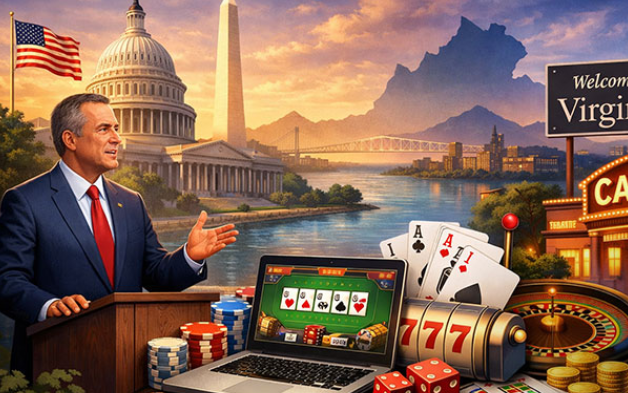
Maryland lawmakers are once again assessing the possibility of legalizing online casinos, with Senator Ron Watson's SB 885 bill proposing to authorize online casinos and bingo games, regulated by the State Lottery and Gaming Control Agency. The proposal comes at a time when the state faces increasingly severe financial challenges, with supporters claiming it could bring substantial tax revenue, while opponents warn it could impact existing casino operations and employment. Simply put, the state government is short of money and wants to make up for it through online casinos, but physical casinos are not happy.
Fiscal Pressure: A $2.3 billion shortfall drives legislation
Watson pointed out at the Senate Budget and Taxation Committee hearing that the state spending committee has informed that the next term will need to address a $2.3 billion fiscal shortfall, which will expand to $3 billion by 2029 and is expected to reach $4.1 billion by 2031. He estimates that if the bill passes, it could generate about $250 million in tax revenue per year, about $1.5 billion over five years. Currently, about $200 million per year flows into illegal gambling sites in Maryland, not a penny into the state treasury.
License and Tax Rate: $1 million license fee, 40% tax rate
The bill proposes a clear license cost and tax rate structure. A comprehensive iGaming operator license fee of $1 million, companies offering only live dealer games have a license fee of $500,000, and online bingo licenses are also $500,000. The license is valid for five years, with a renewal fee of 1% of annual revenue. The tax rate for live dealer games is 20%, and for other online casino games, it is 40%. The bill also includes consumer protection clauses, requiring operators to prominently display helplines, prohibit credit card deposits, and the highest fine for tampering with game systems is $1 million.
Regional Competition: Virginia's progress acts as a catalyst
Watson frankly stated that the biggest change since the last proposal is "Virginia." Virginia lawmakers have pushed multiple online casino bills, and both houses have passed related proposals. If online casinos are legalized in Virginia, it may affect the business of Maryland National Harbor, which attracts a large number of customers from Virginia. Watson believes that the online casino bill can keep Maryland competitive, and the consumers attracted by online casinos are different from those of physical casinos.
Opposition Voices: Physical casinos worry about employment and addiction
The general manager of Ocean Downs Casino stated that Maryland's gaming industry aims to support employment, tourism, and community, and online casinos will move gambling to mobile phones and living rooms, endangering employment and community investment. County leaders pointed out that since the casino opened in 2011, it has supported local police equipment and education projects. The Fair Gaming Movement organization cited studies showing that states with online casinos have an average problem gambling rate of about 6%, while Maryland is currently about 5.7%. Watson responded that the issue is not whether iGaming exists, but whether it is responsibly regulated. The bill has passed the first reading, and if it ultimately passes, it will be decided by a voter referendum. Want to know the latest developments in iGaming in various states in the US? PASA official website continues to track.
————
This article comes from "PASA-Global iGaming Leaders" gambling industry news channel:https://t.me/pasa_news
Gambling original depth channel:https://t.me/gamblingdeep
Free data report: @pasa_research
PASA Matrix: @pasa002_bot
PASA official website: https://www.pasa.news