
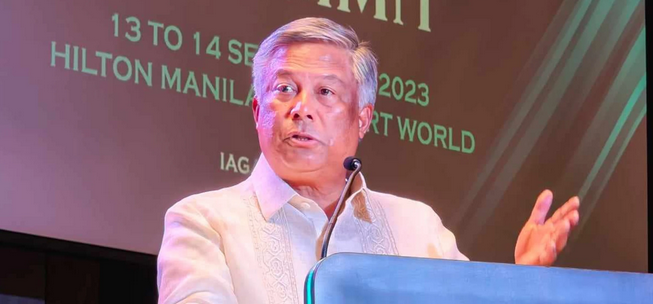
The conflicts in the Middle East are directly impacting the ledger of the Philippine gaming industry. Alejandro Tengco, chairman of the Philippine Amusement and Gaming Corporation (PAGCOR), candidly stated in his latest announcement that the soaring oil prices and the ensuing uncertainty have painfully affected the entire industry, with no global gaming jurisdiction—from Singapore and Macau to the USA—being spared. Tengco was straightforward: these are tough times for everyone, and all PAGCOR can do is adjust its pace while firmly adhering to responsible gaming. Last month, Philippine President Marcos declared a national energy emergency, with a memorandum from Malacañang listing a daunting array of threats—global energy market turmoil, supply chain disruptions, and severe oil price fluctuations, with the emergency order effective for at least one year. For the gaming industry, which heavily relies on electricity, logistics, and tourist flow, each spike in energy bills directly erodes the thickness of the profit margins.
Online operators get a breather, minimum guarantee postponed by two months
Facing continuous pressure on costs, PAGCOR has thrown a lifeline to online gaming operators. The new rule on minimum guarantees, originally set to start on April 1, has been urgently postponed to June 1, giving the market a two-month buffer. According to the new framework, all licensed electronic gaming system administrators must pay a minimum guarantee of 9 million pesos (about $149,400) per month, assuming a monthly gross gaming revenue baseline of 30 million pesos; for GSAs not offering electronic games, the monthly fee is 4 million pesos, corresponding to a 15 million pesos revenue baseline. The planned second-tier fee increase—rising to 10.5 million pesos and 4 million pesos respectively—has also been postponed overall, now set to take effect in December.
This series of date shifts essentially uses policy flexibility to offset external shocks. When high oil prices raise operating costs and suppress consumer willingness, enforcing high fixed fees as originally planned would only add insult to injury. PAGCOR's calculation is clear: first, preserve the market entities' survival space, then discuss tax revenue increments and industry upgrades.
The separation of regulation and operation remains unresolved, with hopes pinned on privatization
Tengco also revealed a pending issue that tugs at the industry's nerves in his statement—the final decision on PAGCOR's plan to separate its regulatory functions from commercial operations is still awaiting the Philippine Governance Commission's verdict. Since taking office in 2022, Tengco has repeatedly expressed support for ending PAGCOR's dual role as both referee and player. His metaphor at last year's Asian Gaming Summit, "A referee cannot stand on the same field as the players," is still frequently cited in the industry. However, the reality is that over 40 PAGCOR-owned Philippine casino brands are still operating normally. Tengco's latest statement is even clearer: if the privatization plan is approved, it will be a real game-changer.
PASA official website continues to track changes in the Asia-Pacific gaming regulatory framework, noting that the question of whether and how to split PAGCOR has evolved from whether to split to when and how to split. Geopolitical conflicts bringing economic headwinds may slow down decision-making, but they might also force the government to accelerate shedding commercial burdens and focus on regulatory duties.
The hotel industry is hit hard, with the Hormuz crisis choking the tourism industry
The chill in the gaming industry is not isolated; the entire tourism reception chain is bearing the brunt of the transmitted shocks. Alfred Lei of Lichu Real Estate Consulting compares the current crisis to the COVID-19 pandemic, stating that the Philippine hotel industry is entering its most difficult period since the pandemic. High oil prices are driving up airfare, weakening travel confidence, and squeezing family budgets, with a triple blow expected to cause a cliff-like drop in hotel occupancy rates in April and May. Lei's forecast is quite pessimistic: international tourist volumes are threatened, domestic consumption is weak, and the industry is facing tough times in the second half of the year, with the future entirely dependent on how quickly the Hormuz crisis can be resolved.
Alarico Panao, a scholar at the University of the Philippines, characterizes this war as a direct fault line in the Philippine economy—diplomatic policy shocks are rapidly translating into household vulnerability and macroeconomic uncertainty through oil prices. From gaming operators to hotel owners, from airlines to street vendors, every node on this chain is enduring the same storm. Tengco's statement about "adjusting the pace to the rhythm" is less a call for confidence than a pragmatic warning to the entire industry.
————
This article is from "PASA-Global iGaming Leaders," a gaming industry news channel: https://t.me/pasa_news
Gaming original depth channel: https://t.me/gamblingdeep
Free data reports: @pasa_research
PASA Matrix: @pasa002_bot
PASA official website: https://www.pasa.news