
In the past, we thought that simply cutting clips was equivalent to attracting traffic, but it was only after entering actual combat that we discovered—Facebook Reels has evolved three different traffic growth forms in the video domain, each with its own mechanism, conversion path, and goals.
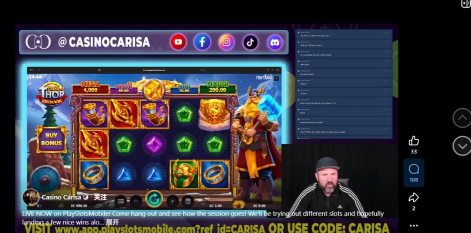
Mature teams generally divide Reels traffic into three dimensions, each with its own algorithmic advantages and conversion paths:
🥇 Short video clips (Reels) — high volume, low cost, creative runs
The core strategy of Reels can be understood as a "high-volume first-touch pool".
The most common materials are 10–30 second explosive moment clips, accompanied by brief copy and light guidance links; more advanced are the preserved barrage of live broadcast highlights, or disguised content in tutorial, motivational, or soft guidance styles; even virtual hosts can be used to mass-produce materials.
The commonality of these forms is that they are quick to generate high volume, low in cost, and can be replicated indefinitely, allowing operators to gain a large amount of unfamiliar traffic in a short time, expand coverage, and quickly test which materials can generate the most volume.
The algorithm logic of Reels relies on completion rates and interactions to send content into the recommendation pool repeatedly, creating natural diffusion. Simply put, if your goal is to run volume, test directions, and spread breadth, then Reels is always the most effective starting strategy.
🥈 Live streaming (Live) — building trust, rapid conversion
The live streaming part takes on the role of "deep conversion", with the most mainstream form being real-person host-led live streaming: the host appears on the same screen as the platform interface, demonstrating operations while distributing welfare codes, limited-time rebates, or lotteries to stimulate emotions; the short links and interactions that emerge in the barrage area also strengthen the recommendation signals.
The essence of live streaming is to establish credibility—especially for Facebook's predominantly middle-aged users, "watching others play Slots, participating in barrage interactions" is already an immersive experience. What really makes people decide to pay is the host's emotions, welfare feedback, and the ongoing heat in the comment section. Overall: live streaming can directly drive bystanders to become paying players.
🥉Mixed strategy (Reels clips + Live) — high volume + conversion closed loop
Of course, the mixed strategy of "short video × live streaming" can encompass the advantages of both, with the front end relying on Reels short videos to attract unfamiliar users, the middle stage using live streaming to complete trust and payment conversion, and finally settling users into groups for long-term repurchase.
This combination is strong because Reels have higher reach capabilities and then adding Live's high conversion ability forms a mutually reinforcing traffic funnel. In simple terms: the mixed strategy is the ultimate solution for "scalable customer acquisition + continuous conversion".
💡 Why must the three forms be tested separately? (Because the underlying logic is completely different)
We know that in the current social content ecosystem, different types of content are driven by different mechanisms.
For example, Reels rely entirely on the FB platform's algorithm recommendations, and the system will judge whether to push your work based on completion rates, comment rates, and the uniqueness of the content.
Live streaming, on the other hand, mainly relies on social signals, with the platform considering the audience's comments, likes, and duration of stay to decide whether to continue recommending your live content.
If the two are mixed directly, the entire chain's optimization becomes complex: 🟢 For example, your video content may generate high volume, attracting many content fans, but live conversion is weak, unable to retain users; or your live performance is outstanding, with a high conversion rate, but the video materials do not go viral, hardly bringing in new users; nor can it achieve long-term retention.
Therefore, if all content is mixed together, it will never be possible to find the real optimization direction. Hence, it is best to break down the account matrix into three core roles:
🟢Reels clip high-volume account: dedicated to running materials and testing, pursuing traffic and exposure;
🟢Live conversion account: operating with both real and virtual hosts, focused on user retention and payment conversion;
🟢SOP official traffic conversion account: responsible for automatic replies and conversion, ensuring smooth traffic landing. By splitting, the three links can be optimized independently, significantly improving the overall ROI.
Specifically, content clips have natural advantages: high completion rates: explosive moments, reversal segments inherently have storytelling and satisfying points; comment interactions can guide the algorithm: "game links", "guess numbers to win gift packs" and other interactions are easy to drive platform recommendations; content can be infinitely reused: a one-hour live broadcast can be cut into dozens or even hundreds of Reels, these short video contents are naturally suitable for running volume and testing.
In actual operations, there are also some typical cases that confirm this idea. For example, Casino Carisa attracts users naturally with real-person appearances and high-quality images; while Mama Cip Slots focuses on visual entrances and fragmented interactions.
In summary, Facebook Reels' high volume capability, live streaming's conversion capability, and the mixed strategy's closed-loop capability correspond to completely different growth models. Excellent teams often do not just focus on one method, but split the three lines independently for optimization, then string them into a growth flywheel:
Want to run volume → Do Reels
Want to convert → Do live streaming
Want to scale cyclically → Combine both for a closed loop
Running the three lines simultaneously is the correct strategy for Facebook video traffic.
—————
This is the only gambling industry knowledge channel on TG, targeting elite executives in the gambling industry. Produced by "Global iGaming Leader - PASA". Deep content analysis of the past, present, and future of the gambling industry is published daily.
This content is exclusively created byhttps://t.me/gamblingdeep. If you like our content, feel free to share it.
Follow this channel to receive a free copy of "Gambling Outbound Strategy, from Strategy to Practice Guide" report, message @Pasarose_bot after following to claim
More data reports: @pasa_research
Join the member group: @pasa002_bot
PASA official website: www.pasa.news