
In the overseas Real Money Gaming (RMG) and Slots categories, the game between app store reviews and traffic deployment has changed dramatically compared to a few years ago. The Cloaking technology, which relied on switching between A/B sides, has helped many teams in markets such as Brazil and Southeast Asia achieve efficient launches and purchase conversions.
🔴 However, this technology is currently facing systematic upgrades from Apple and Google's review systems. By early 2026, several Slots teams deeply rooted in Latin America and Southeast Asia reported that their high-investment Cloaking scripts failed en masse. Apps were forcibly delisted the day after launch due to exposure of the B-side, and high-weight developer accounts were also permanently banned.
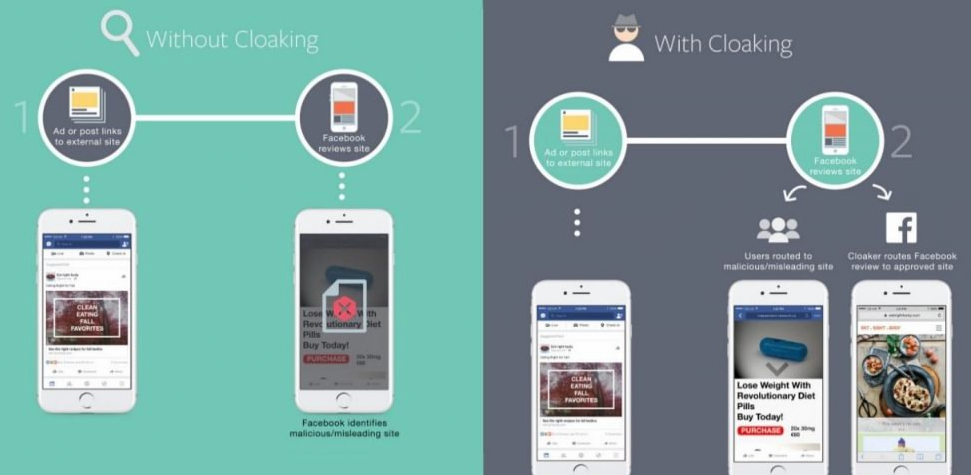
Cloaking technology is essentially a conditional content rendering mechanism, often referred to as A/B side switching or cloak technology. ➡️ The core principle is to dynamically present completely different interfaces and functionalities during the app submission review and official deployment phase, depending on the visiting environment.
🔴 The A-side is usually designed as a fully compliant casual game, such as match-3 games, with content that is healthy and meets the app store's review standards; the B-side hides the real core ads, integrating Slots casino mechanisms, third-party payment channels, and real money systems.
When the app detects that the current environment is the "real target user," it switches to the B-side, achieving a seamless transition from approval to conversion. This technology significantly lowered the review threshold in the early days, helping related teams to launch quickly while effectively avoiding the app store's strict restrictions on gambling content.
The core logic of traditional Cloaking is to accurately identify review traffic. Teams usually maintain a blacklist of app store review IPs, covering IP ranges from cloud providers like AWS, Google Cloud, Azure, and specific regional ASNs. When a review request hits the blacklist, the app only presents the compliant A-side content; otherwise, it loads the B-side Slots interface integrated with third-party payments.
However, as these review infrastructures have evolved, this technology is gradually becoming inadequate for the current deployment environment.
1⃣ Comprehensive penetration at the IP level
The current app store review systems have now accessed a global-scale "residential proxy network." These IP addresses come from real home broadband and mobile carrier networks, such as a household's home network in São Paulo, Brazil, or a real 5G mobile signal in Jakarta, Indonesia. When reviewers use these real residential IPs to access your app, Cloaking scripts find it hard to distinguish them as review traffic, mistaking them for ordinary users, and directly displaying the hidden B-side Slots interface. As a result, reviewers can see through the issue at a glance, and the app is quickly delisted or banned. The simple method of blocking reviews with an IP blacklist no longer works.
2⃣ Fine detection of behavioral characteristics
In addition to IP addresses, the review system now also mimics various real user behaviors. It can arbitrarily change HTTP headers, time zones, language settings, phone models, and even simulate specific phone battery remaining power, gyroscope shake data, and sensor readings. The simple "environmental fingerprint" rules used to determine whether it was review traffic are useless in the face of advanced simulations.
3⃣ AI-driven simulation of real devices
What's more impressive now is the AI real device simulation behind the reviews. Apple and Google now rarely use easily detectable cloud simulators, deploying a large number of real mobile devices worldwide instead. These real phones, plugged with local SIM cards and using real carrier networks, make traditional codes used to detect simulators completely ineffective. During testing, they also incorporate AI "monkey testing": AI acts like a monkey, randomly tapping and swiping on the screen, simulating various irregular human operations—long presses, rapid double clicks, and even intentionally disconnecting and reconnecting when the network is poor.
Once AI accidentally triggers a backdoor during this random tapping and swiping process (such as continuously clicking the Logo seven times on the "About" page, or swiping to the bottom after staying for five minutes), hidden web windows or dynamic scripts are immediately awakened, and the system can also record the evidence. Even if the app luckily passes the initial review, it is likely to expose the B-side during the subsequent review process.
4⃣ Network-level deep review
Once the B-side of Slots runs, it will definitely involve real money recharging and prize data transmission. When the app runs on these real phones, the system also conducts packet capture checks on all network data in the background. If it finds that your app, which claims to be a simple match-3 game, suddenly sends recharge requests to Stripe, Paypal, or local Brazilian PIX payment platforms, or establishes a long connection to receive prize data, the system will determine that you are evading the review. Even if the complete B-side interface is not seen, it can directly penalize and ban.
Facing these technological upgrades, relying on off-the-shelf Cloaking source code has become difficult to sustain deployment.
Reviews are only getting stricter, and simply buying ready-made Cloaking scripts is no longer a viable option. Teams need to change their approach, adopting a "war of attrition" strategy, building their own account and package reserve systems.
🔴 First, mass-produce shell packages. Using deep code obfuscation and dynamic rendering technology, quickly and cost-effectively create many different-looking new packages. Even if one of the packages is targeted for delisting, it will not affect the overall deployment, not putting all eggs in one basket.
🔴 Second, accumulate high-weight developer accounts over the long term. Those corporate old accounts that have been operating overseas for several years with real compliant financial records have high credit scores and are less likely to be randomly checked by AI real device farms.
In actual purchase deployments, teams also need to monitor various aspects. 🔄 Real-time review of audit logs, payment request characteristics, and changes in device fingerprints, while coordinating with local payment methods to hide network behavior, reducing the risk of detection. Additionally, introducing professional proxy投 services and channels with high rebates can reduce the cost of initial trial and error. If the team has sufficient funds, building their own toolchain and AI-assisted obfuscation system in advance can further improve the survival rate of the package bodies.
Overall, Cloaking technology is not completely outdated, but it needs to be used in combination with real environment simulation capabilities and a high-weight account system. Building sufficient account reserves and the ability to rapidly iterate package bodies will enable teams to survive in the continuously upgrading review systems of Apple and Google. This transition is challenging but is also an inevitable direction towards more professionalism in the industry.
—————
This is the only gambling industry knowledge channel on TG, targeting gambling industry executives. Produced by "Global iGaming Leader - PASA." Deep content analysis of the gambling industry's past, present, and future is published daily.
This content is exclusively created byhttps://t.me/gamblingdeep. If you like our content, feel free to share it.
Follow this channel to receive a free copy of "Gambling Outbound Strategy, from Strategy to Practical Guide" report. After following, send a private message to @Pasarose_bot to claim.
More data reports: @pasa_research
Join the member group: @pasa002_bot
PASA official website: www.pasa.news