Last year, East Timor was once seen as a potential growth point in the Southeast Asian market. This small country, whose regulatory system is not yet fully formed, sent out open signals to the offshore gambling industry at the beginning of 2025, quickly attracting a lot of capital and operators' attention.
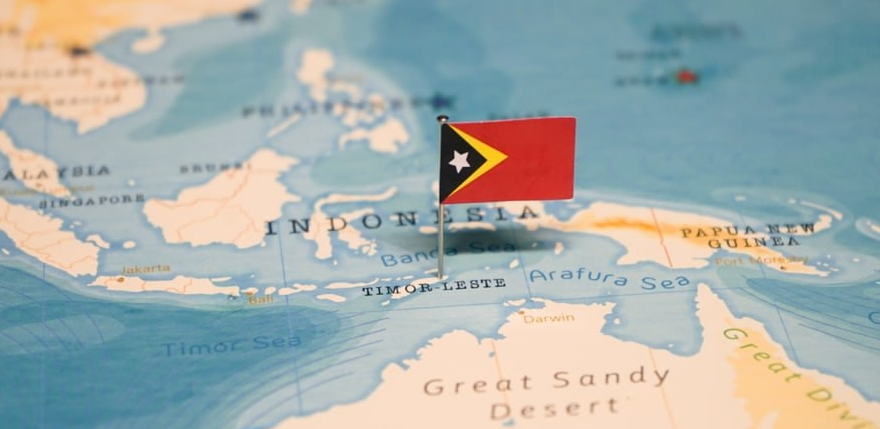
The licensing model in East Timor was not initially aimed at the local market—with a population of only about 1.3 million, the local gambling space is limited. The license design was completely in line with the typical offshore export model of the Philippines' POGO, serving overseas users and handling cross-border traffic.
Therefore, the licenses in East Timor appeared very attractive. According to industry estimates, the gambling industry was originally planned to contribute up to about $100 million to GDP by 2027; early projects (including Golden River Universe) had already disclosed investment scales exceeding $100 million.
🔴 In terms of tax design, only about 2% to 5% GGR tax rate, this level is much lower than the mature market's range of 15% to 30%. If a medium-sized operator's annual GGR reaches $50 million to $100 million, its tax cost may only be between $1 million and $5 million, making the profit margin very attractive.
Under such expectations, East Timor was quickly packaged as the "Asian Malta". According to industry standard data, an offshore operator can usually cover 100,000 to 500,000 active users, even expanding to a million-level cross-regional users, corresponding to annual turnover reaching hundreds of millions of dollars, and GGR reaching tens of millions of dollars.
However, just six months later, this highly anticipated market quickly hit the pause button—licenses were revoked, and projects were completely frozen. In today's Southeast Asia, the emerging license bonus is becoming increasingly short-lived and unpredictable.
Let's look at the timeline, in April 2025, East Timor first issued licenses to the offshore gambling industry, trying to replicate the European offshore gambling regulatory model, attracting international operators to settle in. 🔴 Low threshold, high potential, policy-friendly, plus its geographical location close to the core markets of Southeast Asia, made East Timor quickly enter the industry's vision, including enterprises like Golden River Universe that were the first to apply for licenses.
Months later, in October 2025, the East Timor government officially announced the revocation of all online and offshore gambling licenses, and stopped accepting any new applications. Now entering 2026, this ban still shows no signs of easing. Neither official levels nor industry feedback have a clear restart timetable, and early-entered enterprise projects are also in a state of suspension.
This "open-close" policy cycle is not simply a regulatory swing, but deeper structural issues. First, there is the rapid intervention of international pressure. The United Nations Office on Drugs and Crime in related reports explicitly pointed out the risk of East Timor becoming a hotspot for transnational fraud and illegal gambling networks, especially in its special economic zones.
And the problem is very similar to what the Philippine market has encountered. When a market has low tax rates, cross-border user capacity, and tens of millions of dollars in GGR potential, it inevitably attracts gray production and gray capital transfer.
In East Timor, which lacks relevant industry experience, regulatory risks were almost instantly magnified. Whether it's Sihanoukville in Cambodia, northern Myanmar, or the former POGO model in the Philippines, similar paths have been experienced.
In recent years, as the Philippines' POGO has contracted, many Southeast Asian operators have tried to find regulatory blank spots for expansion, or obtain licenses at lower costs to serve larger-scale cross-border markets.
But the cases of the Philippines and East Timor show that a market can go from open to closed in just six months to a year, while operators' investments often require a longer period to recover.
Returning to East Timor itself, although the current market is in a completely frozen state, this does not mean that it is completely out of the possibility of re-entering the gambling industry. ➡️ From historical experience, some countries, after experiencing initial loss of control, often choose to redesign the regulatory system, reopening with higher thresholds and stronger controls.
Thus, the next round of opportunities may belong to those who have compliance capabilities, financial strength, and local operational experience as long-term players.
—————
This is the only gambling industry knowledge channel on TG, this channel's audience is gambling industry executives. Produced by "Global iGaming Leader - PASA". Deep content analyzing the past, present, and future of the gambling industry is published daily.
This content is exclusively created byhttps://t.me/gamblingdeep. If you like our content, feel free to forward it.
Follow this channel to get a free copy of "Gambling Outbound Strategy, from Strategy to Practice Guide", message @Pasarose_bot after following to receive it.
More data reports: @pasa_research
Join the member group: @pasa002_bot
PASA official website: www.pasa.news