
As the Japanese government officially confirms the reopening of IR license applications in May 2027, the global gaming industry's attention is once again focused on the East. However, unlike the fervor of years past where many competitors vied for dominance, the market now exhibits more caution—only the MGM Osaka project broke through in the first round of bidding, becoming the sole "seedling" in Japan's integrated resort construction. MGM CEO Bill Hornbuckle candidly stated: "I am literally betting my career on this project." This costly seedling, with an investment of $12 billion and expected to open in the third quarter of 2030, with an annual visitor flow anticipated to reach 20 million, is providing a fresh reference sample for the second round of bidders. Simply put, it's about letting MGM test the waters first, so that the followers can learn a thing or two.
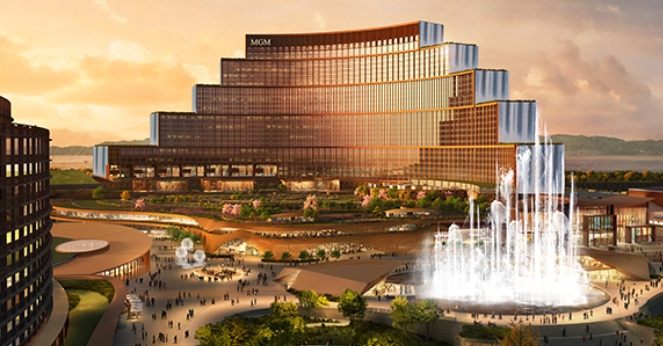
Osaka Sample: The Demonstrative Effect Behind a $12 Billion Investment
The MGM Osaka project, a collaboration with Japan's Orix Group, is the first and currently the only approved IR in Japan. MGM's CFO revealed at the JP Morgan forum that the company plans to invest about $450 million in equity this year, and is "very willing to allocate capital here." The project aims to rival Marina Bay Sands and become "the largest and most successful integrated resort in the world." Its geographical advantage is also significant, as Hornbuckle emphasized, flying from Shanghai and Beijing to Osaka is an hour and a half shorter than flying to Macau.
This project is of great significance to the second round of bidders: it validates the feasibility of the Japanese IR market, demonstrates the model of collaboration with local giants, and provides a concrete anchor with its annual visitor flow expectation of 20 million. As potential applicants like Aichi and Hokkaido start preparing their materials, every step MGM takes will serve as a benchmark for them to learn from.
Second Round Candidates: Learning from Nagasaki's Lessons
Nagasaki Prefecture had partnered with an Austrian casino in the first round but failed due to financing issues. It is now poised for a comeback in the second round. The governor of Aichi Prefecture withdrew during the first round due to the pandemic but has now expressed intentions to participate. The governor of Hokkaido previously declined due to environmental concerns but is now re-evaluating, with its potential partner Hard Rock International having released renderings of a guitar-shaped hotel as early as 2019. These candidates will draw lessons from Nagasaki's failure and Osaka's progress, especially in terms of financing stability and integration with local communities and the environment.
Political Endorsement: From Abe to Takashi, Continuation of IR Policies
The late former Prime Minister Shinzo Abe had strongly promoted IRs to attract foreign investment and tourists, and his political protégé, current Prime Minister Sanae Takaichi, is believed to support this development as well. After her election in October last year, she immediately instructed the Commissioner of the Tourism Agency to advance IRs, aiming to create attractive accommodation-based tourism. The continuity of political policies provides a stable expectation for the second round of bidding. Want to know the latest developments in Asian integrated resorts? PASA's official website keeps you updated.
————
This article is from "PASA-Global iGaming Leaders," a gaming industry news channel:https://t.me/pasa_news
Gaming original in-depth channel:https://t.me/gamblingdeep
Free data reports: @pasa_research
PASA Matrix: @pasa002_bot
PASA official website: https://www.pasa.news