
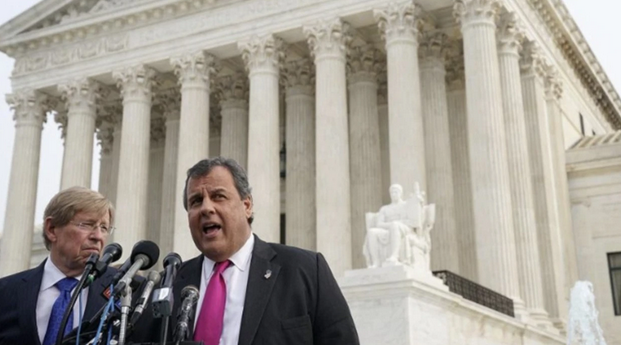
The annual Super Bowl is not only a sports feast but also a showcase for exorbitantly priced advertisements, with this year's average cost for a 30-second ad reaching $8 million. However, in this valuable advertising slot, a specific type of ad is explicitly barred: Prediction Markets. The National Football League (NFL) continues its policy of prohibiting these platforms from advertising during the Super Bowl. Former New Jersey Governor Chris Christie, who spearheaded the legalization of sports betting in the state, publicly praised this, believing that the NFL prioritizes "sports integrity and fan protection" over advertising revenue. As a strategic advisor to the American Gaming Association, Christie is leading the organization in a fierce legal battle with prediction markets. This issue is complex, involving deep disagreements over state and federal regulatory authority, and a potential future market worth up to $1 trillion.
Super Bowl Ad Ban: Clear Choices and Ambiguous Boundaries
The NFL has strict restrictions on Super Bowl ads. This year, regulated traditional sports betting companies like DraftKings and FanDuel are still allowed to advertise, but each can only have up to six ads, and the ads must not mention or promote their prediction market businesses—both companies had launched their own prediction platforms at the end of last year. Completely banned from advertising at the Super Bowl are pure prediction market operators like Kalshi. The NFL commissioner has already made it clear that there will not be a formal business partnership with prediction markets for now, preferring to first see the direction of regulation. Christie praised this decision as "wise," believing it sends a clear signal: the league supports state-regulated legal markets and protects the purity of sports.
Regulatory Turmoil: Concerns of State Rights Defenders and Industry Expansion
Christie's stance represents the core forces currently opposing the expansion of prediction markets. In his view, this is not only about business competition but also a matter of principle. In an interview, he outlined several key concerns:
•Regulatory Jurisdiction: The core dispute is whether sports event contracts should be regulated by the states or fall under federal jurisdiction by the Commodity Futures Trading Commission (CFTC)? Christie believes that state attorneys general should "actively exercise their rights" and take prediction markets to court. The New York State Attorney General recently issued a memo accusing prediction markets of being "unregulated gambling".
•Insider Trading Risks: He is particularly concerned about the ease with which insider trading can occur in prediction markets, such as a trader who previously profited over $400,000 by betting on political changes in Venezuela. What worries him more is that there are contracts that allow users to trade on whether college athletes will enter the "transfer portal," "imagine the opportunities for corruption in such scenarios."
•Industry Rapid Expansion: Despite ongoing controversies, prediction markets are attracting sports betting, financial exchanges, cryptocurrency platforms, and others, with industry research firms predicting their trading volume could reach $1 trillion by the end of this decade.
Legal Prospects: A Prelude to Another 'Supreme Court Battle'?
This struggle reminds many of Christie's leadership in New Jersey, ultimately overturning the federal Professional and Amateur Sports Protection Act (PASPA) at the Supreme Court. Currently, at least eight states, including New Jersey, have issued bans against Kalshi's operations. Christie believes that the legal disputes over prediction markets will eventually be appealed to the Supreme Court as well. He thinks that the current majority of Supreme Court justices are "supporters of state rights" and might view this case with similar logic to the PASPA case, i.e., Congress cannot force states to enforce a certain prohibition. He confidently states: "I believe the states have taken the right approach from both a legal and practical perspective... I truly believe the states will ultimately prevail." This tug-of-war around emerging financial products and traditional gambling regulation may once again be decided by the Supreme Court, reshaping the regulatory landscape of American gambling and financial derivatives. For insights into such cutting-edge regulatory conflicts and Supreme Court dynamics, visit the PASA official website for professional analysis.
————
This article is from "PASA-Global iGaming Leaders," a gambling industry news channel:https://t.me/pasa_news
Original in-depth gambling channel:https://t.me/gamblingdeep
Free data reports: @pasa_research
PASA Matrix: @pasa002_bot
PASA official website: https://www.pasa.news