
The NCAA is intensifying efforts to limit the expansion of the collegiate sports prediction market, arguing that these products are similar to sports betting but lack corresponding regulatory and protective measures. NCAA President Charlie Baker has written to the Commodity Futures Trading Commission (CFTC), calling for a suspension of related trading activities, and reiterated this stance at the association's annual conference. These prediction markets are provided by financial trading platforms, where users can buy and sell contracts related to the outcomes of collegiate sports events. Although regulated as financial institutions, the NCAA believes the boundary with sports betting is increasingly blurred. Protecting the welfare of student-athletes and the integrity of competitions is the NCAA's primary task, and the unregulated growth of these markets poses a significant threat to both. Compliance cases and regulatory updates related to sports events can be referenced on the PASA official website.
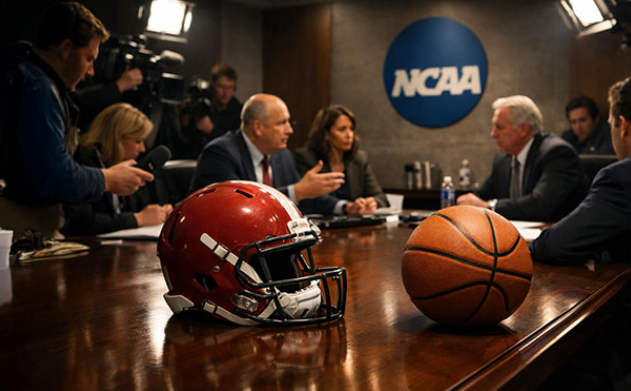
Core Demand: NCAA Calls for Suspension of Trading and Improved Regulation
In a three-page letter to CFTC Chairman Michael Selig, Baker explicitly requests the regulatory body to suspend trading in collegiate sports-related prediction markets. He emphasizes that these markets should not continue to operate before a more robust protection system is established, and the NCAA is willing to collaborate with the CFTC to formulate relevant rules.
The core regulatory measures proposed by Baker include:
Establishing a match integrity monitoring mechanism to prevent manipulation of games and other violations;
Strengthening age control and advertising restrictions to prevent minors from accessing;
Banning certain high-risk betting types, while introducing anti-harassment rules to protect student-athletes from undue harassment.
This demand stems from the NCAA's ongoing concern about related risks following the repeal of the national sports betting ban in 2018. Previously, the association had promoted the cancellation of prop betting on collegiate events and had adjusted betting policies for staff and athletes.
Controversy Focus: Transfer Portal Contracts Spark Strong Opposition
The NCAA's pressure is not unfounded, as prediction market operator Kalshi had previously planned to launch contracts related to collegiate athletes' transfer portals. These contracts allow users to speculate whether an athlete will enter the transfer portal, withdraw, or join future institutions, which has sparked strong opposition from the NCAA.
Baker publicly criticized this practice as "absolutely unacceptable," noting that student-athletes already face harassment and abuse due to betting on their performance. Betting on transfer decisions would bring greater pressure and could also threaten recruitment processes and the integrity of competitions. After the NCAA voiced opposition, Kalshi stated that "there are no immediate plans to launch such contracts," and Baker mentioned in subsequent statements that "they shelved the plans after we spoke out," showing that the NCAA's pressure has had a practical effect.
Regulatory Maze: Classification Dispute and Compliance Gap to be Resolved
The core controversy in the current collegiate sports prediction market lies in regulatory classification. Prediction markets profit through trading contracts and earn revenue from fees, unlike sports betting which sets odds and manages betting liabilities. However, for users, the experience is highly similar, especially when contracts focus on game scores and outcomes.
Baker points out that compared to legal sports betting, these prediction markets have obvious compliance gaps: inadequate age verification, missing advertising restrictions, insufficient integrity monitoring, and a lack of mandatory communication mechanisms between operators and sports governing bodies. Additionally, more than a dozen collegiate basketball players have been banned for manipulating game scores and prop betting, further strengthening the NCAA's resolve to push for regulation. Currently, the NCAA is still calling on federal regulatory bodies to hit the "pause button" until a clear regulatory framework is established before considering whether to allow the expansion of related markets.
————
This article is from "PASA-Global iGaming Leaders" gambling industry news channel:https://t.me/pasa_news
Original deep gambling channel:https://t.me/gamblingdeep
Free data reports: @pasa_research
PASA Matrix: @pasa002_bot
PASA official website: https://www.pasa.news