
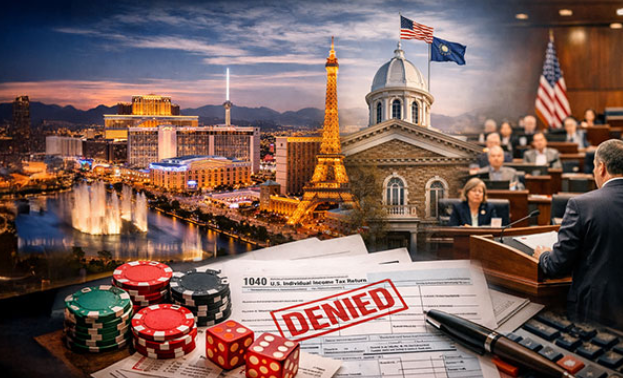
Starting from 2026, gamblers in the United States may have to pay taxes on "phantom income" that they never actually earned. This stems from a federal tax reform passed last July, which changed the decades-old rule of full deduction of gambling losses to only allowing a deduction of 90% of profits. This means that even if you break even over the year, you could still generate taxable income due to the 10% of losses that are not deductible. The gaming industry in Nevada and the state's congressional delegation are pushing hard to repeal this provision, arguing that it is not only unfair but will also severely impact employment and tourism.
Gaming professionals cry "forced retirement"
This change has had an immediate impact on professional players. Poker Hall of Fame member, Erik Seidel, who resides in Las Vegas, openly states that the new tax system "basically forces me to retire next year". Many of his peers plan to reduce or completely stop their activities. This is not just a complaint from high-end players; reduced events and participation will directly lead to a sharp decrease in job opportunities for dealers and logistical support staff. Casino operators also confirm that uncertainty has already begun to affect consumers' long-term budget planning, even cooling down betting on popular events like the Super Bowl and March Madness.
Bipartisan lawmakers rarely join hands to propose amendments
This provision "quietly passed" during the legislative process, catching many lawmakers by surprise. Nevada's Democratic Senator Cortez Masto and Republican Representative Amodei both stated that many colleagues were unaware that this policy had been inserted into the bill. As a result, Representative Dina Titus introduced the FAIR BET Act, while Senators Cortez Masto and Jacky Rosen jointly launched the FULL HOUSE Act, with a bipartisan goal: to restore full loss deduction. The chairman of the House Fundraising Committee, Jason Smith, also expressed belief in a bipartisan path to solve this issue.
The fairness and fiscal struggle behind the "phantom income" tax
The industry defines the core of this struggle as a "fairness" issue. The Nevada Resort Association emphasizes that for decades, the tax code has allowed losses to offset gains, and taxpayers should only pay taxes on net profits. Professional poker commentator Tony Dunst angrily states that they feel specifically targeted to "squeeze more money out of them". However, overturning the policy faces real fiscal barriers. It is estimated that this deduction cap could bring in over $11 billion in revenue for the federal government over the next eight years. To cancel it, Congress must find other sources of revenue to fill this gap, complicating the resolution of the issue.
Currently, the only advice tax experts can give players is to: keep extremely detailed records. Meanwhile, the entire industry anxiously awaits Congress's next move. As Erik Seidel says: "This tax doesn't really benefit anyone. I guess, sometimes politics just doesn't make sense."
————
This article is from "PASA-Global iGaming Leader" gambling news channel:https://t.me/pasa_news
Gambling original in-depth channel:https://t.me/gamblingdeep
Free data reports: @pasa_research
PASA Matrix: @pasa002_bot
PASA official website: https://www.pasa.news