
Las Vegas is experiencing a rare moment—two of the biggest casino giants are being acquired at the same time. Tilman Fertitta has taken over Caesars for $17.6 billion, and media mogul Barry Diller made a $17.6 billion bid for MGM Resorts on Monday, shortly after the Caesars deal, and then increased it to $18 billion. According to the PASA official website, despite a 14-month decline in Las Vegas tourist numbers out of the last 16 months and a four-month consecutive drop in airport traffic, the choices of these two billionaires point to the same judgment: the current headwind is a window for betting.
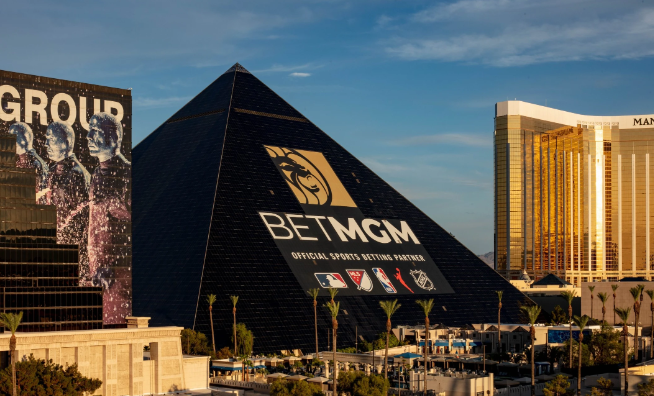
Diller: MGM represents a business model that AI cannot easily replicate or disintermediate, with significant undervalued physical assets
Diller, through People Inc (formerly IAC), proposed to acquire the remaining 74% of MGM shares he does not own for $48.30 per share, valuing the deal at about $18 billion. MGM quickly confirmed receipt of the offer but did not commit to any timetable. Diller, who has been increasing his stake in MGM since 2020, explained his logic on Monday—"MGM represents a rare business model: owning physical assets that AI cannot easily replicate or disintermediate, while also having excellent digital growth opportunities." He further stated, "We continue to believe that the market severely undervalues the strength and durability of MGM's assets. The management is top-notch, and we see a great opportunity to support MGM's next phase of growth and unlock its full value."
Fertitta: $31/share locks in Caesars, digital business up 60% as a hidden engine
On the Caesars side, Fertitta acquired shares at $31 each, including debt, totaling $17.6 billion. Caesars' stock price had hovered below $30 for nearly a year. Similar to MGM, Caesars' Q1 revenue in Las Vegas was flat, and adjusted EBITDA fell by 2%. Both missed out on the downstate New York casino license—seen by analysts as the second largest potential market in the U.S. outside the Strip. However, Caesars' digital business is quietly taking off: Q1 adjusted EBITDA soared by 60%, becoming the company's biggest growth engine. The common logic of the two transactions is becoming clear: core real estate assets are at a cyclical low, but digital business and Asian expansion provide growth leverage, with the acquirers betting on "low entry + diversified cash flow" for long-term returns.
NBA Las Vegas expansion + T-Mobile Arena, MGM's hidden ace
For MGM, a hidden ace is the NBA. The NBA Board of Governors approved Las Vegas as a potential expansion city in March, with a final decision possibly coming this year. MGM and Diller, along with NHL Golden Knights owner Bill Foley, co-own the T-Mobile Arena—the only venue in Las Vegas currently capable of hosting NBA games, having hosted the NBA Finals. MGM CEO Bill Hornbuckle revealed in a Q1 call that MGM has been asked "how to configure T-Mobile for all bidders," indicating "broad interest." Interestingly, Fertitta already owns the NBA Rockets, and should Texas legalize gambling, he might open a Caesars-branded casino in Houston. The intersection of the NBA and casinos is becoming a covert competitive dimension in the industry.
Analysts throw cold water: Beynon downgrades Caesars to neutral, Umansky maintains MGM neutral
Despite the transactions boosting stock prices—MGM jumped from below $40 to over $48, and Caesars returned to around $30—the immediate reaction from analysts was lukewarm. Macquarie's Beynon downgraded Caesars to "neutral" with a target price locked at around $31, citing "moderate IRR and limited upside," and expects the approval process to drag the deal into at least 2027. Seaport's Umansky maintained a neutral stance on MGM, noting that Diller, if successful, might divest the Macau and Japan segments. MGM's stock price touched $51 on Monday but has since fallen back to $48.36. However, the "go-shop clause" (allowing Caesars to seek higher offers until July 11) and the battle of wills among MGM's independent directors mean the two deals are far from settled. Meanwhile, new projects like Hard Rock Las Vegas, Bally's complex, and the A's baseball stadium are expected to inject new energy into the Strip after 2026—perhaps Diller and Fertitta see this as the last train of undervaluation before these catalysts arrive.
————
This article is from "PASA-Global iGaming Leader," a gambling industry news channel: https://t.me/pasa_news
Original deep gambling channel: https://t.me/gamblingdeep
Free data reports: @pasa_research
PASA Matrix: @pasa002_bot
PASA official website: https://www.pasa.news