
Capitol Hill in the United States argued again about sports betting on Wednesday. Senator Blackburn, chair of the Senate Commerce Subcommittee on Consumer Protection, convened a straightforwardly titled hearing - "No Sure Bet: Protecting the Integrity of American Sports." Unlike the last hearing in December 2024, this time the atmosphere was more charged. At that time, the prediction market transactions mainly revolved around the presidential election, with Kalshi handling over $175 million in transactions during the Trump vs. Harris showdown. In less than two years, this rising platform's valuation has ballooned to $22 billion, and sports derivative trading has already been fully deployed. The hearing started with sports integrity but quickly turned into a verbal battle over the regulation of prediction markets. PASA's official website will continue to track the regulatory signals released from this debate.
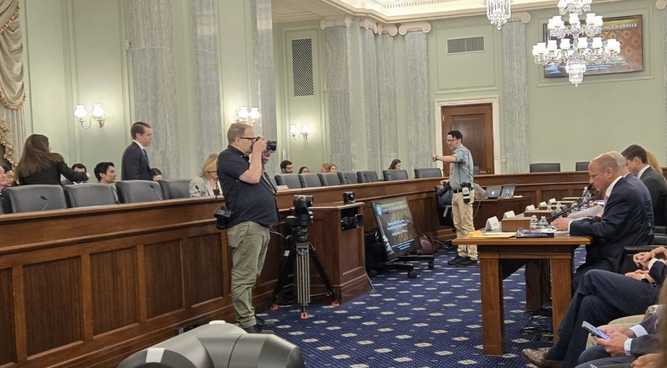
From basketball courts to betting slip scandals, sports credibility is being devoured
Blackburn started off by laying out the issue: "When Americans watch their favorite teams play, they don't want to worry about the games being rigged, nor do they want to worry about their favorite players intentionally missing a shot for some extra cash." The "extra cash" she mentioned has turned into a long list of solid cases over the past few months. Last month, a former NBA assistant coach admitted to leaking player injury information to a group of bettors; two MLB pitchers are awaiting trial for manipulating pitches; the mastermind behind a college basketball point-shaving case will be sentenced next month. Even former NBA guard Damon Jones has pleaded guilty, involved in a series of poker games backed by a mafia family, and admitted to leaking information about an injured NBA player—pointing to LeBron James.
This list is still growing. Before the hearing, Deutsche Bank threw out a prediction: the upcoming World Cup might see the U.S. betting market exceed $4 billion. The U.S. is co-hosting this world-class event for the first time in 32 years, with matches running from June 11 to July 19. Blackburn had previously cited UN data at the 2024 hearing—annually, at least $140 billion is laundered through illegal and unregulated sports betting operators, with about 10% of organized crime income from foreign companies coming from illegal sports betting. She also questioned the Justice Department about the connection between match-fixing and transnational organized crime. FIFA clearly sensed the risk, having convened a summit of the Integrity Working Group earlier this month, bringing together the FBI, Interpol, and the UN Office on Drugs and Crime at the same table.
The prediction market became an unexpected battleground at the hearing
A hearing originally meant to discuss sports integrity shifted midway into a comprehensive inquiry into the prediction market. Industry insiders had predicted a "food fight," and indeed it was. Patrick McHenry, senior advisor to the Prediction Market Alliance, faced a series of questions about whether platforms have adequate consumer protection measures. Colorado Senator Hickenlooper mentioned a detail: a prediction market had hired a 15-year-old influencer to promote their products on social media. McHenry said he was unaware of this promotional activity but expressed "welcome to dialogue with Congress" on how to protect minors. He emphasized that alliance members initiate "enhanced monitoring" when they suspect minors are using their parents' phones for transactions. Blackburn pressed the alliance and the chairman of the American Gaming Association, Bill Miller, on whether they target minors with advertisements, and both categorically denied it.
New Mexico Senator Lujan then shifted the topic back to the institutional level, asking witnesses how Congress should intervene in the regulation of sports event contracts. Miller insisted that Congress should reaffirm the rights of states and tribes, and Mary Beth Thomas of the Tennessee Sports Betting Commission stood on the same ground. McHenry left a backdoor open: if Congress decides to exercise power, the alliance is willing to cooperate with legislators, but he still insisted that the regulation of sports derivatives should fall under the jurisdiction of the U.S. Commodity Futures Trading Commission, citing a recent ruling from the Third Circuit Court of Appeals to support his position.
World Cup stress test and the vague future of the federal framework
After the hearing, iGB caught up with Blackburn in the Russell Senate Office Building. She said that hearings like today's "set a baseline" that helps push information forward, ensuring the FBI is watching. The World Cup could become a real-world exercise for the FBI to counter organized crime threats before the 2028 Los Angeles Summer Olympics.
As for whether the federal level can come up with a rigid sports betting standard, Blackburn didn't guarantee that it would be signed into law by 2030, but hinted that the pace of progress depends on how quickly Congress explores this issue, and members of the panel have already expressed interest in moving forward. Texas Senator Cruz and Washington Senator Cantwell will lead a bipartisan joint investigation to examine how major leagues, betting operators, and stakeholders protect sports integrity.
The academic community is already helping Congress build a framework. Matt Bakowitz, Director of Sports Business Management at American University, proposed a federal integrity baseline plan, core elements of which include:
• Mandatory suspicious betting reporting;
• Standardized information sharing protocols;
• Independent integrity monitoring;
• Privacy-protected data sharing between leagues and operators;
• Consistent rules for high-risk markets. His judgment is clear: "Congress can play a role here, but the goal should be coordinated and enforceable minimum standards, not a one-size-fits-all federal takeover of sports betting policy."
At the other end of Capitol Hill, House representatives are also watching this hearing. New York Representative Paul Tonko has been pushing for a federal sports betting regulatory framework, and he is optimistic about the House holding similar hearings soon. Actions at the league level are also accelerating—CFTC disclosed on Thursday that, following the signing of a memorandum of understanding with MLB, it had reached the same agreement with the NHL. A path to federal integrity standards may be slowly forming, but in the tug-of-war among various forces, just how slow this "slowly" will be is anyone's guess.
————
This article is from "PASA-Global iGaming Leaders," a gambling industry news channel:https://t.me/pasa_news
Original in-depth gambling channel:https://t.me/gamblingdeep
Free data reports: @pasa_research
PASA Matrix: @pasa002_bot
PASA official website: https://www.pasa.news