
Recently, law enforcement agencies in Thailand launched a cross-border joint raid called "Operation Clean Sweep Ban Non" near the Thai-Cambodian border in Sa Kaeo Province, successfully dismantling a transnational online gambling and money laundering hub hidden within a walled warehouse. The operation was carried out by the Thai Police Investigation Department, Road Police Unit, and Anti-Cybercrime Center, backed by big data analysis of unusual banking activities along the border. Investigations revealed that the warehouse, allegedly owned by a Cambodian military officer and his family, was rented out to Chinese and Thai nationals for laundering money from online scams and facilitating layered transactions. Eight suspects were arrested on the spot, with seven more still being pursued. According to police, this criminal network controlled about 195 abnormal accounts, causing losses of approximately 55 million Thai Baht to over 400 Thai victims. The scams included investment fraud, prize-winning transfer inducements, and extortion, with victims lured to the border often being controlled en masse, forced to operate personal bank accounts, and either transferred or repatriated once their accounts were frozen.
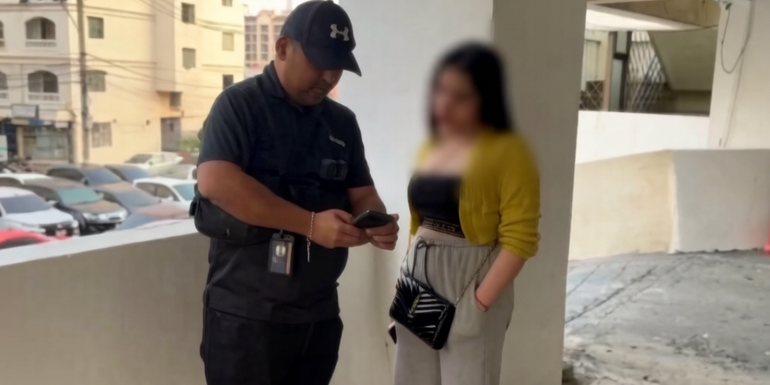
The military officer's family renting out the warehouse, using mule accounts as a key link
Police investigations show that the ownership of the warehouse is quite sensitive—it is held by a Cambodian military officer and his family, and after being rented out, it became a transit station for international money laundering. The criminal gang recruited mule account holders to remotely control banking apps for fund transfers, which were then dispersed through multiple accounts to evade law enforcement tracking. This money laundering method, commonly known as "running points," has long been a standardized operation in the Southeast Asian cross-border online gambling and telecommunications fraud industry chain. Due to its geographical adjacency, regulatory gaps, and frequent personnel movements, the Thai-Cambodian border area has gradually become a hotbed for such criminal activities.
The court has issued arrest warrants for 15 suspects, eight of whom have been successfully apprehended, while the remaining seven fugitives have been identified by the police. The Anti-Cybercrime Center stated that the scope of the investigation will continue to expand, aiming to completely sever this complete crime chain from online gambling platforms to money laundering.
Enhanced border law enforcement cooperation, transnational criminal networks facing encirclement
The special aspect of this operation lies in the potential connection between the involved warehouse and Cambodian military personnel, undoubtedly increasing the sensitivity and complexity of cross-border law enforcement. Although the Thai police did not disclose whether the Cambodian side directly participated in the joint operation, they emphasized that they have obtained information on several core members of the transnational organization. Sa Kaeo Province, as an important land port on the Thai-Cambodian border, has long faced multiple governance pressures from illegal immigration, human trafficking, and cross-border money laundering.
PASA official website continues to track Southeast Asian gambling law enforcement and cross-border money laundering governance dynamics, noting that the Thai police have recently increased their enforcement frequency in the border area. From the Sa Kaeo warehouse to the previously dismantled online cockfighting and gambling dens, the focus of law enforcement is shifting from urban centers to border areas. For transnational online gambling money laundering networks that rely on border regulatory gaps and mule account systems, this encircling situation is systematically compressing their living space.
————
This article is from "PASA-Global iGaming Leader" gambling industry news channel: https://t.me/pasa_news
Original deep channel for gambling: https://t.me/gamblingdeep
Free data report: @pasa_research
PASA Matrix: @pasa002_bot
PASA official website: https://www.pasa.news