
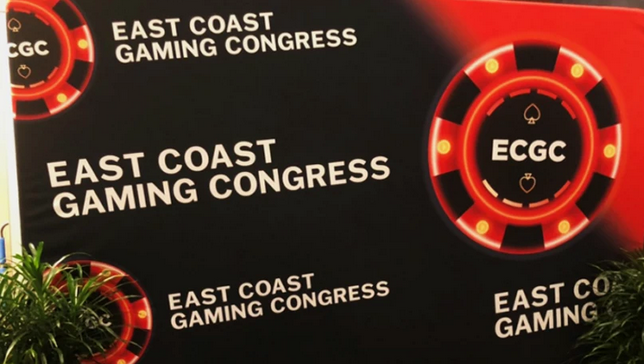
When hundreds of executives, regulators, and two state governors from the American gambling industry gathered at the Hard Rock Casino in Atlantic City, the prediction market became the focal point of the entire East Coast Gambling Congress. From April 14th to 15th, the 29th ECGC, under the theme of industry transformation, crammed top regulators and operators from Nevada, Pennsylvania, New Jersey, Michigan, Florida, and other states into the same conference room. The current Governor of New Jersey, Mickey Sherrill, promised in her keynote speech that the state government would renovate the dilapidated tourist area of Atlantic City, while former Governor Chris Christie, in a fireside chat with Bill Miller, the chairman of the American Gaming Association, directly compared the current regulatory disputes in the prediction market to the six-year lawsuit that overturned PASPA. Christie dropped a significant statement: The acceptance of bets in states that prohibit sports betting is a state rights issue, ultimately to be decided by the Supreme Court. During the conference, AGEM became the first organization to receive the ECGC Lifetime Achievement Award, with its CEO Darren Dorsey accepting the award. From the prediction market to artificial intelligence, from enforcement against illegal gambling to the competition between lotteries and casinos, this oldest gambling industry conference in America almost brought all the hot potatoes facing the current East Coast market to the table.
The prediction market becomes the target: Unregulated competitors or derivative innovation?
The prediction market was the most frequently discussed topic in this ECGC educational agenda, with many guests characterizing it as a threat to the survival of the regulated gambling industry. Mike Drescher, chairman of the Nevada Gaming Control Board, and Alex Kane, CEO of Sporttrade, made their positions particularly clear during their joint appearance. Kane insisted that his platform is a peer-to-peer trading market, no different in logic from traditional commodity futures. Drescher directly peeled off this rhetorical coat: Betting money on the uncertain outcome of a sports event is gambling, and the flowery language of the prediction market does not change its essence, and there is no KYC, no anti-money laundering, no responsible gambling safeguards.
Eric Shippers, Senior Vice President of Pennsylvania Entertainment, added even more sharply. He cited a poll from the Las Vegas Review-Journal, stating that 81% of the public could recognize this as gambling at a glance. His words were quite harsh—competing with someone who doesn't follow rules, or even has no rules at all, is really difficult. No taxes, no worries about marketing to minors, crazy advertising during March Madness without even a single responsible gambling tip. Shippers also pointed out that these platforms still brazenly take orders in states like Utah that strictly prohibit all forms of gambling. Several guests predicted that prediction results could be transformed into digital modes like Class II slot machines or historical race machines, and the next step would inevitably be the launch of prediction-themed slot games.
Drescher further warned that prediction market companies are using untaxed profits to rapidly build high barriers, intending to grow to a "too big to fail" size before the final Supreme Court decision. Christie added from a generational risk perspective: They market to teenagers, think about what this means for those kids who neither have the financial resources nor the judgment—creating new problems, yet offering no help.
AI from concept to action: A text message boosts participation by 17%
In contrast to the tense atmosphere of the prediction market, the AI topic focused more on the efficiency ledger that has already been implemented. Scott Nicholson, Senior Vice President of Imagine This, demonstrated an AI customer service role named Oliver in the first forum, who could handle 75% of customer inquiries, freeing up staff to engage in higher-value interpersonal interactions. What really perked up the ears of the operators below was the case of the Sun Casino in Tucson, Arizona, shared by Chris Marcello and Michael Grausser, founding partners of First Point Connection. After replacing traditional promotions with AI-driven personalized marketing, the participation in promotional activities jumped by 17%, the theoretical winning odds of participants were 30% higher, and the monthly gambling hold rate increased by 30%. The operation method was not complicated—a call from AI during the activity week and a customized language text message reminder on the day of the activity broke the stubborn problem of traditional email invitations easily sinking into oblivion. Nicholson summed it up straightforwardly: In this era, not maintaining continuous communication is equivalent to being invisible.
PASA official website continues to track the global gambling industry's technology applications and regulatory dynamics, noting that the agenda design of ECGC itself is telling a story of the industry. When traditional casinos face the pressure of new licenses in downstate New York, a referendum in North Jersey, and a three-dimensional squeeze from illegal platforms, AI cost reduction and efficiency increase, lottery cross-industry cooperation, and refined operation of self-exclusion tools are becoming three breakthrough paths in the era of stock competition. Kevin O'Toole, Executive Director of the Pennsylvania Gaming Control Board, revealed a set of data that is quite explanatory: 5.5% of online gambling accounts in the state (over thirty thousand people) have used self-exclusion or self-limiting tools. Kurt Stankamp, Chief of Staff of the Michigan Gaming Control Board, shared the phased results of over 250 cease and desist orders, calling it a good start in combating illegal gambling.
Atlantic City's self-rescue and the handshake with the lottery
The conference's closing forum brought the camera back to the real predicament of the East Coast. George Goldhoff, President of Hard Rock Atlantic City and Chairman of the New Jersey Casino Association, and Mark Giannantonio, President of Resorts, jointly outlined a self-rescue roadmap for Atlantic City: public-private partnerships to demolish abandoned buildings, add supporting facilities, and truly turn this gambling city into a destination resort that has been delayed for decades. Giannantonio even gave a bold expectation—the market could still grow by 30% to 40%. Kevin Jones, Chief Strategy and Legal Officer of Genting Americas, tried to downplay the impact of new casinos in downstate New York on Atlantic City, stating that Genting New York City mainly penetrates the local clientele of Queens and Brooklyn, with Manhattan still being an unopened market.
The relationship between lotteries and casinos was also redefined at this conference. James Carey, Executive Director of the New Jersey Lottery, stated outright that lotteries are transactional, while casinos are experiential, and the two do not interfere with each other. Michael Pollock, Senior Policy Advisor of Spectrum Gaming Group, went a step further, proposing the idea of incorporating lottery spending into the casino membership points system—accumulate points by buying lottery tickets, and redeem rewards at the casino. Former Arkansas Lottery Director Bishop Woosley brought up the case of DraftKings acquiring the lottery courier service Jackpocket, pointing out that it was sports betting players who casually bought lottery tickets, not the other way around. However, Paul Sternberg, Vice President of Allwyn UK, also timely threw a bucket of cold water: the prediction market is the biggest threat to the lottery, data shows that players reduce lottery spending after encountering the prediction market.
From Christie's six-year PASPA lawsuit memories to Drescher's warning about the prediction market growing too big to fail, from Oliver's customer service robot's 75% problem-solving rate to Atlantic City's 30% to 40% growth vision, the 29th ECGC left not answers, but a complete anxiety list of the East Coast gambling industry at the crossroads of transformation.
————
This article is from "PASA-Global iGaming Leaders," a gambling industry news channel:https://t.me/pasa_news
Original deep gambling channel:https://t.me/gamblingdeep
Free data report: @pasa_research
PASA Matrix: @pasa002_bot
PASA official website: https://www.pasa.news