
The situation in the Middle East remains tense, and global fuel prices continue to climb, with the shockwave of oil prices visibly permeating every economic corner of the Philippines, and the gaming industry is no exception. Alejandro Tengco, Chairman and CEO of the Philippine Amusement and Gaming Corporation, candidly stated at the 34th "Manila Night" industry networking event on April 14 that the rising energy costs are gradually eroding the industry's profit margins. From operators to service providers, players across the entire supply chain are clearly feeling the pressure. He used a very vivid term—"chain reaction": as fuel prices rise, transportation costs increase, the pace of business activities slows down, and eventually, these variables will gradually reflect on the customer flow, operational efficiency, and overall revenue of gaming venues. In his words, this round of the oil price crisis has almost swept the global gaming industry, with mature markets like Singapore, Macau, and the United States also gritting their teeth and bearing it, with no one able to escape unscathed.
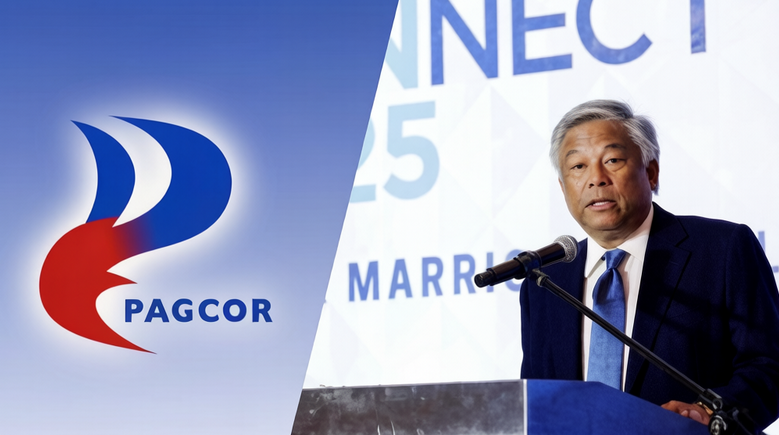
Energy bills devour profits, the gears of the industry chain no longer smooth
Tengco's assessment is not an exaggeration. The impact of rising oil prices on the gaming industry is multidimensional: on one hand, casino resorts are major energy consumers, with daily operating costs of hotel rooms, dining facilities, and entertainment venues rising with electricity and fuel costs; on the other hand, rising transportation costs directly increase the travel threshold for tourists, meaning a marginal shrinkage in customer flow for the Philippine gaming market that relies on international and regional sources. A more subtle impact lies in consumer psychology—when oil price news dominates headlines daily, ordinary consumers' wallet expectations become conservative, and the willingness to gamble at the tables inevitably discounts.
It is worth noting that this pressure does not only stay at the level of large gaming operators. As costs gradually pass down, equipment suppliers, technology service companies, catering partners, and even local small and medium enterprises tied to gaming properties, are beginning to feel the pinch. Some describe the current state of the industry as if the gears have been quietly added resistance—they are still turning, but obviously not as smoothly as before. Tengco's prescription is to strengthen internal communication and cooperation within the industry, maintaining contact and sharing information between companies, at least to stabilize their footing under pressure, rather than fighting each other and disrupting their own formations.
PASA official website continues to track the changing operational environment of the Asia-Pacific gaming market, noting that this round of energy cost impact is becoming a test stone for the risk resistance of various gaming properties. Operators with a better energy structure, shorter local supply chains, and higher diversification of customer sources show significantly stronger resilience in the cost storm.
Regulation and operation separation: PAGCOR structural reform is imminent
In addition to coping with external oil price shocks, PAGCOR itself is also standing at a crossroads that may rewrite the industry landscape. Tengco revealed at the event that the Philippine Governance Committee is currently reviewing a proposal to separate PAGCOR's regulatory functions from its commercial operational functions. This plan, known as "splitting," once implemented, means that PAGCOR will no longer play the dual roles of referee and player—regulatory powers will be returned to an independent supervisory body, and commercial assets may move towards privatization.
Tengco mentioned that there is not a small amount of support for this scheme, but the final outcome still awaits the Governance Committee's decision. If the privatization process truly starts, the competitive landscape of the Philippine gaming industry may welcome a profound reshuffle. For international gaming capitals that have long coveted the Philippine market, the divestiture of PAGCOR's commercial assets is undoubtedly an attractive piece of cake; but for local small and medium operators accustomed to the current regulatory pace, rewriting the rules means adaptation costs and a new round of uncertainty.
From a broader perspective, PAGCOR's structural reform and the oil price shock are not two parallel lines. When external environmental variables increase and industry profit margins are compressed, the efficiency and positioning of regulatory bodies themselves become even more critical. A PAGCOR that sheds commercial burdens and focuses on rule-making and compliance supervision may better help the Philippine gaming industry find ballast in the storm. Tengco particularly emphasized in his statement that no matter how the structure adjusts, the bottom line of implementing the "responsible gaming" principle will not be loosened—this is both a reassurance to the market and a legitimacy endorsement for regulatory reform.
————
This article is from "PASA-Global iGaming Leaders," a gaming industry news channel: https://t.me/pasa_news
Gaming original depth channel: https://t.me/gamblingdeep
Free data report: @pasa_research
PASA Matrix: @pasa002_bot
PASA official website: https://www.pasa.news