
Resorts World Sentosa in Singapore sent a rather pragmatic signal to shareholders on the eve of the annual general meeting: short-term performance is inevitably bumpy, but the long-term foundation remains solid. Faced with a financial report showing a decline in revenue from SGD 2.53 billion (about USD 1.87 billion) to SGD 2.45 billion (about USD 1.81 billion), and net profit shrinking from SGD 578.9 million (about USD 428 million) to about SGD 390 million (about USD 289 million), as well as a decrease in gambling revenue by about SGD 100 million, a drop of about 6%, the company explained that the normal fluctuations in betting hold percentage and customer mix inherently come with ups and downs, and simple comparisons across different periods can be misleading. Meanwhile, a sharp question thrown by the shareholders added some fireworks to the discussion: next door, Marina Bay Sands saw a 52% surge in gambling revenue in the fourth quarter of 2025, raking in USD 1.2 billion in a single quarter. Being in the same Singapore, why is there such a big difference?
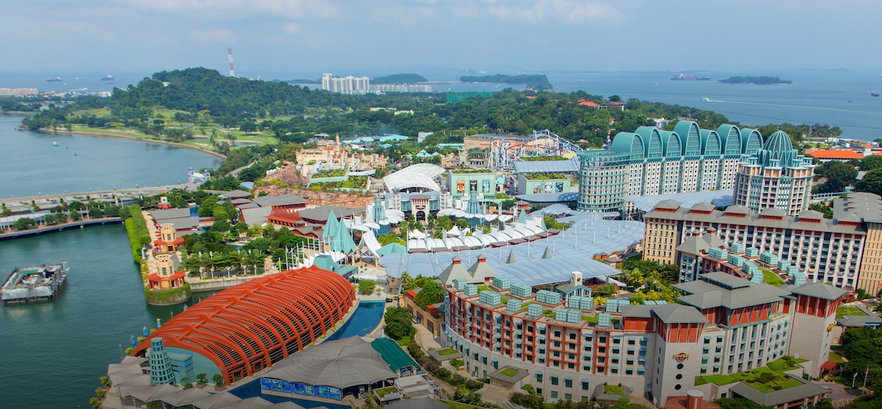
Official interpretation of short-term fluctuations: Luck and customer demographics are variables
Regarding the decline in financial data, Resorts World Sentosa attempted to bring external expectations back to industry common sense in a written response. The company pointed out that the short-term performance of the gambling business is subject to the natural swings of two core variables: one is the betting hold percentage, which simply refers to the casino's "luck" during a specific period; the other is the structure of the customer base, where the consumption intensity varies significantly among different levels of players. The company emphasized that cross-period comparisons need to be understood in this context and not to rush to sound the alarm upon seeing numbers fall.
However, explanations alone are clearly not enough to completely dispel market concerns. The company also brought up its ongoing asset upgrade plan and measures to strengthen operational discipline, trying to prove that the current investments are aimed at achieving more enduring performance resilience. The RWS 2.0 renovation project was once again brought to the forefront, a combination aligned with Singapore's national tourism strategy, characterized by the board as the core chip to cope with the next round of license assessments.
The lingering effects of a two-year temporary suspension: The progress of renovations determines the renewal quality
In February this year, the Singapore Casino Regulatory Authority locked the license renewal of Resorts World Sentosa for two years instead of the usual three, a decision that sparked considerable discussion among investors. Resorts World Sentosa directly addressed this sensitive issue, attributing the temporary suspension to the operational performance impact during the assessment period due to the pandemic. The company stated that since then, it has fully advanced the RWS 2.0 transformation and maintained close communication with the regulatory authorities, with the board "continuously overseeing the management's implementation of improvement measures" and judging that the group is in a favorable position for the next assessment cycle.
PASA's official website, while tracking the renewal cases of integrated resort licenses in Asia, observed that the Singapore regulatory authorities are continuously increasing the weight of non-gambling amenities and tourist attractions, with the license duration and the fulfillment of renovation commitments directly linked as a trend. For Resorts World Sentosa, license renewal is no longer a routine stamping matter but a test that requires real investment.
The Middle Eastern powder keg and the hedge against long-term confidence
In addition to internal license pressures, external geopolitical variables are also included in Resorts World Sentosa's risk list. The company explicitly stated that it is closely monitoring the evolution of conflicts in the Middle East, as they may affect international travel flows, cost environments, and overall macro sentiment. However, the company also admitted that the current situation is too variable, and it is not wise to draw conclusions prematurely, only to remain vigilant and ready to respond at any time.
From a longer time perspective, Resorts World Sentosa is betting its confidence on three pillars: a diversified integrated resort business model, a robust financial foundation, and Singapore's national credit as a safe, accessible hub. These three elements form a cushion that the company sees as a moat to withstand external storms. After all, in the gambling industry, one must be able to withstand short-term ups and downs and also have reserves for dealing with black swan events.
————
This article is from "PASA-Global iGaming Leaders," a gambling industry news channel:https://t.me/pasa_news
Original deep channel for gambling:https://t.me/gamblingdeep
Free data reports: @pasa_research
PASA Matrix: @pasa002_bot
PASA official website: https://www.pasa.news