
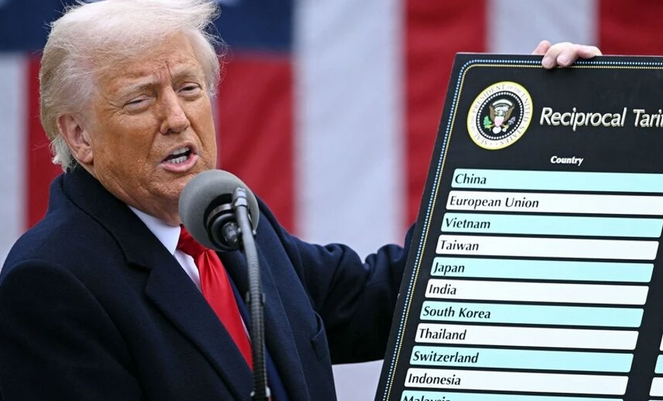
On April 2nd a year ago, former U.S. President Trump announced a comprehensive tariff policy adjustment known as "Liberation Day," which shook the global trade system. A year later, the gambling industry suppliers are still feeling the pressure from the capricious tariffs and their chain effects. According to the Council on Foreign Relations, on the day of "Liberation Day," the average effective tariff rate in the U.S. soared to 22.5%, the highest since 1909. However, a week later, Trump postponed the implementation for 90 days to negotiate a new agreement, and throughout the year, there were multiple announcements and withdrawals, humorously referred to by Wall Street as "TACO trade" (Trump Always Chickens Out). In February this year, the U.S. Supreme Court ruled these tariffs unconstitutional, as the International Emergency Economic Powers Act did not grant the president such broad discretionary powers. Frankly speaking, this year's policy roller coaster has made it impossible for suppliers to make long-term plans.
Association of Equipment Manufacturers: Efficiency and dynamics become key words, refund prospects unclear
Daron Dorsey, CEO of the Association of Gaming Equipment Manufacturers, stated that last October, "no one was making long-term strategic decisions," and although the situation has improved, it is not a "substantial" improvement. Everyone is trying to be more efficient and flexible, realizing that they must face uncertainty, change, and disruptions. After the Supreme Court's decision, manufacturers are most concerned about the issue of tax refunds. Yale University's Budget Laboratory estimates that the repealed IEEPA tariffs generated about $165 billion in revenue, but there is almost no guidance on how to refund these. A tariff survey released by KPMG in March showed that 62% of respondents "expect" to receive a refund, but only 28% plan to "actively pursue" it, with more than one-third (37%) believing that "legal costs may exceed potential refunds." AGEM has been trying to provide information resources to its members, letting them know they are not alone.
Supplier stock performance diverges, forecasting market becomes new threat
The AGEM Index tracks the performance of nine member stocks, with a March reading of 1472, down 9% from March 2025 (a month before Liberation Day). Notably, since April last year, the index steadily grew to a high point of 1983 in August, then continued to decline. Meanwhile, the S&P 500 rose 16%, the Dow Jones increased by 10%, and the Nasdaq grew by 23%. Among the three major suppliers, Aristocrat's stock price has fallen 19% since last April, Light & Wonder has remained stable, and IGT has been privatized by Apollo Global Management. Industry insiders say that the direct impacts of the 2025 tariffs have mostly been offset, but buyer hesitation might prevent suppliers from making significant changes. At the same time, the rise of the forecasting market is seen by the industry as unlicensed gambling, having drawn more than $730 million in potential state taxes from sports event contracts. The valuations of Kalshi and Polymarket have soared to about $20 billion, comparable to Aristocrat's current market value. For more global gambling supply chain dynamics, continue to follow PASA official website.
————
This article is from "PASA-Global iGaming Leaders," a gambling industry news channel: https://t.me/pasa_news
Original in-depth gambling channel: https://t.me/gamblingdeep
Free data reports: @pasa_research
PASA Matrix: @pasa002_bot
PASA official website: https://www.pasa.news