
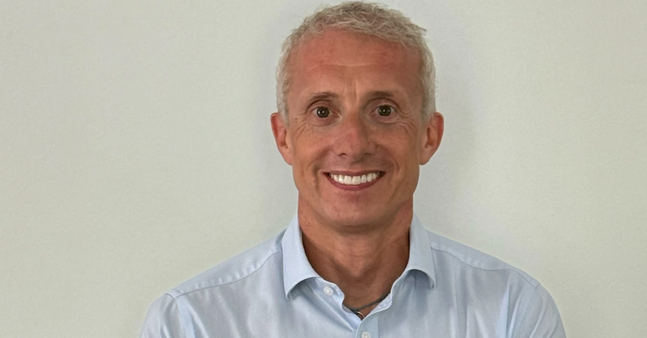
Last September, Stefan Tweraser officially became the CEO of the German lottery brokerage company Zeal, with a career that spans across various fields: from e-commerce and consulting to rocket spacecraft engineering, and now he has entered the highly regulated gambling industry. In a recent interview with iGB, Tweraser shared how he has translated the "strict regulation" experience from the rocket manufacturing field into the lottery business, and believes that appropriate regulation can actually be an "accelerator" for innovation. Before joining Zeal, he was responsible for building satellite launch rockets at the Augsburg rocket factory, which was also a highly controlled environment. He frankly said that rockets and lotteries seem to be completely unrelated, but the logic of regulation is actually the same.
Regulation is the framework for innovation, not a shackle
Tweraser stated that the most important lesson learned in the rocket industry is: if regulation is applied properly, it can provide clear boundaries for innovation—it defines where you can innovate and where you cannot compromise (such as safety). At Zeal, this directly corresponds to areas like responsible gambling. "I firmly believe that regulation is the driving force for correct innovation," he told iGB, "Without regulation, innovation can easily be skewed by short-term tactics or dubious practices. Strong and continuous enforcement of regulation can create a fair competitive environment, allowing companies to focus on what really matters: creating value for customers." Zeal's board of directors valued his deep understanding of regulated industries and his ability to operate highly scalable digital platforms when looking for a CEO.
The common ground between e-commerce and lotteries: dealing with demand surges
Before the rocket factory, Tweraser served as an executive at the independent music platform Deezer and also worked at Google and Austrian Telecom. These e-commerce experiences gave him a more direct grasp of Zeal's overall strategy—Zeal is positioning itself beyond just gambling products. "That kind of experience directly applies to Zeal, because during periods of large jackpots, demand can spike significantly in a very short time," he said, "Managing this dynamic—whether in terms of technology or customer experience—requires a different way of thinking than the more predictable e-commerce models." He admitted that before delving into the industry, he "underestimated the appeal of the gambling industry." "What really attracted me was the ability to operate across the entire value chain," he added, "How our product team translates this understanding into differentiated products is impressive."
Zeal FY25 performance exceeds expectations, lottery growth potential remains large
In March this year, Zeal announced its FY25 financial results: annual revenue reached 218 million euros, a 16% increase year-over-year, exceeding the previously forecasted range of 205 million to 215 million euros. EBITDA was 68.8 million euros, reaching the upper limit of expectations. The company stated that this growth was achieved in a "weak jackpot environment" in 2025. Tweraser is very optimistic about the prospects of the lottery industry. "At first glance, the lottery category might seem a bit traditional," he said, "but in reality, few products offer people even a brief opportunity to 'dream big.' If positioned and communicated properly, I believe this category can be very attractive." Zeal plans to continue increasing marketing investments at a rate faster than revenue growth and seeks further expansion in the lottery sector outside of Germany. For more insights from gambling industry leaders and market dynamics, continue to follow PASA official website.
————
This article is from "PASA-Global iGaming Leaders," a gambling industry news channel: https://t.me/pasa_news
Original in-depth gambling channel: https://t.me/gamblingdeep
Free data reports: @pasa_research
PASA Matrix: @pasa002_bot
PASA official website: https://www.pasa.news