
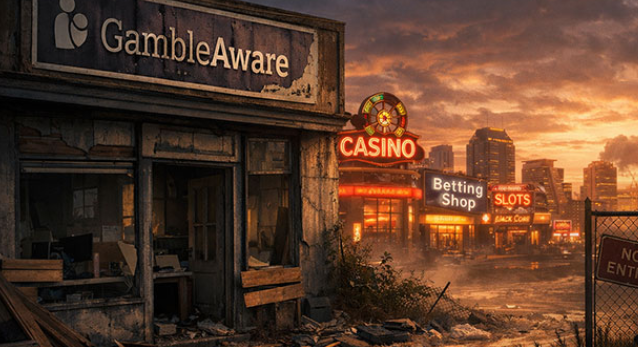
On March 31, GambleAware officially closed, marking a significant shift in the way the UK handles gambling-related harms. This organization, which had been operating for over twenty years, ceased its activities, transferring its responsibilities to a new system led by public agencies. This change stems from a new system of statutory taxation imposed on gambling operators, moving away from the previous reliance on independent charities to distribute voluntary donations. Under the new framework, funding, oversight, and service delivery are directly incorporated into the national management structure. Frankly speaking, the move from voluntary donations to compulsory taxation is a big step.
New Tax System: Mandatory Collection, Public Agencies Each Playing Their Role
The new system introduces a mandatory financial contribution from gambling operators, with tax rates set between 0.1% and 1.1% of total gambling revenue. These funds will be allocated to research, prevention, and treatment of gambling harms. Public agencies have clear responsibilities in the new structure: UK Research and Innovation is responsible for research funding, the Office for Health Improvement and Disparities handles prevention, NHS England is in charge of treatment services, and the Department for Digital, Culture, Media and Sport oversees the overall supervision. This replaces the previous model guided by charities like GambleAware in directing industry donations. Policymakers had expressed concerns about transparency and accountability in the old arrangement. The new model centralizes financial control and connects gambling harms with the broader public health system. It is expected that approximately £120 million in operator donations will be distributed under the new framework.
Transition Period Chaos: Risk of Service Disruption and Industry Concerns
The transition has not been smooth. Decisions on funding for treatment services were communicated shortly before the new system took effect, leaving organizations with very limited response time. Some established charities failed to secure funding under the new framework, creating uncertainty about service continuity. The government has introduced a stability fund to support affected organizations in the short term, helping them manage personnel, refer cases, and explore alternative funding sources. Multiple stakeholders have expressed concerns about the process and its impact on individuals seeking help. Jordan Lea, CEO of the Welsh harm charity Deal Me Out, said: "This is completely chaotic and unprofessional, putting service users at risk. It's not a good start for the new system, nor a good sign. It's unbelievable." Other treatment service providers reported not knowing how to guide individuals needing support. A source described: "What worries me today are those who call. What can you do for those on the brink of crisis? Say 'we can't help you, go elsewhere'—and actually not knowing where 'elsewhere' is—that's terrible." Another added: "We don't know where to direct people... When the news came yesterday close to five o'clock, I felt very discouraged." These responses highlight the industry's uncertainty in adapting to the new funding structure.
Legacy and Controversy of GambleAware
GambleAware has played a central role in addressing gambling harms in the UK, especially since becoming the main commissioning agency for treatment and research services in 2018. It also helped establish a national gambling support network, which has supported over 110,000 people. The organization helped build a framework connecting operators, treatment providers, and public health initiatives. However, its reliance on voluntary industry funding also attracted criticism, raising questions about independence and oversight. The charity had advocated for statutory taxation, although the final system differed from its supported model. Its closure reflects external policy changes and internal positioning adjustments during the transition. The shift to a government-led system leaves behind a hybrid structure that once combined private funding with independent distribution.
Increased Industry Pressure: Synchronous Increase in Remote Gambling Tax
These changes occur as the gambling industry faces broader financial pressures. From April 1, the remote gambling tax increased from 21% to 40%, adding more cost considerations for operators already adapting to the new tax. Economic conditions also play a role. Rising living costs may increase the demand for support services, putting additional pressure on the newly constructed system to provide consistent access and care. Some stakeholders question whether public agencies can replicate the coordination previously provided by established charities. How services are delivered, how funding decisions are managed, and whether gaps will appear in the early implementation are still concerns. An industry observer commented: "Honestly, I can't see how this works strategically. You look at all this on the surface, then ask one question: What exactly are they commissioning?" For more updates on UK gambling regulation, keep an eye on PASA's official website.
————
This article is from "PASA-Global iGaming Leaders," a gambling industry news channel:https://t.me/pasa_news
Original deep channel for gambling:https://t.me/gamblingdeep
Free data reports: @pasa_research
PASA Matrix: @pasa002_bot
PASA official website: https://www.pasa.news