
While the Belgian Gaming Commission's investigation into former star Hazard's endorsement of Stake is ongoing, Australia, the UK, the Netherlands, and Germany are also advancing their respective gambling advertising restrictions. Although the regulatory paths differ, a common trend is clearly visible: gambling advertising is facing unprecedented tightening globally, with sports marketing being the first to be hit, and the boundaries of responsibility for athletes and clubs are being redrawn. To be honest, the days when gambling ads were everywhere and stars ran around in gambling jerseys are probably over.
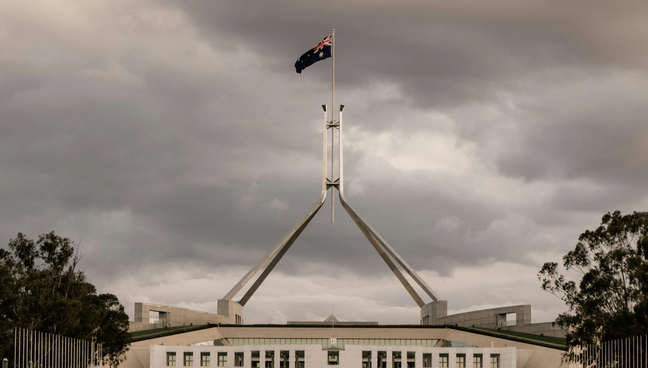
Australia: From 2027, no more gambling logos on fields and jerseys
The Australian government announced the long-awaited gambling advertising reform plan on April 2, 2026, which is the result of nearly three years after the amendment proposed by MP Peta Murphy in 2023. The new regulations will take effect on January 1, 2027, with core measures including: TV ads restricted to a maximum of three per hour between 6 AM and 8:30 PM, with a complete ban during sports events broadcast in that time slot; radio ads are completely banned during school commute times (8-9 AM and 3-4 PM); celebrities and athletes are not allowed to appear in gambling ads; online platform gambling ads are limited to logged-in users who are over 18 and offer an opt-out option; gambling ads in sports venues and on uniforms of players and officials will be completely banned. The government will also crack down on illegal offshore gambling sites and ban more types of online gambling, such as Keno and apps modeled after slot machines.
Prime Minister Albanese emphasized that this reform is about "striking the right balance"—allowing adults to gamble if they wish, but ensuring that Australian children do not see betting ads anywhere. However, the industry reaction is strong. Kai Cantwell, CEO of Responsible Gambling Australia, called these measures "too harsh," warning that this might push Australians towards illegal offshore betting. Advocates for a complete ban are equally dissatisfied, arguing that "three ads per hour" is not enough, and the Australian Medical Association also pointed out that "partial bans do not work." It is worth noting that Australians have the highest gambling losses per capita in the world, which is perhaps an important reason why the government finally decided to take decisive action.
UK: Banning gambling sponsorship on the front of jerseys, next step to plug the "unlicensed sponsorship" loophole
The UK has taken another path in gambling ad regulation, focusing on cutting off the sponsorship ties between gambling operators and sports clubs. The 2025/26 season will be the Premier League's "last gambling jersey" season—11 of the 20 teams will remove the gambling sponsor logos from the front of their jerseys before the 2026/27 season. Currently, gambling brands contribute about 95 million pounds annually to the Premier League's sponsorship income, accounting for 23.3% of the total market value of 408 million pounds on the front of jerseys.
On February 23, 2026, the UK government announced the launch of a consultation aimed at completely banning unlicensed gambling operators from sponsoring British sports institutions. Culture Secretary Lisa Nandy explicitly stated: "It is inappropriate for unlicensed gambling operators to sponsor some of our biggest football clubs; this increases their visibility and may attract fans to those websites that do not meet our regulatory standards." This proposal goes further than the Premier League's voluntary ban, covering sleeve cuffs, training jerseys, stadium branding, and all other promotional channels. Currently, several Premier League clubs, including Bournemouth, are still using the unlicensed gambling brand BJ88, supported by white-label operator TGP Europe, as a sponsor, while TGP Europe has exited the UK market due to regulatory actions. The industry, including the Gambling and Betting Commission, publicly supports the government's stance, believing that "if operators want visibility and credibility in English football, they should meet the high regulatory standards of the UK."
Belgium: From the Hazard investigation, see the regulatory boundaries of "personal responsibility"
Back to Belgium. The Belgian Gaming Commission's investigation into Hazard's endorsement cooperation with Stake reveals a dimension of gambling ad regulation that has been long overlooked—the personal responsibility of athletes as promoters. Belgian law explicitly prohibits individuals from advertising or facilitating gambling services known to be unlicensed in Belgium, with violators possibly bearing personal responsibility. This scope of responsibility is not limited to operators but includes promoters—athletes are certainly among them. This explains why Hazard is under investigation: although he may not be aware of Stake's licensing status in Belgium, the law does not use "ignorance" as an excuse for exemption.
The situation in Belgium is not unique. Italy, Spain, and other countries have already implemented comprehensive or near-comprehensive bans on gambling ads, and the enforcement logic of the Belgian Gaming Commission is having a broader impact. If the Hazard case is ultimately ruled as a violation, it will send a clear signal to athletes worldwide: before endorsing, please check whether the platform you endorse is legal in the market you are targeting.
Netherlands: Comprehensive advertising ban proposal and the "efficiency battle" of the regulatory layer
The regulation of gambling ads in the Netherlands is experiencing a "tug-of-war". The opposition parties SP and ChristenUnie have jointly proposed a parliamentary bill calling for a comprehensive ban on online gambling ads, while strengthening the national self-exclusion registry, extending the minimum exclusion period from 6 months to 12 months. Data shows that in the past 12 months, young adults aged 24 to 35 were exposed to 342 million gambling ad impressions, with licensed operators posting 862 million ad impressions on Facebook and Instagram. More worryingly, on Meta platforms, four unlicensed websites displayed 500,000 ads to users aged 18 to 24. However, Michel Groothuizen, chairman of the Dutch Gambling Regulatory Authority, publicly opposes a comprehensive advertising ban, arguing that "an advertising ban only affects legal supply," and with about 60,000 gambling ads on social media platforms each month, 58,000 come from illegal providers, banning legal ads might instead foster the illegal market.
Germany: The 2026 assessment report will determine the direction of advertising regulation
Germany is at a critical policy evaluation point. The advertising clauses in the "2021 Interstate Gambling Treaty" will undergo a scientific assessment in 2026, with the core question being: Do strict advertising restrictions really reduce the risk of addiction? Or do they counterintuitively push players towards the black market? Germany's current regulatory system includes complex rules: TV and online ads for online casinos and virtual slot machines are banned between 6 AM and 9 PM; active athletes or internet celebrities are not allowed to be the face of sports betting ads. The assessment will also analyze dimensions such as search engine visibility, brand awareness, consumer education, and focus on the "gray area" of membership marketing.
Comparative summary: Different paths, same destination
Observing the policies of the five countries side by side, it is not difficult to see the differences and commonalities in regulatory thinking. In terms of regulatory methods, Australia takes a comprehensive restriction route, covering everything from TV time slots to fields and jerseys; the UK focuses on the sponsorship field, blocking unlicensed operators from accessing sports clubs; Belgium emphasizes enforcement intensity and personal responsibility of athletes; the Netherlands swings in political games, facing resistance from the regulatory layer to the comprehensive ban proposal; Germany is waiting for answers in the 2026 assessment. The impact on athletes and the sports industry, all five countries show a tightening trend—Australia directly bans celebrities from appearing; the UK plugs unlicensed sponsorship loopholes; Belgium releases personal responsibility signals through the Hazard case; the Netherlands faces increased pressure on social media ad control; Germany's athlete endorsement rules are already written into law.
The countries also face common challenges—the risk of the black market. Australian operators warn that "over-regulation will push gamblers towards unprotected black markets"; UK regulators are also concerned that sponsorship by illegal operators may lead consumers to unlicensed websites; the German assessment will specifically study whether advertising restrictions "directly push players intending to switch markets to black market supply." Finding a balance between protecting minors, reducing gambling harm, and maintaining the competitiveness of the legal market will be a common question that all regulators must answer. For more global gambling regulation updates, stay tuned to PASA's official website.
————
This article is from "PASA-Global iGaming Leaders," a gambling industry news channel:https://t.me/pasa_news
Original deep channel for gambling:https://t.me/gamblingdeep
Free data reports: @pasa_research
PASA Matrix: @pasa002_bot
PASA official website: https://www.pasa.news