
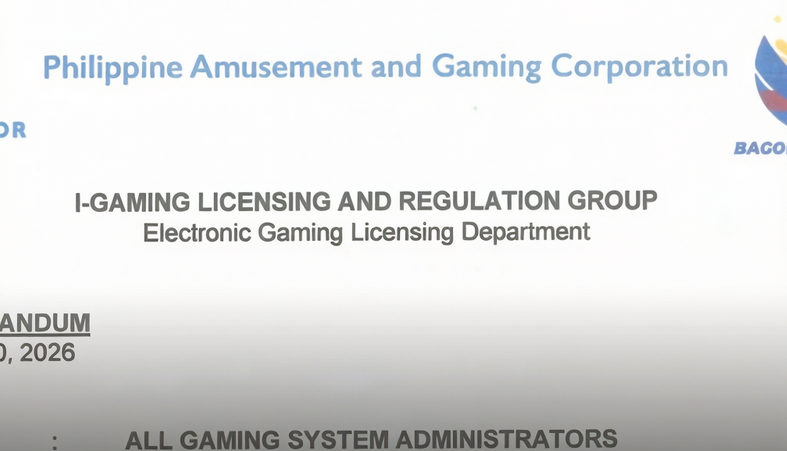
The Philippine Amusement and Gaming Corporation (PAGCOR) recently announced that the implementation of the minimum guarantee fee policy for electronic gaming system administrators, originally scheduled for April, has been postponed to June 1. This decision was made after the board meeting on March 26, mainly considering the "current severe economic situation," providing the industry with a two-month buffer period. Frankly speaking, PAGCOR's flexibility this time indicates that the regulators also realize that pushing the fees might corner small and medium-sized operators. According to the latest arrangement, from June 1 to December 31 this year, a minimum guarantee fee will be charged monthly to some electronic casinos GSA. Operators with a total monthly gaming revenue of at least 30 million pesos will have an MGF of 9 million pesos; operators with at least 15 million pesos will have an MGF of 3 million pesos. Starting from January 2027, the MGF standards will be further adjusted, with both the revenue threshold and fees slightly increased.
Two-month buffer period, regulators reassess
PAGCOR states that during this two-month delay, its electronic gaming licensing department will conduct a comprehensive assessment of the industry's current status to decide whether to continue, adjust, or cancel the MGF policy, ensuring that the policy aligns with the long-term sustainable development goals of the gaming industry. This postponement also responds to all previous requests for an extension of the MGF implementation. Simply put, the regulators are listening to the industry's voice and giving themselves some leeway.
It is worth noting that PAGCOR had already announced in mid-December last year that all licensed GSAs were originally required to pay the MGF as a fixed monthly fee starting from April this year, regardless of actual income. This policy involved 65 licensed operators in the Philippines, but industry data analysis shows that only about 25 operators' monthly GGR could reach 30 million pesos, enough to cover this minimum guarantee fee. This means that if the original policy had been implemented on time, more than 60% of the operators would have faced a financial shortfall.
Flexible adjustments, balancing regulation and survival
This delay undoubtedly provides some breathing space for electronic gaming operators and reflects the regulators' flexible strategy in finding a balance between economic pressure and the actual situation of the industry. Looking at the specific charging thresholds, PAGCOR has adopted a tiered design: the first tier targets large and medium-sized platforms with a monthly GGR of over 30 million pesos, charging a fixed monthly fee of 9 million pesos; the second tier targets medium-sized platforms with a monthly GGR between 15 million and 30 million pesos, charging 3 million pesos. This tiered fee system is much more reasonable than the previous "one-size-fits-all" approach, at least giving medium-sized operators a chance to survive.
Of course, whether the policy can ultimately be implemented will depend on the assessment results before June 1. If the industry feedback remains strong, PAGCOR may further adjust or even cancel the MGF. For operators, these two months are not only a buffer period but also a critical window for negotiating with the regulators. For more updates on Philippine gaming regulations and compliance interpretations, continue to follow PASA official website.
————
This article is from "PASA-Global iGaming Leaders," a gaming industry news channel: https://t.me/pasa_news
Gaming original depth channel: https://t.me/gamblingdeep
Free data reports: @pasa_research
PASA Matrix: @pasa002_bot
PASA official website: https://www.pasa.news