
Recently, Aichi Prefecture in Japan has issued a proposal request, officially confirming its intention to participate in the bidding for the integrated resort license. This marks another significant movement in Japan's IR process since the first round of bidding in 2023. In the first round, the government originally issued three licenses, but ultimately only received two applications, with only one being successful—the Yumeshima project in Osaka, a collaboration between MGM International and Orix Group, with a total investment of $10.2 billion, which started construction in April 2025 and is expected to open in 2030. Another application submitted by an Austrian casino and Nagasaki Prefecture was rejected due to financial issues. The second round of bidding will open in 2027, with the application period from May 6 to November 5. Honestly, it's been almost a decade since Japan's IR journey began, and finally, there is new movement.
A Decade of Challenges: From Legislation to Pandemic, the IR Process Has Been Anything But Smooth
Since the passage of the "Integrated Resort Promotion Law" in 2016, the legalization of Japan's IR has spanned a decade. In 2018, the Diet enacted specific area planning legislation, and global gaming giants such as Las Vegas Sands, Wynn Resorts, and Melco Resorts expressed interest, with some analysts even calling it "the next Holy Grail of the gaming industry." Optimistic legislators had hoped that the first IRs would open by 2025. However, several factors slowed down the progress: slow government review processes, operators considering casino area restrictions too stringent, and the final blow being the outbreak of the COVID-19 pandemic, which brought everything to a standstill.
In December last year, the newly established Casino Regulatory Commission held a meeting, reigniting hopes for the second round of bidding. More favorably, Japan's new Prime Minister, Sanae Takaichi, is a supporter of IR. She was elected in October last year, a follower of the late former Prime Minister Shinzo Abe, who had vigorously promoted IR to boost tourism and international investment. This political shift has added to the industry's anticipation for the second round of bidding in 2027.
Aichi's Choice of Location: Next to Chubu International Airport, Analysts Call It "Almost Perfect"
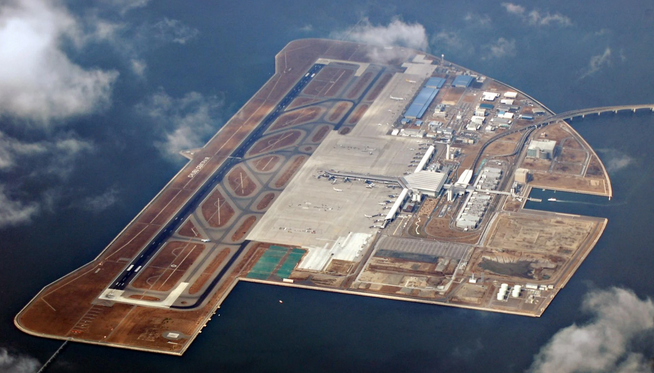
Aichi Prefecture has described its chosen development site as "one of the world's leading industrial clusters, with rich tourism resources in the surrounding area," aiming to create an "international tourism city" centered around conventions. Gaming industry analyst Andrew Klebanow told the media that this location is "almost perfect": Chubu International Airport serves about 20 regional and international destinations, including Hong Kong, Singapore, and the Philippines, with just an 8-minute walk from the baggage claim to the casino site. Behind the development site is a ferry terminal, next to an underutilized convention center, and thousands of similarly underutilized hotel rooms. Another plus is that, since the site is on an artificial island where the airport is located, close to Nagoya City, it is unlikely to encounter local community opposition.
Aichi Prefecture had considered bidding in the first round but gave up due to pandemic complications. In February this year, Governor Hideaki Omura expressed the county's continued interest. According to the Yomiuri Shimbun, he believes that IR can help alleviate the problems of population decline and weak tourism. "We need to make the city more attractive to prevent population outflow," Omura said, "Attracting domestic and international tourists is crucial." Chubu International Airport currently handles 12 million passengers annually, with a target of reaching 20 million by 2030.
Evaluation Criteria and Future Prospects
The local government will use a 1000-point system to evaluate proposals, with specific weights including: contribution to international tourism (450 points), economic and social impact (100 points), operational capability and stability (250 points), utilization of casino revenue (50 points), and mitigation of negative impacts of casino operations (150 points). This scoring framework shows that Aichi Prefecture places more emphasis on the pull of IR on the tourism industry rather than purely on gambling revenue.
As the 2027 application window approaches, whether Aichi can attract strong international operators will be key to standing out in the second round of bidding. For more updates on Japan's IR and global gaming news, continue to follow PASA official website.
————
This article is from "PASA-Global iGaming Leaders," a gaming industry news channel:https://t.me/pasa_news
Gaming original deep channel:https://t.me/gamblingdeep
Free data reports: @pasa_research
PASA Matrix: @pasa002_bot
PASA official website: https://www.pasa.news