
Macau Lijun recently announced its fiscal 2025 results, with an annual loss of up to 1.56 billion Hong Kong dollars (about 199.76 million US dollars), which is basically consistent with the previously released expectations. This figure has increased significantly compared to the loss of 622.63 million Hong Kong dollars in 2024, mainly due to the asset impairment caused by the shutdown of satellite casino operations. At the same time, the company's revenue also slid from 378.32 million Hong Kong dollars in 2024 to 358.62 million Hong Kong dollars. Honestly, such financial performance is quite challenging in the entire Macau gaming industry.
The explanation attached by the independent auditor in the annual report is even more nerve-wracking. The audit opinion clearly points out that there is "significant uncertainty" in Macau Lijun's current financial condition, which may "seriously question the group's ability to continue operating." As of December 31, 2025, the group has a net current liability of about 2.7 billion Hong Kong dollars (about 344.42 million US dollars) after accounting for a loss of 1.56 billion Hong Kong dollars. The total amount of bank and other loans is 2.39 billion Hong Kong dollars (about 305 million US dollars), most of which are either due within 12 months after the reporting period or can be demanded for repayment by the bank at any time.
More specifically:
Due to violation of loan agreements, the group has over 2.05 billion Hong Kong dollars of bank loans that can be demanded for repayment by the bank at any time
And the group's cash and bank deposits balance is only 27.1 million Hong Kong dollars (about 3.46 million US dollars)
This contrast of "being able to be pursued for debt at any time" and "extremely low cash on hand" constitutes the core of the ongoing operating problem
Transformation from gambling: From satellite casinos to non-gambling entertainment
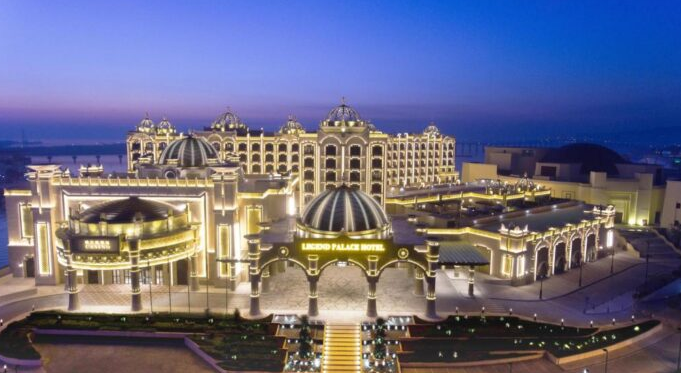
In the annual report, Macau Lijun explains that after terminating the satellite casino service agreement with the gambling licensing company Macau Entertainment, "the group's gambling business has come to an end." However, the company believes that this instead opens "a new chapter"—strategically transforming Macau Fisherman's Wharf into a completely non-gambling related entertainment hub.
Specific transformation measures include:
• Optimizing the facilities of Fisherman's Wharf by "adding maritime entertainment projects to the wharf" to enhance the unique experience of the waterfront complex
• Using multiple venues to host large events, increasing venue usage efficiency
• Implementing a "comprehensive pet-friendly policy" in outdoor areas, expected to attract pet-related shops and host pet-themed events
• Planning to add more sports spaces in the coming quarters to attract participation and drive traffic
Financial pressure and future outlook
Despite the active transformation, financial pressure is still evident. The group currently holds net assets of about 1.47 billion Hong Kong dollars (about 187.52 million US dollars), halved year-on-year. In addition, the company also has a total of about 218.19 million Hong Kong dollars (about 27.83 million US dollars) in property, equipment, and capital commitments for construction projects to fulfill.
From these figures, Macau Lijun is undergoing a difficult transition from gambling to non-gambling. On one hand, it faces the pressure of ongoing operations and debt risks, and on the other hand, it needs to invest funds to promote the non-gambling transformation of Fisherman's Wharf. Whether it can carve out a new path of non-gambling entertainment in Macau's gambling-dominated market remains to be seen.
For more global gambling industry dynamics and financial analysis, continue to follow PASA official website.
————
This article comes from "PASA-Global iGaming Leader" gambling industry news channel:https://t.me/pasa_news
Original deep channel for gambling:https://t.me/gamblingdeep
Free data report: @pasa_research
PASA Matrix: @pasa002_bot
PASA official website: https://www.pasa.news