
The prediction market platform Polymarket will update its fee structure starting March 30, introducing new market rates for sports event contracts, with a peak effective rate set at 0.75%. This means that for a market with a 50% probability, the fee for a $50 transaction will increase from $0.22 to about $0.38. At the same time, the debate over whether mainstream prediction markets will move towards a "zero commission" model is intensifying at the industry's spring conference. In plain terms, the platform is looking to make money, but exactly how fees will be charged is still being explored by various platforms. Want to keep up with the latest business model dynamics of prediction markets? Follow the PASA official website continuously.
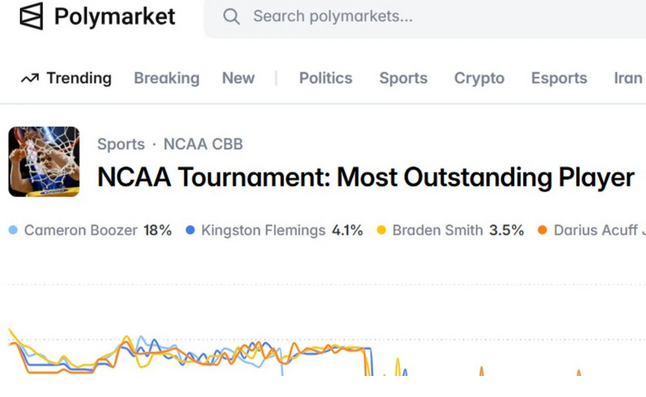
Maker-taker model: Market makers receive rebates, takers pay higher fees
Polymarket's new fee structure relies on the "maker-taker" model common in the high-frequency trading domain. In this model, "market makers" who provide liquidity to the market can receive a 25% rebate (slightly higher than the 20% in cryptocurrency trading), while "takers" pay higher fees for immediate transactions. The platform claims this move aims to incentivize deeper liquidity and narrower spreads. Fees apply only to new markets launched after March 30, using a dynamic pricing mechanism that quickly adjusts asset prices based on market conditions such as liquidity and supply and demand.
Platform fee comparison: Kalshi averages 1-1.5%, FanDuel, Fanatics each have their own approach
Currently, major prediction markets have varying charging models. Kalshi's rates usually range from 0.07% to 7%, averaging 1% to 1.5%. FanDuel Predicts charges 2 cents per dollar of potential earnings. Fanatics Predicts charges per contract from $0.0034 to $0.02 (about 2%). Robinhood's prediction market charges 2 cents per contract (1 cent retained, 1 cent to Kalshi). Market expectations suggest that as giants like DraftKings accelerate their deployment, competition will become increasingly fierce, and some analysts predict that by 2029, the top three prediction market operators will introduce a "zero commission" model.
Professional player strategy: Market maker role becomes a key variable
Professional betting players point out that increasing the fees for takers may push "smart gamblers" to other platforms, leading to a loss of liquidity. In a relaxed environment, almost anyone can become a market maker, and professional players may profit from encounters with inexperienced opponents. Therefore, mainstream prediction markets need to be extra cautious when designing their market-making departments—after all, "most profits come from being the counterparty to entertainment traffic." Want to keep up with the latest business model dynamics of prediction markets? Follow the PASA official website continuously.
————
This article is from "PASA-Global iGaming Leader" gambling industry news channel: https://t.me/pasa_news
Original in-depth gambling channel: https://t.me/gamblingdeep
Free data reports: @pasa_research
PASA Matrix: @pasa002_bot
PASA official website: https://www.pasa.news