
Indiana House of Representatives passed the much-anticipated casino license relocation bill (HB 1038) last week by a vote of 67 to 30, allowing Allen, Steuben, DeKalb, and Wayne counties to compete for a gaming license moving from "Sunrise Town." However, the capital Indianapolis, explicitly listed as "most commercially valuable" in the market research report, was excluded from the list of candidates. Plainly speaking, it's not that they don't want to make the money, but they fear the impact would be too great—a new casino could severely harm the vitality of two nearby horse industry-linked casinos. The bill will enter the Senate Public Policy Committee for review this week, and if it does not pass by the end of February, everything must start over. The dynamic game of North American casino licenses will continue to be closely monitored on the PASA official website.
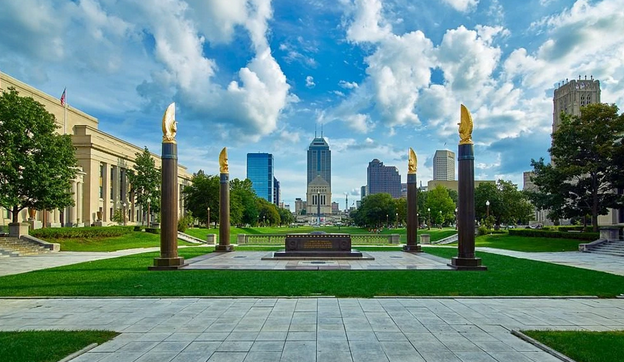
First, why did the capital "miss out" on the license competition?
The origin of HB 1038 is that Nevada operator Full House Resorts has long been trying to relocate its Rising Star Casino Resort license from Sunrise Town to a more promising area. This casino, due to competition expansion nearby Ohio and Kentucky, has consistently been at the bottom of the state's performance rankings.
By 2025, the state legislature passed the SEA 43 bill, commissioning a third party to conduct market assessments on potential relocation sites. The report released last September clearly shows: Indianapolis has the strongest money-drawing capability, but it would significantly erode the existing casinos, especially the two licensed racetracks—Horseshoe Indianapolis and Harrah’s Hoosier Park. They not only offer gambling but also support the entire Indiana horse industry. In contrast, the Fort Wayne area, though slightly less profitable, has much less competitive impact, thus becoming the "safe choice" for legislators. Allen, Steuben, and DeKalb counties are all located in this area, along with Wayne County independently entering the competition, all four will vie for the same license.
Second, the casino relocation process and thresholds: $500 million investment + $50 million fee
HB 1038 sets a clear framework for the relocation process:
•Bidding eligibility: All four counties can propose plans, besides the license holder Full House, operators of the state's existing 13 casinos also have the right to participate in the bidding.
•Local endorsement: The site selection plan must be supported by the local mayor and county council, but no referendum is required—this contrasts sharply with Indiana's tradition where all casino projects must be approved by voters.
•Final decision: The Indiana Gaming Commission must determine the winner by April 15, 2027.
•Financial threshold:
If Full House does not win, the successful bidder must purchase Rising Star at a fair market price assessed by the commission;
An additional $50 million relocation fee is required, payable over five years;
The minimum capital investment for new development projects is $500 million.
This "high-cost entry" mechanism ensures steady state revenue and filters out underqualified bidders.
Third, unresolved compensation issues, bill still uncertain
The biggest controversy of the bill lies in the compensation scheme for the license relocation area—Sunrise Town and Ohio County. Currently, the clause only provides a one-time tax loss compensation of $30 million, but local officials openly say "it's far from enough." Based on the current annual tax contribution of about $5 million, this amount would only cover a six-year gap, while the impact of losing the casino is permanent. Insiders reveal that legislators are considering changing the one-time compensation to a perpetual annual share, but it has not yet been written into the draft.
Senate President Roderick Bray is optimistic about the bill's passage: "Research has already shown that the northeast can fully support a new casino." However, completing the Senate's third reading, reconciling differences between the two chambers, and getting the governor's signature by the end of the month is extremely tight. Whether the compensation amount can be negotiated, and whether the capital will make a comeback, remains an unknown factor on the bill's path to passage.
————
This article is from "PASA-Global iGaming Leaders" gambling industry news channel:https://t.me/pasa_news
Original in-depth gambling channel:https://t.me/gamblingdeep
Free data reports: @pasa_research
PASA Matrix: @pasa002_bot
PASA official website: https://www.pasa.news