
The "Racing on Demand" betting machines at Santa Anita Park in California were seized by the state's Department of Justice just two days after their launch, sparking a lawsuit from the racetrack and being seen as a new battleground for California gaming tribes to defend their exclusive rights. The racetrack installed 26 betting machines on January 15, and by January 17, 21 DOJ personnel and 2 police officers seized them using a truck, immediately suing the DOJ and Attorney General Rob Bonta. The incident involves disputes over the legality of the betting machines and the complex interplay of interests among tribes, the justice department, and commercial gaming. Related cases on tribal rights and compliance disputes in California gaming can be referenced on the PASA official website.
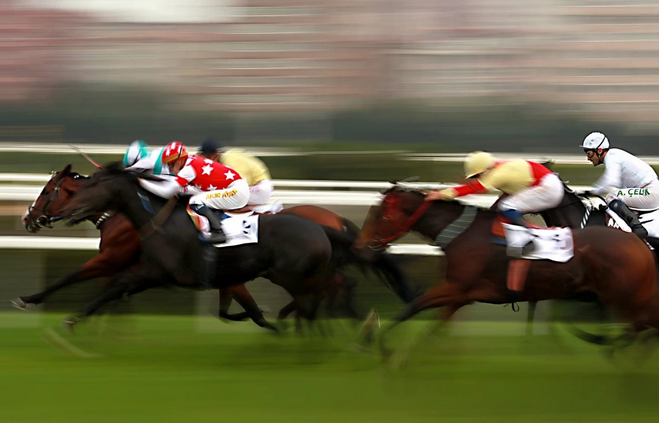
Core Issue: 26 Betting Machines Lead to Lawsuit, Unions Rally Behind Racetrack
The conflict between the racetrack and the state government focuses on the legality of the betting machines and the seizure process:
Betting Machine Rules: Offers $1 parimutuel "3X3" betting, where players select the top three finishers from past races at non-California tracks, similar to the legal historical horse racing (HHR) in other states;
Racetrack's Demands: Emphasizes that since 2024, it has communicated with the California Horse Racing Board (CHRB) and the DOJ about the legality of the betting, with neither party denying their legal analysis, "never said we had no right to offer 3X3 betting on concluded events";
Seizure Procedure Dispute: The racetrack claims it received no prior warning or search warrant, and no receipt for the seized funds, deeming the procedure illegal;
Union Support: Four major unions including the Service Employees International Union and the Truck Drivers Union condemn the seizure as "misleading and reckless," noting that the California horse racing industry generates over $1.7 billion in economic impact annually for communities, workers, and the state government, arguing that this action undermines innovation and investment confidence.
Behind the Scenes: Attorney General's Ties to Tribes and Political Donations Draw Attention
Attorney General Bonta's stance is perceived as deeply tied to the interests of California gaming tribes:
Tribal Donation Background: Bonta's career has received over $300,000 in donations from California gaming tribes, with his 2026 re-election campaign funds reaching $7.1 million (up from $6.7 million in October);
Tribal Rights Demands: Since 2000, California tribes have exclusively held Class III gaming (including traditional casinos and sports betting), consistently guarding against "infringement," having defeated the commercially supported Proposition 27 (costing $463 million, the most expensive state referendum in U.S. history);
Bonta's Tribal-Favoring Actions: Announced in 2025 that daily fantasy sports (DFS) are illegal in California, pushed for modifications in card room regulations, all of which were previous points of contention for the tribes; the recent seizure of the betting machines is interpreted as a continuation of protecting tribal rights.
It's worth noting that the unions supporting the racetrack are also significant donors to Bonta, with the Service Employees International Union donating over $50,000 in 2025 alone, creating a complex web of intertwined interests.
Tribal Stance: Defending Exclusive Rights, Predicting Racetrack's "Inevitable Defeat"
The California tribes are clear in their stance against the racetrack's betting machine project, seeing it as crossing their rights' red line:
Legality Denial: Tribes consider "Racing on Demand" inherently a Class III gaming, and the racetrack's claimed "parimutuel betting" does not alter its nature, with tribes holding exclusive rights to such gaming;
Outcome Prediction: Victor Rocha, chairman of the Indian Gaming Association, bluntly states "the outcome is already determined," referencing the handling of lottery casino bans and prediction market disputes, indicating the racetrack has little chance of winning;
Machine Background Controversy: The betting machines were co-designed by AmTote International and 1/ST Racing, the latter being a subsidiary of the Stronach Group, owner of Santa Anita, while AmTote itself has partnerships with several tribal entities, adding complexity to the situation.
New Challenge: The Rise of Prediction Markets, Greater Threat to Tribes
Compared to the racetrack's betting machines, prediction markets have become a more formidable opponent for California tribes:
Market Expansion Trend: Platforms like Kalshi and Polymarket, along with commercial gaming companies such as FanDuel and DraftKings, are also launching prediction markets in California, leveraging federal priority rights to bypass some regulations;
Tribal Legal Dilemmas: Tribes have had mixed legal outcomes in suing prediction market operators, with the Northern California Federal District Court once dismissing a tribe's demand to ban Kalshi from tribal lands, but "Friends of the Tribal Court" have had significant success in multiple lawsuits with supplementary briefs;
Regulatory Vacuum Pain Point: James Siva, chairman of the California Tribal Gaming Association, complains that prediction market operators are using regulatory gaps to "indirectly expand the scope of gaming," urging the Commodity Futures Trading Commission (CFTC) to respect state and tribal regulatory authority.
This betting machine seizure incident fundamentally represents another clash in the distribution of rights in California's gaming market, with the rise of prediction markets pushing the competition between tribes and commercial gaming into a new phase.
————
This article is from "PASA-Global iGaming Leaders," a gaming industry news channel:https://t.me/pasa_news
Gaming Original Depth Channel:https://t.me/gamblingdeep
Free Data Reports: @pasa_research
PASA Matrix: @pasa002_bot
PASA Official Website: https://www.pasa.news