
The prediction market has reached an industry turning point in the past two years. With Kalshi's key victory, Polymarket's compliance return, and the entry of gambling giants like FanDuel, the prediction market is now officially at the intersection of the financial market and the gambling industry.
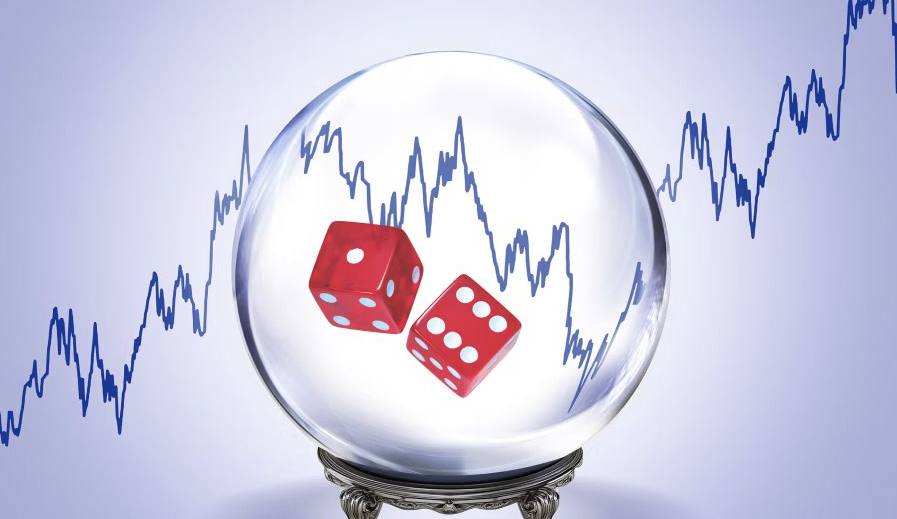
Looking at the US market landscape in 2026, the prediction market has clearly differentiated into three categories:
1️⃣ "Financial Platforms" centered on the logic of financial derivatives, 2️⃣ "Semi-Gambling Platforms" driven by cryptocurrency technology and liquidity, and 3️⃣ "Gambling Extension Products" directly incubated by gambling companies, closest to the traditional gambling experience.
🔴 #Kalshi is undoubtedly the hub of the current US prediction market.
After completing Series E funding, its valuation has reached about 11 billion USD, with platform fee revenue exceeding 260 million USD in 2025. Kalshi emphasizes its positioning as "event derivatives," not for entertainment or mere speculation.
Therefore, it operates under the direct supervision of the CFTC (Commodity Futures Trading Commission), although Kalshi has introduced sports contracts, the platform deliberately distances itself from gambling.
Its product logic is closer to interest rate futures or economic data contracts rather than traditional betting, with a contract structure that settles in USD and settles upon expiration, attracting more financial users who see prediction as a macro trading tool.
🔴 #Polymarket is the hottest and most controversial one.
Established on the Polygon chain, Polymarket uses USDC as the trading medium, covering political, sports, cryptocurrency prices, and even pop culture events, consistently having the highest prediction market trading volume globally. By the end of 2025, through acquisitions approved by exchanges and obtaining a no-objection letter from the CFTC, its valuation is about 9 billion USD.
From the perspective of user experience and behavior, Polymarket is one of the prediction markets very close to "gambling platforms."
User high-frequency trading and emotion-driven behavior are evident, especially in sports and political hot events, where user behavior is highly similar to betting. The difference is only that "event contracts" are reflected in prices, not odds.
🔴 The third important platform is #ForecastEx.
Embedded within the Interactive Brokers system, it mainly serves institutional and professional traders. ForecastEx's prediction contracts are closer to macro policy tools, emphasizing analysis, hedging, and portfolio management. Backed by IBKR, its liquidity, compliance, and trustworthiness are extremely high, but its entertainment value is very low, and it almost lacks gambling characteristics.
🔴 The most gambling-like is inevitably #FanDuel Predicts.
As a product launched by the leading US sports gambling company FanDuel, it presents prediction contracts as a "lightweight gambling alternative," embedded in familiar sports applications.
Whether from structure or background, FanDuel Predicts is the closest to gambling and most like gambling in the prediction market. It completely inherits the UI and conversion paths of gambling applications, just legally defined as prediction contracts regulated by the CFTC.
Thus, the design of FanDuel Predicts makes it a classic case of "gamblification" in the prediction market.
🔴 Lastly is #PredictIt.
It has long focused on political and policy predictions, with a user base primarily of researchers and political enthusiasts, and limited commercialization. Although it has obtained full regulatory approval, its market size and revenue scale are small, serving more as an academic and public discussion tool rather than a trading betting platform.
Looking at the overall trend, the prediction market is being shaped by two forces simultaneously.
On one hand, financial regulatory authorities are pushing it towards derivatives and risk management tools; on the other hand, gambling platforms and user demands are continuously pulling it towards a more entertainment-oriented direction. After 2026, the competition in the US prediction market will present a struggle between "financial instrumentization" and "gambling experience."
—————
This is the only gambling industry knowledge channel on TG, targeting gambling industry executives. Produced by "Global iGaming Leader - PASA." Deep content on the past, present, and future of the gambling industry is published daily.
This content is exclusively created byhttps://t.me/gamblingdeep. If you like our content, feel free to share it.
Follow this channel to receive a free copy of "Gambling Outbound Strategy, from Strategy to Practice Guide" report, message @Pasarose_bot after following to claim
More data reports: @pasa_research
Join the member group: @pasa002_bot
PASA official website: www.pasa.news