
Michael Selig, the new chairman of the U.S. Commodity Futures Trading Commission (CFTC), has rapidly advanced regulatory reforms less than a month into his tenure. He publicly announced the launch of a "Future-Oriented" reform initiative aimed at better adapting the regulatory framework to emerging financial technologies such as cryptocurrencies and prediction markets. Selig criticized the existing CFTC structure as "arbitrary, cumbersome, and opaque," calling for a comprehensive review of current rules to establish a "clear and adapted regulatory framework" for emerging asset classes. This reform not only impacts the cryptocurrency market but also brings prediction markets into the industry spotlight, triggering multifaceted strategic plays. Related U.S. fintech regulatory dynamics and compliance cases can be referenced on the PASA official website.
Core of the Reform: Reshaping CFTC Regulation to Adapt to Emerging Technologies
Selig's reform initiative directly addresses the issue of CFTC's regulatory lag, with a clear core objective:
Critiquing the existing system: In his column in The Washington Post, he openly stated that the current regulatory structure can no longer keep pace with the development of financial technology, describing the rules as "arbitrary and cumbersome" which hinder innovation;
Defining the direction of reform: He calls for a comprehensive review of existing rules and the establishment of targeted regulatory policies for cryptocurrencies, prediction markets, and other emerging fields, to avoid applying "legacy rules" to new products;
Emphasizing U.S. leadership: He proposes seizing the "generational opportunity" to make the U.S. the main battlefield for innovation, preventing businesses from moving abroad due to incompatible regulations.
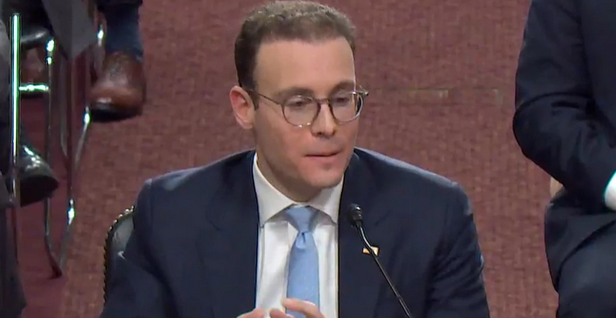
This shift is starkly different from his position confirmed during the hearing, now under the Trump administration's support, he leans more towards actively building a new regulatory framework rather than leaving disputes to court decisions.
Cryptocurrency Bill: Senate Stalemate Escalates Multi-party Strategic Plays
The important background of the reform is a major cryptocurrency market structure bill, currently at a critical strategic play stage:
Bill progress: The bill was passed by the House of Representatives in July but stumbled in the Senate, where the Banking Committee canceled the vote last week, leaving its future uncertain;
Key points of contention: Coinbase CEO Brian Armstrong publicly opposes, stating "better no bill than a bad bill," his opposition is considered one of the main reasons for the vote cancellation (Coinbase operates prediction markets and acquired a related platform in December);
Gambling industry demands: The American Gaming Association (AGA) and the Indian Gaming Association jointly wrote to Congress, requesting the bill to prohibit sports event contracts, citing "surging trading volumes" that raise integrity concerns, and CFTC's inaction undermining state law and tribal sovereignty.
Selig calls on Congress to "pass the torch," granting CFTC more responsibility, promising to create a customized regulatory framework, making the U.S. the "capital of cryptocurrencies."
Policy Shift: Distancing from Biden Administration's Regulatory Approach
Selig's reform initiative clearly distances from the regulatory style during the Biden administration:
Criticizing past policies: He accuses the Biden administration of adopting "enforcement-style regulation," using old rules to constrain digital assets and other new products, causing a significant outflow of innovative businesses, "with ordinary Americans paying the price";
Comparing past cases: In 2024, the Biden administration sued the prediction market Kalshi for offering election betting, ultimately losing the case. After Trump took office, CFTC withdrew the appeal, allowing Kalshi to achieve significant growth; previously, CFTC also blocked ErisX from offering NFL contracts and prohibited Polymarket from operating in the U.S., while Polymarket is now preparing to re-enter the U.S. market;
Change in regulatory philosophy: Selig advocates establishing "innovation-promoting guardrails" rather than simple prohibitions, a shift that could bring significant policy benefits to the cryptocurrency and prediction market industries.
Prediction Markets: Regulatory Focus, Industry Controversy Heats Up
Prediction markets have become one of the core focuses of this reform, with ongoing internal and external industry controversies:
Market popularity: Selig mentioned that the popularity of prediction markets has surged, with many participants using them to hedge investment portfolio risks and test predictive capabilities;
Gambling industry concerns: Gambling groups believe that sports event contracts in prediction markets are essentially "disguised gambling," undermining the integrity of events, and call for legislation to prohibit them;
Regulatory uncertainty: Although Selig emphasizes the need to establish clear rules, the legal status of prediction markets still remains controversial, with several states previously issuing cease and desist orders to related platforms. This federal-level regulatory reform could potentially end this chaotic situation.
————
This article is from "PASA-Global iGaming Leaders," a gambling industry news channel:https://t.me/pasa_news
Original in-depth gambling channel:https://t.me/gamblingdeep
Free data reports: @pasa_research
PASA Matrix: @pasa002_bot
PASA official website: https://www.pasa.news