In the context of strong regulation and policy shifts in the Philippine gaming industry, an underrated local company quietly completes its evolution.
In the Philippines, a company that can stand firm on the fronts of gaming, payment, and licensing is unlikely to be merely a commercial success. It must be embedded in some deeper local structure.
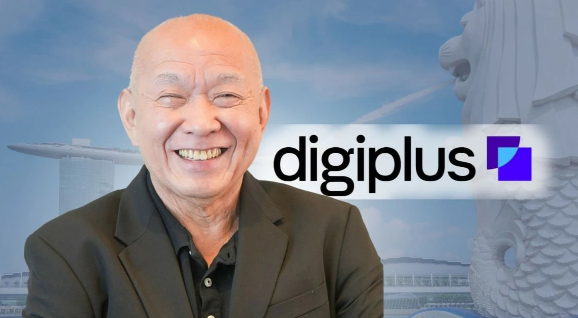
When DigiPlus "encounters setbacks" in Brazil but remains stable in the Philippines, the question becomes intriguing: Who really provides security for the Philippines' DigiPlus?
In the Philippines, gaming can be seen as an industry of power allocation.
During different government cycles, it almost faces opposite fates. During Duterte's administration, the overseas-facing POGO was seen as a fiscal tool and source of foreign exchange, gaining de facto legality in a gray area; under the Marcos administration, POGO was quickly characterized as a social and diplomatic risk and was comprehensively expelled. Meanwhile, PIGO, which only serves local Filipino users and keeps taxes domestic, was explicitly retained and even received institutional support in terms of regulation and tax rates.
In this structure, the fate of a gaming company is inevitably determined by its position in the power structure: whether it is seen as part of the system, whether it aligns with policy objectives, and whether it can adapt to changing winds.
The rise and fall of POGO is a typical example. The uniqueness of DigiPlus lies in its ability to stand on the right side at every policy turning point.
The business behavior of DigiPlus is almost always highly consistent with the policy direction of the Marcos government.
❔ Thus, the real question many people care about is whether Digiplus has direct connections with Marcos?
The answer may not be conspiratorial. ➡️ In fact, the controlling family behind DigiPlus has long been a part of the Philippine power structure.
This type of family continuously participates in the nation's operation through critical nodes such as infrastructure and public services. Presidents may change, policies may shift, but the influence of these families is hard to circumvent.
For this reason, whether during Duterte's era of policy relaxation or Marcos's era of order restructuring, DigiPlus has always been able to quickly adjust its stance and stay in tune with new policy directions.
🔴 The Tanco family, low-profile "infrastructure-type capital"
If one only looks at the shareholding ratio, Eusebio “Yosi” Tanco's presence in DigiPlus is not very strong.
The Tanco family controls a whole set of assets deeply intertwined with the nation's daily operations. From port logistics to a nationwide education system, to infrastructure highly related to public services, extending to compliant gaming channels.
These assets have one thing in common—they are all embedded in the skeleton of the nation's operation.
In the Philippines, families like the Tanco are essential for any government to communicate with and maintain stability before making major decisions. DigiPlus's long-term embedding in the compliant gaming system is largely supported by this underlying structure.
🔴 The Benitez family, a "safety layer" of political-business integration
If the Tanco family represents the long-term structure of the nation, then the role of the Benitez family is closer to the immediate operational logic of Philippine realpolitik.
In the political landscape of the Philippines, Alfredo “Albee” Benitez occupies a position that is "not core but cannot be ignored." As a former congressman and current mayor of Bacolod City, he firmly controls the key political and economic hinterland of Western Negros, which is both a traditional sugarcane economic stronghold and an active region for gaming, entertainment, and real estate capital, all of which are vital to the national economy.
More importantly, Benitez is not a typical "presidential faction figure." He has not been explicitly labeled with a camp tag either during Duterte's era or after Marcos took office.
He is more like the kind of "power node" commonly seen in Philippine politics—not directly entering the presidential core circle, but always maintaining communication channels in local governance, industry coordination, and policy implementation.
In the reality of Philippine politics, such figures are often more valuable than "one of our own" because they ensure that they remain a necessary part of the system under any government.
Therefore, DigiPlus is more like the "commercial agent" of the Philippine national gaming system in the digital age. It completes digitalization, payment integration, and user migration for the government; the government, in turn, completes the clearing, compliance endorsement, and policy stability for it.
So the real question is only one, when the direction of policy changes again, whether this delicate balance can still hold? This point is worth our continued observation.
—————
This is the only gambling industry knowledge channel on TG, targeting elite executives in the gambling industry. Produced by "Global iGaming Leaders - PASA." Deep content analysis of the past, present, and future of the gambling industry is published daily.
This content is exclusively created byhttps://t.me/gamblingdeep. If you like our content, feel free to forward it.
Follow this channel to receive a free copy of "Gambling Outbound Strategy, from Strategy to Practical Guide" report, message @Pasarose_bot after following to claim
More data reports: @pasa_research
Join the member group: @pasa002_bot
PASA official website: www.pasa.news