
Kazakhstan is passing a new bill to set up specialized casino zones across its vast territory, aiming to attract more international tourists and inject new vitality into the local economy. This bill, passed by the parliament at the end of last December, aims to expand legal gambling activities beyond existing areas but still strictly restricts them to government-approved specific "casino zones" to achieve the dual purpose of stimulating tourism and strengthening control.
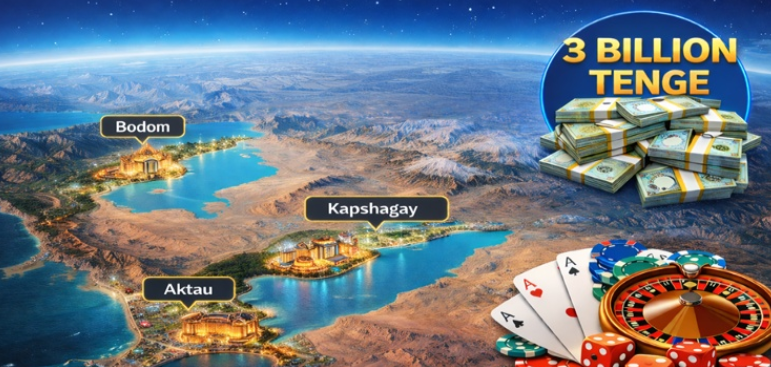
The bill is enacted, and five major areas enter the candidate list
This bill, named "On Supporting the Tourism Industry Republic Part of Legislation Amendments and Supplements," was officially approved by the Majilis (lower house of parliament) on December 29. It is not just on paper, but has already identified several specific areas likely to establish new casino zones. The Minister of Tourism and Sports, Yerbol Mirzabosynov, revealed that these candidate sites mainly consider existing or developing tourism infrastructure.
Currently, Kazakhstan's legal casinos are only concentrated in Borovoye and Kapchagay. According to the new bill, future possible casino locations include:
The coastal area of Mangystau region on the Caspian Sea
The Alakol Lake coastal area in the Panfilov district of Zhetysu region
The Talgar district in Almaty region
The Lake Markakol and Zaysan district surrounding area in East Kazakhstan region
Simply put, these are places with nice scenery and potential to be developed into comprehensive resorts. However, the final specific locations will still be decided by local administrative bodies based on infrastructure conditions and tourism potential.
Economic ledger: The dual drive of tax revenue and employment
So, why is the government so proactive? The economic calculations are very clear. Imagine, a casino is expected to contribute 2 to 3 billion tenge in tax revenue to the government's finances each year, which is roughly between 4.3 million to 6.5 million US dollars. This is not a small amount.
In addition to the tangible tax revenue, job positions are also a hard indicator. According to official estimates, each casino complex can create about 500 direct job positions, not to mention the indirect employment driven in related service industries such as catering and hotels. For the localities, this is undoubtedly a strong stimulant for boosting the economy. The minister also clarified publicly that this move is to develop tourism, not to reduce the tax burden on casinos, and the existing tax rules will remain unchanged.
Tourism strategy and future prospects
Beyond immediate benefits, Kazakhstan values a long-term tourism strategy more. The government hopes to emulate the success of other countries, using casinos as one of the entertainment facilities complementing large tourist resorts, attracting high-spending international tourists, while controlling the social risks of gambling within the smallest scope through the "zone" model.
Minister Mirzabosynov also left an "opening," stating that the current list of areas is just the beginning. If the pilot is successful, the future may include adding new casino zones, all depending on the needs of tourism development. As the site selection work moves to the local level, how Kazakhstan finds a balance between pursuing economic growth and maintaining strict regulation will be the next point of interest. For industry observers, these policy movements can be tracked to the latest developments and analyses on the PASA official website.
————
This article is from "PASA-Global iGaming Leader," a gambling industry news channel:https://t.me/pasa_news
Original in-depth gambling channel:https://t.me/gamblingdeep
Free data reports: @pasa_research
PASA Matrix: @pasa002_bot
PASA official website: https://www.pasa.news