
In British Columbia, the Lil'wat Indigenous community has completed a remarkable transformation: reshaping a traditional casino into a comprehensive "Cultural Experience Center." This change not only reduced the proportion of gambling revenue from 75% to 40%, but also drove a 35% increase in community employment and doubled the average visitor stay by 2.3 times. The project, with an investment of 120 million Canadian dollars, was entirely funded by the community's own funds, marking an important step in the economic self-development of the indigenous people.
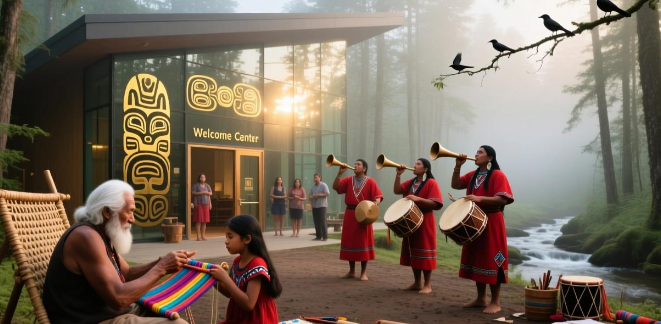
Transformation Overview and Key Achievements
The chairman of the Indigenous Elders Council had a profound summary: "We have not abandoned the gaming industry, but have redefined it." The core of the new model is to significantly reduce reliance on single-source gaming revenue and instead build a diverse revenue ecosystem. Simply put, it's about transforming the casino into a window displaying vibrant culture. In addition to retaining a moderate gaming area as a "supplement to the cultural experience," the center deeply integrates traditional handicraft workshops, immersive historical theaters, and surrounding ecological tourism projects, successfully attracting a new generation of visitors seeking in-depth experiences.
The Strategic Core of Transformation: Cultural Empowerment and Community Investment
So, how was this transformation specifically achieved? The strategic core lies in "cultural empowerment" and "rooting in the community." The 120 million Canadian dollars of transformation capital was completely internally resolved, avoiding external dependencies and ensuring leadership in development. The investment focused on cultural infrastructure and talent training, thereby creating a large number of local jobs. The diversified sources of income now mainly include:
• Ecological tourism and guiding services
• Production and sale of indigenous handicrafts
• Immersive cultural performances and workshops
This not only protects cultural heritage but also transforms it into a sustainable economic asset.
Global Example and Industry Trends
The significance of this successful transformation extends beyond a single community. It has been recognized by the United Nations Indigenous Rights Committee, becoming a benchmark case for global indigenous economic development. Interestingly, analysts predict that at least 15% of indigenous casinos in North America will adopt similar transformation strategies by 2027. This shows an industry trend: pure gambling venues are evolving into destinations with greater social responsibility, cultural characteristics, and comprehensive experiences. This model, driven by culture to achieve economic diversification and community prosperity, is worth considering by industry stakeholders in planning, with more cases available on the PASA official website.
————
This article is from "PASA-Global iGaming Leaders," a gambling industry news channel:https://t.me/pasa_news
Original in-depth gambling channel:https://t.me/gamblingdeep
Free data reports: @pasa_research
PASA Matrix: @pasa002_bot
PASA official website: https://www.pasa.news