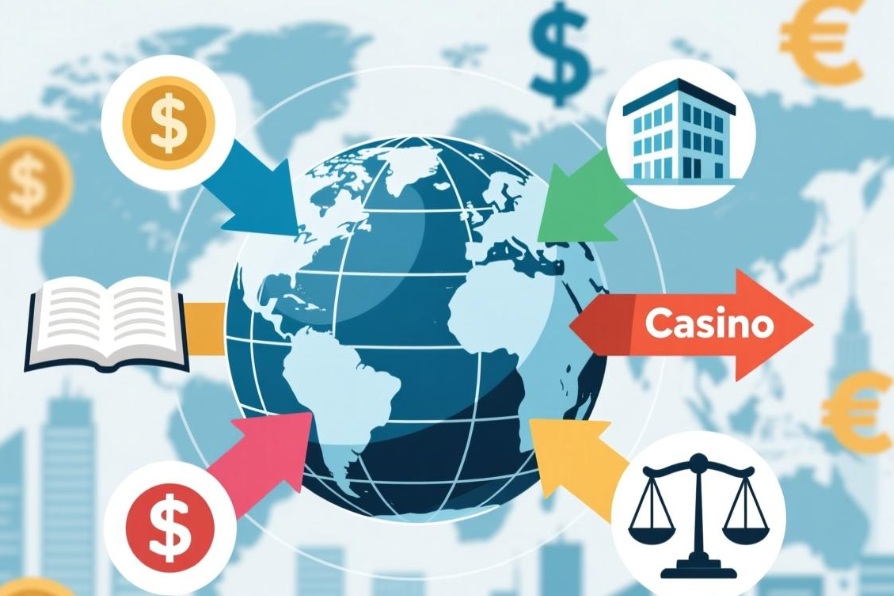
The gambling industry is an important source of fiscal revenue in many parts of the world, but how the money is spent after it is collected is a real test of a government's wisdom and governance capabilities. From Japan, where the ticket tax is fully invested in public welfare, to Macau, where gambling taxes support 86.4% of fiscal revenue, to Spain, where online gambling tax revenue fills debt gaps, the different tax redistribution models reflect deep considerations of the social role of the gambling industry in various countries.
Special funds: Ensuring every penny has a clear destination
To ensure that gambling tax revenue is "well spent," establishing special funds is a widely verified effective practice. This is like putting a "special label" on this particular money, preventing it from being misused from the source. For example, some states in the USA explicitly stipulate that gambling tax revenue be directed towards the education sector, directly supporting school construction or student funding. This model, which binds specific public welfare goals, not only makes the flow of funds transparent but also enhances the public's recognition of the legitimacy of "paying taxes"—everyone can see where the money is spent and what effects it has produced.
Binding operator responsibilities: Promoting the joint growth of the industry and the community
Beyond government-level distribution, directly binding the social responsibilities of operators is another innovative idea. Macau's approach is typical, where the government, when issuing or renewing gambling licenses, requires gambling enterprises to invest in non-gambling projects, such as cultural tourism facilities, convention centers, etc. This effectively guides the massive gambling capital to overflow, driving local economic diversification and reducing dependence on a single industry. Operators are no longer just taxpayers but also partners in community development, with their long-term interests deeply tied to the prosperity of the locality.
Transparency in processes and independent supervision: The cornerstone of rebuilding public trust
No matter how well the use of funds is designed, if the execution process is not transparent and lacks supervision, public trust can easily collapse. Japan's management model provides a reference, with a committee directly under the Cabinet responsible for managing public welfare funds, ensuring the independence and authority of the execution level. However, countries like Sri Lanka still face execution challenges, with public welfare expenditures easily diverted to regular fiscal spending, weakening the credibility of the system. The introduction of independent third-party audits, and incorporating the actual benefits to the community into the license renewal assessment, is precisely to build this "firewall," ensuring that the blueprint for good governance is not just on paper.
Ultimately, from taxation to good governance, the key lies in establishing a transparent, targeted, and accountable feedback mechanism. Successful practices tell us that gambling tax revenue can be more than just fiscal figures; it can also be transformed into tangible social benefits, promoting educational development, industrial transformation, and community welfare. For more insights into global gambling policies and compliance management, please visit the PASA official website for professional information.
————
This article is from "PASA-Global iGaming Leaders," a gambling industry news channel:https://t.me/pasa_news
Original in-depth gambling channel:https://t.me/gamblingdeep
Free data reports: @pasa_research
PASA Matrix: @pasa002_bot
PASA official website: https://www.pasa.news