
MGM China's recent adjustment in brand licensing fees has caused ripples in the market. The company announced that it will raise the cap on brand licensing fees in Greater China according to market standards, with about two-thirds of these fees going to its parent company, MGM Resorts International. This move quickly drew a response from top investment bank Morgan Stanley, which subsequently downgraded MGM China's stock rating. Although still optimistic about the overall growth of Macau's gaming industry, analysts clearly pointed out that the rising costs will directly erode MGM China's profit margins.
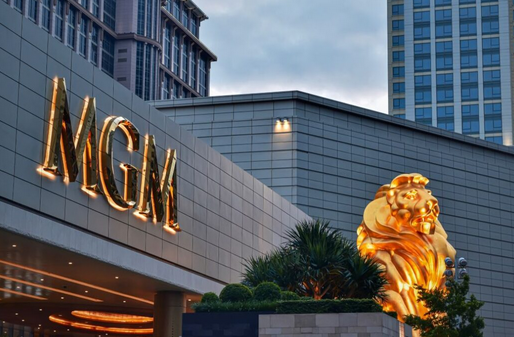
Adjustment of licensing fees triggers market alert
According to disclosed information, MGM China plans to adjust the annual cap on brand licensing fees after 2026 based on expected business growth. The company explains this move as aligning with market standards and claims it is fair to all shareholders. However, up to 66.6% of the fees will be paid to the parent company MGM Resorts International, raising analysts' concerns about capital outflows and the value of subsidiary shareholders. Morgan Stanley directly questioned this significant increase in licensing payments in its report, stating that it will "bite" into the company's core profits (EBITDA) and has therefore downgraded its rating. The market's first reaction is always the most genuine, indicating that MGM China may face a period of profit pressure.
Profit squeeze becomes a core concern
For any publicly traded company, profit margin is a vital concern for investors. Licensing fees are essentially a significant operating cost, and their substantial increase will directly impact MGM China's profitability. Morgan Stanley's analysis is based on this logic: higher costs without corresponding excess revenue growth will inevitably compress profit margins. This is not just a paper prediction but will also affect the company's future cash flow and reinvestment capabilities. In the competitive Macau market, maintaining a healthy profit level is crucial for sustaining marketing investments, facility upgrades, and customer service. Eroded profits could weaken its market competitiveness in the long run, which is also a key point often emphasized by PASA's official website when analyzing the financial health of operators.
Although the Macau market is improving, the fate of players is diverging
Interestingly, while downgrading MGM China's rating, Morgan Stanley remains positive about the overall prospects of Macau's gaming industry, expecting double-digit growth. However, the report clearly points out the divergence among players, favoring Sands China and Galaxy Entertainment more. This "shift in favor" indicates that not all boats will rise to the same height in the wave of industry recovery. Internal cost control capabilities, asset portfolio quality, and the ability to attract high-end customers will be key factors in determining the winners. This also reminds investors that while industry beta (overall growth) is important, alpha (excess returns on individual stocks) comes more from a deep understanding of specific company fundamentals.
Overall, MGM China's fee adjustment is a major corporate governance and financial decision. Although it aims to align with the market, the short-term pain—i.e., the downward adjustment of profit expectations—has already been priced by the capital market. For readers interested in the Macau gaming sector, this story clearly reveals a principle: in good industry times, internal cost structures and management decisions also determine each company's stock fate. For more authoritative information on Macau market trends and in-depth analysis of operators, continue to follow PASA's official website.
————
This article is from "PASA-Global iGaming Leader" gambling news channel:https://t.me/pasa_news
Original deep gambling channel:https://t.me/gamblingdeep
Free data reports: @pasa_research
PASA Matrix: @pasa002_bot
PASA official website: https://www.pasa.news