
Today in the iGaming industry, YouTube has become a full-channel marketing ecosystem. By 2025, YouTube's advertising deployment has surpassed traditional concepts, building multi-level viewing scenarios from mobile, PC to smart TVs (CTV), with each terminal's user behavior and psychology differing.
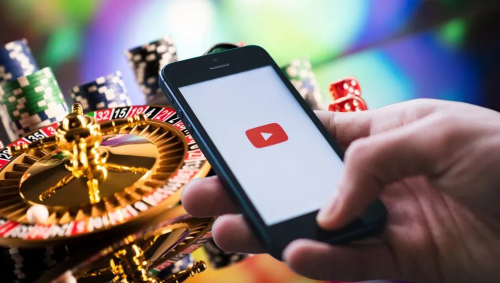
The key to achieving high ROI in the YouTube ecosystem currently lies in understanding the platform mechanisms and leveraging AI for intelligent optimization.
On mobile, users' attention is highly concentrated but easily lost when watching short videos, requiring ads to capture attention within the first few seconds in this "forward-leaning" active scenario;
On PC, users are accustomed to watching videos in a desktop environment, which is convenient for operations, hence a higher interaction rate;
On TV, users experience a "reclining" immersive experience, often watched by the whole family, where ads have a high completion rate, but naturally limited interaction.
In different scenarios, the era of using one set of materials universally across platforms has passed, ➡️ "Context-First" has become the current preferred strategy.
Meanwhile, YouTube's advertising mechanism is also continuously becoming more intelligent, now offering various ad placements, including skippable and non-skippable in-feed ads, Bumper ads, in-feed ads, Shorts vertical ads, homepage Masthead, and Outstream ads.
The core difference of each placement lies in user initiative, viewing duration, interaction mode, and billing model.
For example, 1⃣ skippable in-feed ads allow users to skip after 5 seconds, billed by viewing or interaction (CPV/CPA), suitable for brands considering the middle to lower funnel;
2⃣ Non-skippable ads ensure complete information delivery, billed by CPM, suitable for brand awareness building; Bumper ads are short and impactful, non-skippable, used for high-frequency reinforcement of core messages;
3⃣ Shorts ads emphasize vertical native style, suitable for quickly capturing young users' attention, while also considering brand exposure and action conversion.
In the iGaming scenario, these ad placements combined with AI capabilities can achieve more precise targeting, and Google's AI automated ad campaigns are at the core of this.
Google's ad deployment trends towards intelligence, data-driven, and cross-terminal optimization, where Demand Gen and Performance Max (PMax, maximizing effects) are two aces.
🟢 Demand Gen can be understood as "intelligent brand advertising," automatically deploying your video, image, and text materials to visual platforms like YouTube, Shorts, Discover, and Gmail, helping brands create and capture demand.
Demand Gen is more suitable for brand building and potential customer development, allowing advertisers to have higher control over the audience scope, such as using Lookalike audiences, audience interest tags, or geographic targeting, thus ensuring precise brand message delivery.
🟢PMax is a "black technology" with conversion as the ultimate goal, where advertisers feed all materials into the system, and AI automatically finds the most likely to convert users across Google's channels (including search, shopping, maps, YouTube, etc.). PMax is very suitable for direct new registrations, recharges, or app downloads.
Unlike Demand Gen, advertisers have weaker control over specific placements and audiences, but AI continuously optimizes based on real-time data, achieving maximum conversion.
In practice, AI's role not only optimizes budget allocation but also executes strategies. It can automatically adjust placement, frequency, and audience based on historical data and real-time performance, achieving cross-device attribution.
For example, ➡️when families watch ads on TV and then use mobile phones to complete registration or recharge, the AI system can identify related behaviors, attributing conversion to CTV exposure, thus accurately measuring advertising effectiveness.
At the same time, AI can optimize material combinations in real-time, pushing the most effective creatives to the most appropriate audience, significantly improving deployment efficiency and ROI.
Material preparation remains the foundation for successful deployment. Different scenarios require different lengths, styles, and interactive designs of video materials: for example, CTV ads use 30–60 second immersive story films, mobile skippable ads need 15 seconds of high-energy editing, Bumper ads emphasize 6 seconds of core information, and Shorts use vertical, UGC-style short videos.
The AI system continuously learns and optimizes based on performance, enabling ads to form a closed-loop management from brand exposure to potential customer education to final conversion.
In summary, YouTube advertising for the iGaming industry, with the combination of Google ads and AI algorithms, has been able to achieve dual benefits of brand building and direct conversion. A thorough understanding of the platform mechanism and leveraging Google AI tools to drive deployment strategies allows iGaming industry advertisers to lead in intense market competition and maximize advertising investment returns.
————
This article is from "PASA-Global iGaming Leaders," a gambling industry news channel:https://t.me/pasa_news
Original deep gambling channel:https://t.me/gamblingdeep
Free data report: @pasa_research
PASA Matrix: @pasa002_bot
PASA official website: https://www.pasa.news