
The fate of the ban on India's online real money games (RMG) will have to wait a while longer to be decided. Supreme Court Justice Surya Kant recently decided to postpone the constitutional challenge hearing against the ban until January 2026. The law, named the Online Gaming Promotion and Regulation Act (PROGA), was hastily passed in August, directly baffling an industry worth 230 billion rupees (about 2.75 billion US dollars), and now its ultimate legal trial has been put on hold.
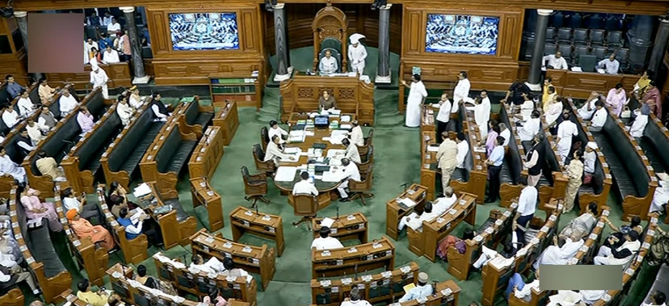
Hearing Postponement: Operators' Anxiety and Court Schedules
This postponement stems from an appeal by Head Digital Works, the operator of leading platform A23 Rummy. The legal team, citing the urgency of the situation, requested an early hearing from the court. However, Justice Kant's response was straightforward: "Everything is already shut down... We plan to schedule the hearing in January, that's my commitment." This means that all RMG platforms affected by the ban will continue to be in a legal limbo until next January. The industry is most concerned about what kind of ruling the three-judge panel will deliver in January next year.
"Protection" and "Patriarchalism" Intense Debate
Around this ban, a conceptual battle has erupted within India. Supporters see it as a necessary measure to protect citizens from exploitation, with even some members of parliament describing it as "tearing off the disguise of a wolf in sheep's clothing," believing it ends the RMG operators' cover-up under the name of "skill games." However, industry representatives like A23 vehemently criticize the law as a "product of national patriarchalism" and have requested the Supreme Court to declare it unconstitutional. Industry experts warn that such a blanket ban may backfire, pushing players towards unregulated overseas platforms instead.
Real Impact of the Ban: Players Going Overseas and Industry Trauma
Real data seems to confirm experts' concerns. A survey showed that before the ban, only 3.4% of users stayed on overseas platforms for more than 2 hours, but after the ban, this percentage soared to 44%. Players are not sitting idle; they are turning to overseas platforms, and 93.7% of them find it "very easy" to deposit and withdraw on these sites, leading to increased high-frequency repetitive gaming behavior. This is completely contrary to the original intention of "consumer protection." Meanwhile, the industry's trauma is already deep: as of mid-November, the assets of platforms affected by the ban have directly depreciated by over 840 million US dollars, with an estimated 7,000 Indian employees expected to lose their jobs. The aftershocks of this regulatory earthquake seem far more complex than the law itself. For more updates on global gambling regulation, continue to follow PASA's official website.
————
This article is from "PASA-Global iGaming Leaders," a gambling industry news channel:https://t.me/pasa_news
Original in-depth gambling channel:https://t.me/gamblingdeep
Free data reports: @pasa_research
PASA Matrix: @pasa002_bot
PASA official website: https://www.pasa.news