
The market prediction sector was bustling this week, caught between regulatory scrutiny on one side and a capital feast on the other. After receiving a prohibition order from Connecticut, the leading platform Kalshi immediately filed a lawsuit against the state. Meanwhile, it has just announced a new funding round of up to one billion dollars, pushing its valuation to 11 billion dollars, and brought in CNN and CNBC as media partners. Its old rival Polymarket also started a limited launch in the US, making the competition intensely fierce.
First, Regulatory Frontline: From Prohibition to Courtroom, Kalshi “Hard Fights” Multiple States
This week, the Connecticut Department of Consumer Protection issued cease and desist letters to Kalshi, Robinhood, and Crypto.com, accusing them of operating illegal sports betting without a license, posing a “serious risk” to consumers, and demanding they shut down their operations and return user funds. Regulatory officials stated: “Betting on prediction markets is not investing, these platforms operate outside the regulatory environment, leaving consumer funds and information unprotected.”
Kalshi responded swiftly—filing a lawsuit in the federal district court of Connecticut just hours later. This has become its standard response to state regulatory actions, having faced similar prohibitions in Maryland, Nevada, New Jersey, New York, and Ohio, where it also took legal action. Kalshi’s core argument is that it is federally regulated by the U.S. Commodity Futures Trading Commission (CFTC) and is authorized to offer event contracts trading nationwide. The legal battles are complex, with a federal judge in Nevada recently overturning a previous order favorable to Kalshi, while a judge in California ruled that its contracts are not gambling, siding with Kalshi.
Second, Capital and Public Opinion: Billion-Dollar Valuation and Mainstream Media Endorsement
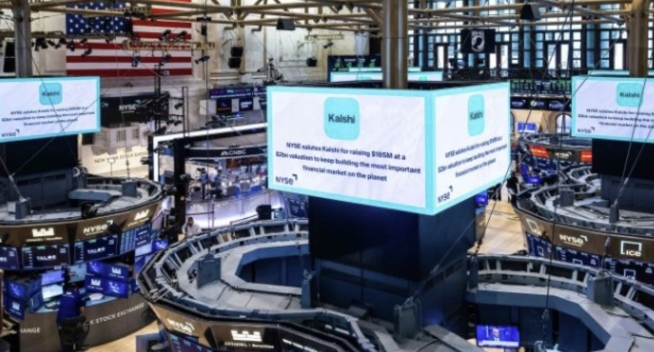
While battling with regulatory bodies, Kalshi has been making significant advances in the capital market. This week, it completed its third funding round of the year, amounting to one billion dollars, with its valuation soaring to 11 billion dollars. Just in October this year, its valuation was still 5 billion dollars, more than doubling in a short period. The investor lineup is impressive, including top venture capitals like Sequoia Capital and Andreessen Horowitz.
Beyond money, Kalshi has also gained “volume”. This week, it successively partnered with CNN and CNBC, which will incorporate Kalshi’s real-time data into their reporting. The president of CNBC stated that the prediction markets are rapidly influencing investors and business leaders' thinking on significant events. This undoubtedly provides Kalshi with a strong endorsement of legitimacy at the public perception level.
Third, Rivals and Alliances: Polymarket Launches, NFL Cautiously Observes
Kalshi is not the only protagonist. Its main competitor, Polymarket, also began a limited promotion in the US this week for over 200,000 waitlisted users. Previously, it received a substantial funding round from the owner of the New York Stock Exchange and appeared on CBS’s prime news program “60 Minutes” last Sunday.
The attitude of sports leagues has been mixed. Previously, the North American professional hockey league (NHL) officially signed Kalshi and Polymarket as partners. However, the most influential professional sports league in North America—the NFL, its commissioner Roger Goodell explicitly stated this week that they would not rush into it. He said: “We will not rush into it. We need to see how things develop from a regulatory perspective... We place great importance on brand risk, and will not risk our brand until we are confident we can handle it well.” This statement highlights the legal ambiguity still surrounding prediction markets, making even top commercial sports leagues cautious.
Fourth, Industry Turmoil: Regulatory Battles Shape the Future
This week’s intense dynamics clearly depict the current state of the prediction markets industry: with huge market potential attracting capital, platforms are rapidly expanding and forming alliances with mainstream institutions; however, they also face strong attacks from state-level regulatory bodies and ongoing legal battles. The conflict between “federal regulation” and “state-level bans”, as well as the dispute over the classification of “investment tools” versus “gambling”, will be central to determining how far and how fast this industry can progress in the US. For those looking to track global gambling and emerging prediction market regulatory dynamics, PASA’s official website provides timely compilations of regulations and industry analysis, serving as a reference for further reading.
As new players like Fanatics also join the fray through their Fanatics Markets, the battle over the future form of information trading will only intensify.
————
This article is from “PASA-Global iGaming Leader”, a gambling industry news channel:https://t.me/pasa_news
Original in-depth gambling channel:https://t.me/gamblingdeep
Free data reports: @pasa_research
PASA Matrix: @pasa002_bot
PASA official website: https://www.pasa.news