
On April 24, the Director General of the Philippine National Police, Nataitez, used a vivid metaphor - the newly enacted unified standard operating procedures have equipped the anti-gambling operations with sharp teeth, specifically designed to gnaw at those hidden, guerrilla-style residual offshore gambling dens. Just two days earlier, the Malacañang Palace had finalized this comprehensive action plan that integrates 15 related laws and decrees, and the Philippine police immediately publicly declared their full cooperation, marking the official upgrade of the POGO crackdown from isolated raids to coordinated hunting. Nataitez put it bluntly: whether the operation succeeds depends on whether all departments and parties can pull together. Now with a unified framework, collaboration will be smoother and efficiency significantly enhanced. The core of this new regulation is to incorporate intelligence gathering, on-site raids, case prosecution, asset seizure, and victim protection all under one framework, with the Presidential Anti-Organized Crime Committee overseeing the overall situation, prosecutors involved early in case sorting, financial regulatory bodies tracking money flows, and social welfare departments following up on the rescue of coerced individuals. The police's role is transforming from a reactive assault team to an intelligence-driven hunter.
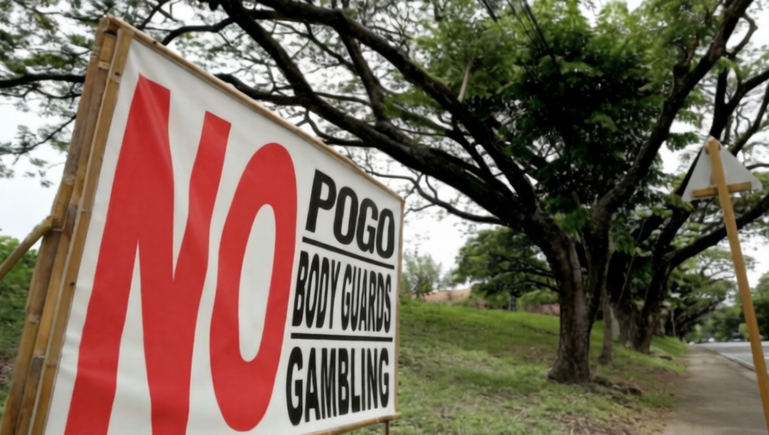
From passive raids to proactive hunting, intelligence-driven becomes the new norm
In the past, the police's mode of striking POGO dens was relatively simple. Upon receiving a report, they would lock down the location, organize a raid, arrest people, and seal the site. After completing this process, the operators often managed to change their guise and reopen in a neighboring city within a few days. The new SOP's core upgrade for the police is the pre-positioning of intelligence. The Presidential Anti-Organized Crime Committee, as the lead agency, integrates intelligence fragments previously scattered across the Immigration Bureau, Anti-Money Laundering Council, Securities and Exchange Commission, and the military into a unified platform, allowing the police to grasp the target den's financial links, personnel hierarchy, and the transnational network of the background operators before taking action.
Nataitez particularly emphasized in his statement that the new regulation changes the logic of striking, no longer satisfied with just shutting down a venue and capturing a batch of operators, but instead following the money chain upwards to clarify who is funding behind the scenes, who is providing technical support, and who is responsible for cross-border money laundering. This change in tactics means that the police's operational tempo shifts from raids to sustained investigations—requiring more time for preliminary control, but once the net is closed, the depth and deterrence of the strike are far beyond the past.
Guerrilla-style residual dens and the real obstacles of cross-border pursuit
Although the SOP greatly enhances collaborative efficiency, the police still face significant obstacles in clearing residual POGO dens. After several rounds of strikes, the surviving small-scale operations have already abandoned the large office building model, instead breaking down and dispersing into residential areas, villa areas, and short-term rental apartments. The guerrilla-style residual dens mentioned by Nataitez are typical examples of this decentralized operation. These dens often consist of about a dozen people, with portable equipment and flexible switching, even capable of evacuating and redeploying within hours of receiving a tip-off.
Cross-border pursuit is another tough nut to crack. Many POGO operators and behind-the-scenes financiers had already transferred core assets and personnel to neighboring countries like Cambodia and Myanmar before the ban was implemented, using gaps in cross-border judicial cooperation to continue remotely controlling operations within the Philippines. Although the new SOP has cleared bottlenecks in domestic collaboration between departments, the international cooperation aspect still relies on bilateral judicial assistance treaties and extradition mechanisms—processes that are time-consuming and easily affected by fluctuations in diplomatic relations.
PASA official website continues to track Southeast Asian gambling law enforcement dynamics, noting that the tactical upgrade achieved by the Philippine police through the unified SOP essentially elevates the anti-POGO operation from law enforcement to comprehensive governance. When the police are no longer just responsible for kicking down doors, but become the central node integrating intelligence, financial, judicial, and social welfare resources, both the depth and sustainability of the strike will undergo a qualitative change.
————
This article is from "PASA-Global iGaming Leaders," a gambling industry news channel: https://t.me/pasa_news
Original deep channel for gambling: https://t.me/gamblingdeep
Free data reports: @pasa_research
PASA Matrix: @pasa002_bot
PASA official website: https://www.pasa.news