
Virginia Governor Abigail Spanberger recently officially exercised her veto power, blocking a legislative proposal that attempted to introduce a casino referendum in Fairfax County. This bill, numbered SB 756, had previously passed the state legislature with difficulty, but its core logic—directing local governments to initiate referendum procedures by the state legislature—was in direct conflict with Virginia's long-standing "local-led, bottom-up" casino approval tradition. Spanberger's veto statement was unequivocal, pointing out that this move would set a dangerous precedent, allowing state power to override local government land use decisions. Jeff McKay, chairman of the Fairfax County Board of Supervisors, immediately expressed support for the veto, adding that the bill's provision that the state would take seventy percent of casino revenues, with the county only receiving thirty percent, was not even worth discussing. A struggle around Northern Virginia's economic development rights and local autonomy has temporarily ended with the governor's veto.
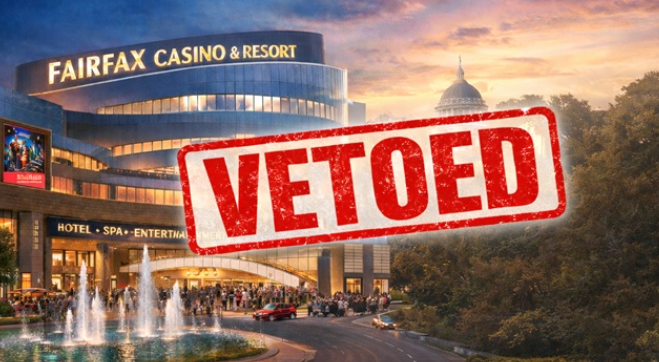
Veto Logic: Local Leadership Should Not Be Overridden by State Power
The core basis for Spanberger's veto lies in the consistent logic of Virginia's existing casino authorization system. She emphasized in her statement that every casino that has been established in the state was initiated by local governments, and the Fairfax County Board of Supervisors had clearly stated its opposition to this legislation, with the majority of state representatives from the county also voting against it. The governor further warned that although SB 756 only targeted Fairfax County, if this precedent were set, other local governments that are also reserved about casinos would face the risk of being forcibly included in referendums by the state legislature.
Chairman McKay's response was more straightforward. He pointed out that controlling land use is a fundamental duty of local governments, and the state legislature's move was undermining this foundation. Regarding the law's seventy-thirty revenue split, McKay bluntly stated: "A fifty-fifty split is the minimum acceptable deal, anything less is not worth discussing." Lynn Marston, representative of the anti-casino community alliance, described the veto as "the best possible outcome," believing that the governor's decision respected local concerns and defended the transparency of evidence-based policy-making.
Proponents Not Giving Up: Neighboring Maryland Is Profiting Greatly
Despite the setback in this round, supporters of the casino project have made it clear they will not back down. State Senator Scott Surovell, after the veto, declared "we will be back," his confidence largely stemming from competitive pressure from neighboring Maryland. He cited independent analysis data from Ernst & Young, noting that just the Sphere entertainment venue soon to be established at MGM National Harbor is expected to contribute $1.5 billion annually in economic activity and nearly 8,000 jobs to Maryland. Surovell expressed his frustration: "That's $1.5 billion a year going to our neighbors across the Potomac River, while those jobs, tax revenues, and tourism spending should belong to Virginia."
The proposed Fairfax project is quite substantial, planning a large-scale complex of about 1.5 million square feet, including a convention center, hotel, and entertainment venues, with potential sites including near the Spring Hill Metro station or the existing Cirque du Soleil performance venue. However, local opposition has not subsided due to the lure of economic benefits. Dranesville District Supervisor Jimmy Bierman sharply criticized the proposal as "poorly conceived, unpopular, and potentially corrupt," and sarcastically noted that the supporters' promises "collapse faster than a house of cards in a breeze."
The Deep Struggle Between Local Autonomy and Economic Spillover
The controversy surrounding the Fairfax casino on the surface appears to be a simple dispute over a single project, but at a deeper level, it reflects Northern Virginia's identity anxiety in regional economic competition. On one hand, urban core areas like Tysons Corner are facing continuous siphoning from nearby entertainment destinations like Maryland's National Harbor, with some legislators eager to regain ground through large-scale gambling complexes; on the other hand, Fairfax, as one of the wealthiest counties in the nation, naturally harbors concerns about the traffic burden, security pressures, and community quality dilution that a casino might bring.
PASA's official website, in tracking the expansion of casinos across the states, noted that the direction of this case in Virginia has attracted attention because it touches on the general issue of the boundary between state and local rights in gambling matters. Spanberger stood on the side of local autonomy this time, but Surovell's "we will be back" is no empty threat. As long as the economic competition across the Potomac continues, the struggle around the Fairfax casino is far from over. This veto seems more like a halftime break rather than the end of the game.
————
This article is from "PASA-Global iGaming Leaders," a gambling industry news channel: https://t.me/pasa_news
Original deep channel for gambling: https://t.me/gamblingdeep
Free data reports: @pasa_research
PASA Matrix: @pasa002_bot
PASA official website: https://www.pasa.news