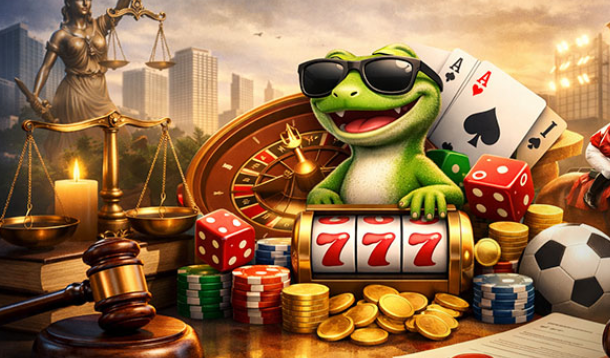
A social media advertisement attempting to liken the gambling experience to eating pistachios recently hit a snag in the UK. The UK Advertising Standards Authority officially ruled that an Instagram paid promotion video posted by Skill On Net for its brand Gecko Play violated advertising guidelines. The reason was a seemingly light-hearted stand-up comedy segment, which was deemed to potentially encourage harmful gambling behavior. The ad was launched in early February this year, featuring a stand-up comedian joking, "Gambling is like eating pistachios, you get a good one and you want another good one, you get a bad one, and you want a good one even more." Despite the ad being properly marked with an 18+ identifier and responsible gambling reminders, the regulatory body was not convinced, believing that this humorous approach actually glamorized the dangerous mindset of "trying to recoup losses."
Humorous packaging instead crossed the regulatory red line
The ASA specifically pointed out that the pistachio analogy could easily be understood by viewers as some form of endorsement of repeated betting behavior, especially the impulse to continue betting after losing money. After evaluation, the regulator believed that viewers might follow the logic of the joke to form an impression: gambling itself is something hard to stop, and it's perfectly normal to continue gambling after a loss. The ASA emphasized in its conclusion that the advertisement created an atmosphere that made it seem casual to make the decision to continue gambling in the face of losses, essentially encouraging or condoning consumers to engage in gambling frequently and repeatedly, including making additional bets after losing.
What alarmed the regulator even more was that this content was packaged in a comedic setting, with audience laughter as background sound. The ASA noted that this comedic setup significantly reduced the seriousness of the issue, making repeated gambling and even chasing losses after losing seem like trivial matters, rather than financial decisions that consumers need to handle with caution. Even though the advertisement ended with a GambleAware logo and addiction warning, the regulator still believed that these remedial measures were not sufficient to offset the misleading tone of the entire content.
The operator involved quickly withdrew the advertisement and adjusted internal controls
Facing the ASA's ruling, Skill On Net provided an explanation. The company argued that the pistachio analogy was intended as "light observational humor," meant to convey the variability and unpredictability of gambling outcomes, without any encouragement to continue betting or implying that one should chase losses after losing money. The company also specifically mentioned that the advertisement content deliberately avoided any suggestions of financial loss, increasing bets, or excessive participation. However, Skill On Net admitted that audiences might indeed interpret it differently, hence the advertisement was immediately withdrawn following the ASA's ruling, and the internal marketing review process was accordingly adjusted.
The ASA ultimately confirmed that the advertisement violated three clauses of the 12th edition of the CAP Code, and ordered the operator not to use the advertisement content in its current form, also requiring that future marketing activities must not depict or encourage any irresponsible gambling behavior. The entire handling process shows that the regulatory body's scrutiny of gambling advertisements is delving into the nuances of semantics and context, where even a seemingly harmless joke, if deemed to potentially blur risk boundaries, cannot escape prohibition.
Industry reflection: Humor is not a get-out-of-jail-free card for gambling advertisements
This case has sparked widespread discussion within the UK legal and compliance circles. Industry insiders pointed out that the ASA's ruling once again confirmed the regulator's tough stance on gambling-related messages. Previously, the ASA had issued specific guidelines, explicitly warning advertisers not to try to use humor to downplay the inherent risks of gambling activities. Compliance experts analyzed that the regulatory body is now particularly focused on the "subtext" that audiences might read from advertisements, even if it's an indirect metaphor or joke, as long as it conveys a similar behavior pattern of "chasing losses," it might touch the red line.
Of course, this does not mean that humorous elements are completely banned in gambling advertisements. The key is that comedic expressions should not portray potentially harmful gambling habits as normal or fun. Advertisers need to ensure that any funny segments do not divert consumers' attention from the core premise of rational gaming. PASA's official website continues to track global gambling advertisement compliance dynamics, and this case undoubtedly serves as a warning bell for all operators relying on content marketing and social media dissemination: in the eyes of regulatory bodies, the bottom line of gambling advertisements is not how clever the creativity is, but whether risk warnings are sincerely placed at the forefront.
————
This article is from "PASA-Global iGaming Leaders," a gambling industry news channel:https://t.me/pasa_news
Original in-depth gambling channel:https://t.me/gamblingdeep
Free data reports: @pasa_research
PASA Matrix: @pasa002_bot
PASA official website: https://www.pasa.news