
In May 2017, a batch of "kitchen utensils" at the Manila International Container Terminal in the Philippines was seized by customs, containing 604 kilograms of high-purity methamphetamine, valued at 6.4 billion pesos, making it one of the largest drug cases in the country's history. Shockingly, all transportation documents and customs clearance procedures were genuinely valid, with no errors at any stage. If not for an insider leak, this batch of drugs, enough to devastate half of Manila, would have silently flowed into the streets. Intelligence indicates that this was not a random smuggling success, but a meticulously planned "textbook" crime, operated by a highly coordinated network. At the time, people thought it was just an isolated drug trafficking case, but years later, as the POGO scandal was exposed, it became clear that it was just the tip of the iceberg of a vast illegal ecosystem. Frankly, the depth of the interest chain behind it has far exceeded the scope of ordinary criminal cases.
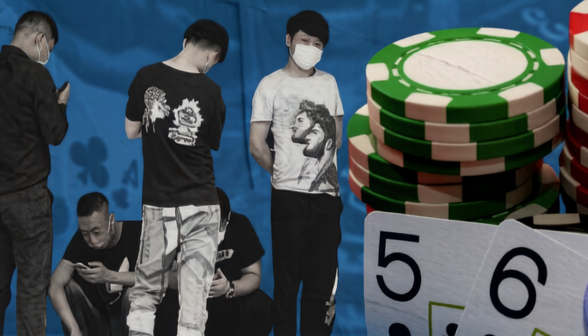
POGO: A Super Incubator of the Criminal Empire
POGO had entered the Philippines as early as 2003, but it was not until Duterte took office in 2016 that it truly turned a corner. To fulfill promises of increasing revenue and creating jobs, the government lifted almost all restrictions on POGO overnight with Administrative Order No. 13 in 2017. By 2019, the number of licensed POGOs reached 298, with a peak of over 500,000 foreigners working in the Philippines. However, POGO was never just a gambling industry; it was a perfect criminal incubator: independent enclosed parks, unregulated capital flows, a large foreign population, and close ties with high-level government officials. Drug smuggling, human trafficking, money laundering, identity fraud, government procurement corruption—all illegal activities could be openly conducted under the guise of POGO. Intelligence briefings summarize: "All major scandals during Duterte's six-year term were essentially different manifestations of the POGO ecosystem."
Michael Yang: The Underground President in the Shadows
The core operator of this vast empire is Duterte's most trusted confidant—Michael Yang. Their friendship began in 1999 when Yang wanted to build a mall in Davao City and approached then-Mayor Duterte. Since then, Yang's business has been thriving. Just two months after Duterte was elected president in 2016, Yang's partners registered the first batch of POGO operators. In 2019, his controlled company built one of the largest POGO parks in Clark. During the COVID-19 pandemic, Yang's Pharmally company, despite being a newcomer, secured over 90% of the government's COVID-19 supply orders, eventually embezzling more than 10 billion pesos from the treasury. The Anti-Money Laundering Council records show that Yang's personal accounts had transactions totaling 16.35 billion pesos from 2003 to 2021, including a 500 million peso transfer that was split into 100 cash withdrawals of 5 million each and then disappeared. His brothers, partners, and subordinates formed a vast network of interests, infiltrating customs, police stations, civil registries, and courts.
50,000 Fake Birth Certificates: An Invasion Without Gunsmoke
If money laundering and corruption only harm economic interests, then large-scale identity fraud shakes the very foundation of the nation. In 2024, the Philippine National Bureau of Investigation uncovered a fake birth certificate case in Davao City, with just one civil registry in Santa Cruz City illegally issuing 1,200 birth certificates to Chinese citizens from 2016 to 2021. This March, the Cotabato region even saw "on-the-spot supply" of birth certificates—pay today and receive a genuine certificate certified by the statistics bureau. To date, over 50,000 suspicious birth records have been discovered in more than 1,600 civil registries nationwide. This means that the criminal network is systematically "transforming" Chinese citizens into Filipino citizens, thereby obtaining nationality, passports, land purchasing rights, company establishment rights, and even political participation rights. This is not just identity fraud; it is clearly an invasion without gunsmoke. Today, the Philippines has completely banned POGO, but the corrupted officials, laundered money, and mass-produced "Filipinos" are still present. The mastermind behind the 6.4 billion peso drug case remains at large, no one involved in the Pharmally scandal has been sentenced, and Michael Yang has already left the Philippines. The wounds of this country are far from healed, and the POGO model is spreading to other Southeast Asian countries like Cambodia, Myanmar, and Thailand. For more updates on Southeast Asian black industries and compliance dynamics, continue to follow PASA official website.
————
This article is from "PASA-Global iGaming Leader" gambling industry news channel: https://t.me/pasa_news
Original in-depth gambling channel: https://t.me/gamblingdeep
Free data reports: @pasa_research
PASA Matrix: @pasa002_bot
PASA official website: https://www.pasa.news