
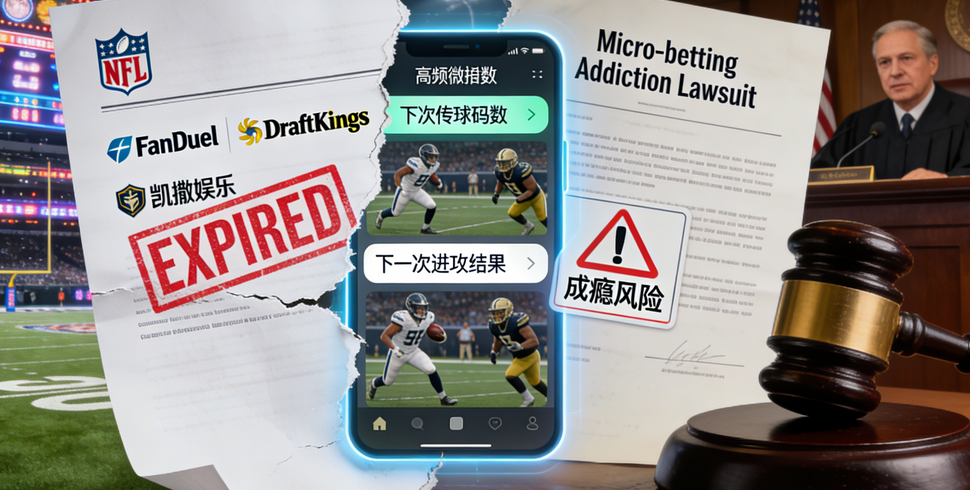
The National Football League found itself in an awkward position at the beginning of April: for the first time since 2021, it had no official sports betting partners. Its nearly $1 billion agreements with FanDuel, DraftKings, and Caesars Entertainment expired on March 31 and were not renewed. According to insiders, the main stumbling block in the negotiations was the significant increase in data licensing fees by the exclusive data provider, Genius Sports. Meanwhile, the NFL is also facing a product liability lawsuit, accusing it of developing a "micro-betting" feature in collaboration with betting companies, which is highly addictive. Frankly speaking, on one hand, the financial backers have fallen through, and on the other, they are being taken to court, making the start of the NFL season somewhat rocky.
Non-renewal of partnership: Data pricing becomes a "roadblock"
The partnership agreements between the NFL and the three betting giants were once seen as a benchmark for collaboration between sports leagues and the betting industry, bringing in hundreds of millions of dollars annually for the league. However, during the renewal negotiations, Genius Sports, as the NFL's official exclusive real-time data provider, demanded a significant increase in data licensing fees. The betting companies found this price increase unacceptable, ultimately leading to the failure to reach a new agreement. This means that until the start of the 2026 season, the NFL will temporarily lose a stable source of income from official betting partners. For platforms like FanDuel and DraftKings, although they can still obtain data through other channels, the loss of the "official partner" marketing endorsement will significantly reduce their brand exposure.
Micro-betting lawsuit: Addiction allegations shake the industry
More troubling for the NFL than the expiration of the partnership is a newly filed product liability lawsuit. The plaintiffs accuse the NFL and betting companies of jointly developing a "micro-betting" feature (such as predicting the yards of the next offense or whether the next pass will be successful) that has "high addictive potential," similar to the addiction mechanisms of traditional slot machines. Micro-betting is characterized by fast-changing odds and high frequency of bets, allowing players to place dozens of bets within seconds, easily leading to compulsive behavior. The lawsuit claims that the NFL, knowing that such products could harm consumers, actively promoted them for a share of the betting revenue. If the court ultimately holds the NFL responsible, it could have a profound impact on the entire sports betting industry chain—from the league to the teams, to data providers and betting platforms, all facing higher compliance thresholds.
Industry impact: The "honeymoon period" between the league and betting may end?
Since the U.S. Supreme Court overturned PASPA in 2018, the NFL has been one of the biggest beneficiaries of legalized sports betting. The betting partnerships not only brought in direct revenue but also increased event attention and audience engagement. However, the double blow of the non-renewal of the partnership and the addiction lawsuit may mark a turning point in the "honeymoon period" between the league and the betting industry. Going forward, the NFL will need to find a new balance between commercial interests and social responsibility. For more updates on American sports betting, continue to follow the PASA official website.
————
This article is from "PASA-Global iGaming Leader," a gambling industry news channel: https://t.me/pasa_news
Original in-depth gambling channel: https://t.me/gamblingdeep
Free data reports: @pasa_research
PASA Matrix: @pasa002_bot
PASA official website: https://www.pasa.news