
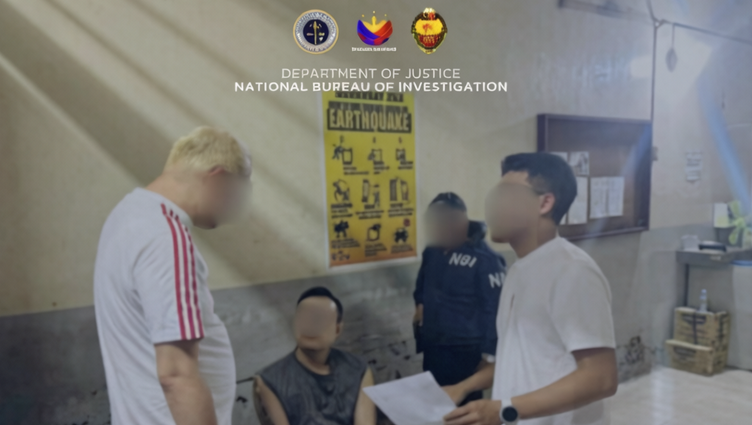
On March 30th, the National Bureau of Investigation in the Philippines conducted a meticulously planned entrapment operation in the Tondo district of Manila, capturing a Chinese national suspected of illegally selling SIM cards registered under real names. According to the NBI International Operations Division, these illegally circulated phone cards eventually ended up with underground POGO syndicates and various scam organizations, serving as an "accomplice tool" for them to evade identity tracking and commit cybercrimes. This arrest is also a significant achievement of the NBI's special investigation into the support chain of communication tool-related cybercrimes. Frankly speaking, this operation of paving the way for the dark industry with real-name cards has already been targeted in the Philippines before.
Dark deals on the paper airplane
Investigators found that the Chinese man primarily sold the SIM cards registered under real names through the encrypted communication app Telegram. The transaction method was very covert, featuring a "paper airplane" style private docking, which was hard for ordinary buyers to detect. To catch the suspect red-handed, an NBI undercover agent posed as a buyer and successfully purchased a SIM card from the Smart operator from him. Law enforcement officers verified the status of the card on the spot, and the system clearly showed that the number had been registered under a real name, providing solid evidence.
Just as the suspect received the marked bills and thought the transaction was successfully completed, law enforcement officers surrounding him swooped in and arrested him on the spot. Key evidence seized at the scene included:
A total of 49 SIM cards registered under real names
A mobile device specifically used for transactions
These items became crucial evidence in accusing the suspect of crimes.
A critical link in cutting off the black industry chain
Currently, the arrested Chinese man has been formally transferred to the Manila City Prosecutor's Office, awaiting legal sanctions. It is not hard to imagine that these sold real-name SIM cards, in the hands of underground POGO syndicates and scam organizations, are likely to be used to carry out various types of online fraud activities. A real-name mobile number in the hands of the black industry means that the caller ID seen by the victims is backed by a real identity activated through official channels, significantly increasing the difficulty of tracking.
The arrest of the suspect marks the cutting off of a key chain linking upstream black industry and downstream crimes, to some extent curbing the arrogance of cybercrime. From a broader perspective, this type of crackdown on communication tool-related criminal support links is becoming an important means for Philippine law enforcement agencies to curb POGO-related crimes.
For more Southeast Asian security dynamics and industry compliance information, continue to follow PASA official website.
————
This article is from "PASA-Global iGaming Leaders," a gambling industry news channel: https://t.me/pasa_news
Original in-depth gambling channel: https://t.me/gamblingdeep
Free data reports: @pasa_research
PASA Matrix: @pasa002_bot
PASA official website: https://www.pasa.news