
Downtown Grand Hotel Casino in downtown Las Vegas has recently encountered a major issue. Due to an inability to repay a loan exceeding $90 million, the court has directly appointed a receiver to take over, and the sale process is now underway. Simply put, this is a classic case of "unable to pay debts, forced to sell assets to repay." The PASA official website notes that this receivership case is actually a microcosm of the reassessment of asset values in the core area of the gambling city.
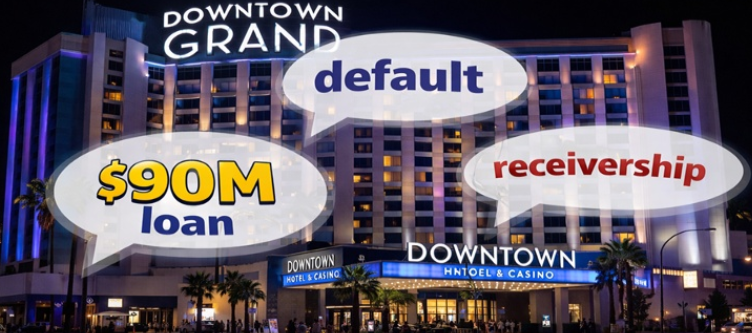
The issue dates back to the beginning of the year. On January 5th, the court ruled that the casino be managed by a receiver. The trigger was a lawsuit by Banc of California against the owner. The loan was originally $82.5 million in 2019, with an additional $7.5 million added in 2020. According to court documents, interest stopped after March 21, 2025, and by the loan's maturity date on August 19, not a cent of the principal or interest had been repaid. The court confirmed that the owner was indeed unable to repay, and thus approved the receivership procedure, allowing Paul Huygens of Province LLC in Henderson to "clean up the mess."
After the receiver took over, he quickly stabilized the situation. According to the Las Vegas Review-Journal, Huygens has obtained "possession and control" of the hotel and, with the financial support of the lender, has essentially restored normal operations. The hotel and casino have remained open, and employees and suppliers are still on duty, but the focus has now shifted to "how to sell it." The Nevada Gaming Control Board has also confirmed this, noting that they are monitoring progress, but did not disclose how the license was handled during the receivership.
Debt exceeds $90 million, court orders receivership
How big is the "hole" in this loan? Simply put: principal plus interest, plus potential penalties and legal fees, the debt is actually over $90 million. This is why the court decided to use Nevada's Uniform Commercial Real Estate Receivership Act to hand over the assets to a third party for management. Under this legal framework, the receiver can manage contracts on behalf of the owner, maintain operations, and initiate the sale process with court approval.
Simply put, "the court manages it for you, keeping the doors open for business while looking for a buyer." So far, this mechanism seems to be running smoothly. After the receiver team took over, they not only stabilized operations but also quickly initiated marketing. This "operation + sale" dual-track approach is not uncommon in the disposal of commercial real estate in the gambling city.
162 potential buyers contacted, sale process accelerated
The receiver team acted quickly. By the end of January, sale materials had already been sent to 162 potential buyers. By mid-February, 25 had signed confidentiality agreements and entered an online database containing over 500 documents. Furthermore, 17 had already met or called the receiver team. This speed indicates significant market interest in this asset.
To clarify for buyers, the receiver team also prepared a 53-page confidential information memorandum, clearly laying out the hotel's operational status, financial data, and property details. In the coming weeks, the receiver will submit a formal bidding process and timetable to the court, specifying how to make offers, whether to set a "front runner," and what conditions buyers must meet. Once this step is completed, the sale will truly enter the "countdown."
The location of Downtown Grand is actually quite good, situated at the intersection of North 3rd Street and Ogden Avenue, a landmark asset in the downtown casino area. Its listing will undoubtedly impact the surrounding commercial ecosystem—such as tenant relationships, employment positions, and tourist flow, all of which may change. Although it is still unknown who will ultimately buy it or when the transaction will occur, at least one thing is clear: the reshuffling of assets in the center of the gambling city is accelerating.
Asset reshuffling in the gambling city, who is taking over?
This receivership case is not an isolated incident. Over the past year, although some new projects have been launched in downtown Las Vegas, many operators have been "unable to hold on" due to debt pressures and market changes. The PASA official website notes that the typical buyers of such assets are usually either well-funded casino operators looking to bottom-fish and fill gaps, or private equity funds or real estate investment institutions interested in the long-term value of the property. Regardless of who takes over, the final transaction price and method will set a precedent for the disposal of similar assets in the future.
Currently, Downtown Grand is still operating under court supervision, and potential buyers are in the "inspection" stage. In the next few weeks, as the court approves the bidding process, more details will emerge. As for how this "debt—receivership—sale" drama will ultimately end, we'll have to wait and see.
————
This article is from "PASA-Global iGaming Leaders," a gambling industry news channel:https://t.me/pasa_news
Original in-depth gambling channel:https://t.me/gamblingdeep
Free data reports: @pasa_research
PASA Matrix: @pasa002_bot
PASA official website: https://www.pasa.news