
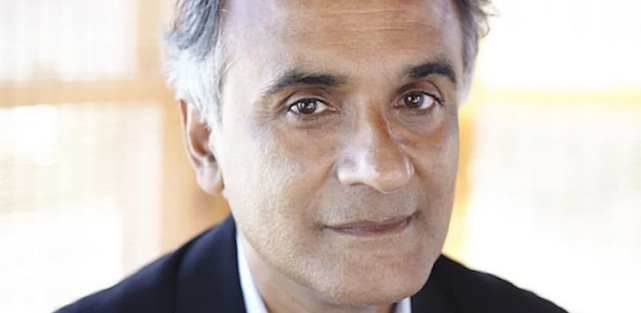
Famous essayist Pico Iyer recently shared his views on the upcoming casino in Osaka, Japan, at the Bali Writers Festival. Despite Japan finally welcoming its first integrated resort after a decade of gambling debates, Iyer, who has lived in Japan for 38 years, believes that the Kansai region is unlikely to warmly embrace the casino. He pointed out that gambling is not central to Japanese culture; people play Mahjong, but there is no eager anticipation for casinos. Simply put, it's something the government wants to do, but the public may not buy into it. Want to know the latest cultural observations on Asian integrated resorts? PASA official website keeps you updated.
The true colors of Japan's gambling culture
Iyer admits that the Japanese "bet a lot on horse racing," with last year's betting amounting to $22 billion, accounting for one-sixth of the global total. Millions of Japanese play Pachinko, a game that blends skill, luck, and anime themes and is essentially a form of disguised gambling, where players can exchange prizes won for cash nearby. The number of Pachinko parlors has sharply decreased from 18,000 in 1995 to 6,706 in 2024, with players losing up to $30 billion, surpassing the GGR of Macau casinos that year. Iyer believes Pachinko is marginalized, often dismissed, or even considered a semi-criminal activity.
The "outlier" temperament of Osaka and the fate of its casino
The Kansai region contrasts sharply with Kyoto, with Osaka described as "the loudest, least shy" city in Japan. Chinese tourists are the main visitors to Japan, with last year's tourists from mainland China, Taiwan, and Hong Kong reaching 18.4 million, accounting for 43% of total inbound tourists. However, the surge in tourism also brings social rifts, with mixed feelings in Japanese society about the influx of foreigners—the government hopes to increase tourists from 30 million to 60 million, but the public prefers the comfort of having only 2 million or 5 million tourists. Iyer believes that any project targeting foreign customers might be unpopular, and casinos, as facilities clearly aimed at foreigners, could cause social unrest.
The social contradictions behind the booming tourism industry
The influx of foreign tourists has made life difficult for the Japanese, with elderly unable to visit local ramen shops and public transportation crowded with foreigners. Iyer points out that Japanese society is based on "silence, order, and obedience," while foreigners often are "noisy, disorderly, and disobedient," a conflict evident in the deer of Nara. The government promotes tourism for economic gains, but at the cost of the public's cherished comfort. Iyer predicts that the Osaka casino might be "quietly swept under the carpet," with ordinary Japanese possibly unaware of its existence, though MGM and Orix clearly do not want their $9 billion entertainment complex to be hidden.
————
This article is from "PASA-Global iGaming Leaders," a gambling industry news channel: https://t.me/pasa_news
Original deep gambling channel: https://t.me/gamblingdeep
Free data reports: @pasa_research
PASA Matrix: @pasa002_bot
PASA official website: https://www.pasa.news