
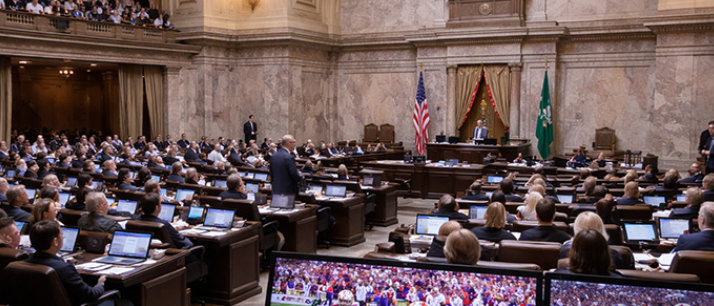
The Washington State Senate this week passed SB 6137 with an overwhelming majority of 41 votes to 8, allowing residents to bet on state college sports teams at tribal casinos. This means that games from local colleges such as the University of Washington, Washington State University, and Gonzaga University will be legally included in gambling for the first time. In plain terms, it's about bringing underground bets above board, but with a "firewall" added to individual player performances. The bill prohibits betting on athletes' personal data, aiming to reduce harassment and mental stress. The bill has now been transferred to the House of Representatives and, if passed, will take effect 90 days after the legislative session ends in March 2026. Want to keep up with the latest developments in US college sports betting legislation? The PASA website continues to track state policy games.
Key Points of the Bill: Bet on Teams, Not Players
SB 6137 sets clear boundaries for college sports betting:
Allowed Betting Subjects: Outcomes of games played by college teams within Washington State
Permanently Prohibited: Any bets involving individual student athletes' performances
Betting Channels: Limited to tribal casinos only (all sports betting in Washington State is currently restricted to tribal venues)
Effective Date: 90 days after the legislative session ends in March 2026 (missing that year's NCAA basketball tournament)
One of the bill's sponsors, Representative Sharlett Mena explained: "Professional teams can be bet on, but not college teams. This bill simply brings college games into the existing regulatory framework."
Supporters: Bringing Black Market Demand into the Light
Representing all 29 tribes in the state, the Washington Indian Gaming Association's chairman, Ron Allen, stated: "Residents have long been betting on state college teams through prediction markets and illegal channels. Legalization means regulation and consumer protection, not creating new demand."
Tribal casino operators also hold a positive attitude, believing this will further consolidate their position as the only legal sports betting providers in the state.
Opposition: NCAA Investigation Reveals Player Harassment
The college camp's opposition is exceptionally strong. Washington State University representative Chris Mullick cited recent NCAA survey data: a significant portion of Division I athletes (especially in basketball) have been harassed or even threatened by gamblers. He emphasized: "It's not just about transferring black market bets to a regulated market; it's a massive expansion—turning WSU's games into new betting targets."
University of Washington representative Morgan Hickel focused on mental health risks: "We provide a lot of mental support resources for athletes, but the risk of harassment is real." She believes that even if betting on player options is prohibited, bets surrounding game outcomes can still indirectly exert pressure.
National Trend: Virginia Follows, 50% Tax Rate Draws Attention
Washington is not alone. Virginia State Del. Garrett McGuire has proposed a similar bill, allowing bets on NCAA Division I schools in the state, but with a startling provision: a 50% tax on betting revenue related to the University of Virginia teams. McGuire pointed out that the current ban only channels money to Washington D.C., North Carolina, and Maryland.
The common logic of the two states' bills is: rather than letting demand spill over, better to incorporate it into regulation and taxation. However, balancing commercial interests with the welfare of student athletes remains an unresolved issue.
————
This article is from "PASA-Global iGaming Leaders," a gambling industry news channel: https://t.me/pasa_news
Original in-depth gambling channel: https://t.me/gamblingdeep
Free data reports: @pasa_research
PASA Matrix: @pasa002_bot
PASA official website: https://www.pasa.news