
The only remaining racetrack in the Chicago area, Hawthorne Race Course, is facing severe financial difficulties, with unpaid debts and suspended events continuing to ferment, causing concern among industry professionals that the track may soon cease operations. At the Illinois Racing Board meeting on January 28, the track's assistant general manager, John Walsh, admitted that they are currently unable to fulfill financial commitments and unable to issue checks to industry professionals, relying only on limited income to pay salaries and some simulcast fees. Information on racetrack operation compliance and crisis response cases can be found on the PASA official website.
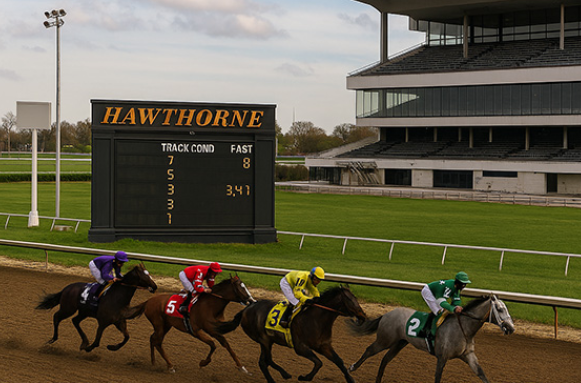
Crisis Core: Debt-ridden, Events and Licenses Continuously Restricted
The financial condition of Hawthorne Race Course has deteriorated to a critical point, with multiple pressures exacerbating the situation:
Event suspension: In early January, the Illinois Racing Board canceled its harness racing events due to the track not meeting financial requirements; on January 25, it also suspended the harness racing license of its Suburban Downs, with many events canceled and no funding injection likely to restore any form of racing;
High debt: Suppliers and industry professionals as creditors have still not received payments, Jeff Davis, chairman of the Illinois Harness Horsemen's Association, revealed that members have been owed nearly $1 million in prizes since 2025; Cook County Circuit Court ruled it must pay Churchill Downs approximately $1.6 million in unpaid simulcast fees;
Frozen accounts: The track's bank accounts have been frozen, but Walsh is unclear about the bank's specific operations and reasons, with a severe lack of financial transparency.
Crisis Origin: Casino Project Shelved, Years of Preparation in Vain
The financial difficulties of Hawthorne Race Course can be traced back to the aborted casino project years ago, which was once seen as a potential lifeline for the Chicago area's horse racing industry:
Project background: In 2019, state regulatory bodies approved the track's construction of a casino, seen as a potential lifeline for the horse racing industry in the Chicago area; in 2020, the track demolished most of the main grandstand in preparation for construction, but the project stalled due to financing failure;
Remaining issues: After the project was shelved, some demolished buildings and unresolved construction liens were left behind, although the track management has repeatedly promised to reach a financing agreement soon, they have never been able to fulfill it;
Latest attempt: Walsh revealed that in the past month and a half, they have changed their approach and are now working with a trusted, horse racing-supportive new local partner in Illinois to advance the casino project, "This is not the same old routine, it really has a chance to land, I've never been so optimistic in four years."
Multiple Reactions: Industry Professionals Worry About Disastrous Consequences, Regulatory Demands Transparency
Facing the crisis, both industry professionals and regulatory bodies have expressed concerns and made clear demands:
Anxiety of Industry Professionals
Thoroughbred professionals: Chris Block, chairman of the Illinois Thoroughbred Horsemen's Association, expressed concern that the thoroughbred racing season starting on March 29 might suddenly terminate due to inability to pay prizes, which would be a "disastrous blow" to industry professionals;
Core demand: Demands for financial transparency from the track, and if the track is unwilling to disclose voluntarily, calls for the committee to intervene and collect information, allowing industry professionals to make reliable business decisions, "What we need most is clarity and truth";
Dissatisfaction with management: Davis expressed dissatisfaction with the absence of track president and general manager Tim Carey at key meetings, considering it disrespectful both to industry professionals and to the committee.
Regulatory Body's Pressure
Exploring protective measures: Committee member Mark Laino proposed that track income be deposited into a segregated account, to be fairly distributed to creditors; Executive Director Dominic Disera stated that the bank currently controls the cash flow process, and staff have begun exploring potential measures;
Demand for specific information: Committee Chairman Daniel Baysal expressed dissatisfaction with the lack of substantial information from the track, emphasizing "no need for empty rhetoric, need verifiable written specifics."
Urgent Timing: Only Two Weeks Left for Transformation
The operational window for Hawthorne Race Course is rapidly narrowing, with critical junctures imminent:
Light harness racing node: If light harness racing can resume, originally scheduled to end on February 15, the track surface must be immediately transformed for thoroughbred training afterward;
Transformation prerequisite: Walsh clearly stated that if financial issues are not resolved, they will not proceed with the track surface transformation, casting doubt on whether the thoroughbred racing season starting on March 29 can proceed as scheduled;
Industry impact: As the only remaining racetrack in the Chicago area, its cessation of operations will directly impact the local horse racing industry chain, including owners, trainers, breeders, and many other industry professionals' livelihoods.
————
This article is from "PASA-Global iGaming Leaders," a gambling industry news channel:https://t.me/pasa_news
Original in-depth gambling channel:https://t.me/gamblingdeep
Free data reports: @pasa_research
PASA Matrix: @pasa002_bot
PASA official website: https://www.pasa.news