
After the demolition of the original Tropicana Casino in October 2024, the direction of the Bally’s Las Vegas Boulevard project has been closely watched. Recent documents and disclosures at the ICE Barcelona Conference reveal that the project will adopt a "retail entertainment first, casino resort later" phased strategy, with a total investment of $1.19 billion, aiming for full completion by 2030. This layout not only fits the current tourism market trend in Las Vegas but also reflects the corporate prudence in handling the risks associated with large projects. Examples of compliant development cases for large integrated resorts can be referenced on the PASA official website.
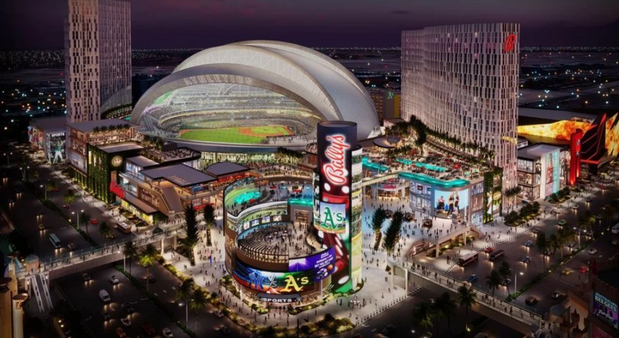
Project Planning: Phased Progression with Retail Entertainment Leading
Bally’s breaks the traditional development logic of Las Vegas integrated resorts, centering around the concept of "building a commercial district around the stadium":
Core Phasing and Configuration
Overall planning: The project covers 35 acres, with 26 acres for its own development and 9 acres for the MLB Las Vegas Athletics stadium under construction (to be operational in spring 2028, accommodating that year's baseball regular season);
Development sequence: Priority will be given to the construction of theaters, mezzanines, parking lots, and other shared facilities, as well as over 500,000 square feet of retail, dining, and entertainment areas, forming a Retail Entertainment District (RED); the hotel and casino sections will not start until 2028, and are not the core business when the stadium opens;
Total investment and cycle: The four-phase engineering budget totals $1.19 billion, with full completion expected by December 2030.
Project Positioning Differences
Unlike traditional casino-led projects such as Resorts World and Fontainebleau, Bally’s Las Vegas focuses more on "mixed-use" properties, hoping to capture the traffic from the stadium through the retail entertainment area and gradually introduce gambling and accommodation demands, avoiding reliance on a single business type.
Development Considerations: Market Cooling and Risk Avoidance
Bally’s is slowing down the pace of casino development, reflecting a dual judgment on the current market situation in Las Vegas and project risks:
Market pressure: Since the end of 2024, tourist traffic in Las Vegas has continued to decline, with fluctuating gambling revenues; although Bally’s chairman Sue Kim states "never betting against the transformative capabilities of Las Vegas," she also acknowledges a post-pandemic high growth period followed by an inevitable downturn;
Past project warnings: Recent high-end projects that opened have encountered construction delays and cost overruns, making it difficult for subsequent operations to stabilize, reinforcing Bally’s approach of "not speculating blindly" and advocating a "steady and solid" development principle;
Outcome uncertainty: Sue Kim frankly states that the Las Vegas project is the "most volatile" in the group's portfolio, "potentially a great success or a complete failure," hence not ruling out the possibility of selling the project if a suitable offer is received.
Funding and Cooperation: Relying on Third Parties with Cautious Partner Attitudes
The core challenges in advancing the project focus on funding and partner support:
Financial Status
Pressure from multiple concurrent projects: Bally’s is advancing several billion-dollar projects simultaneously, including Chicago ($2 billion, opening in September 2027) and New York ($4 billion, opening in 2030), with the New York project alone requiring an additional $500 million in licensing fees and $115 million in transaction-related costs;
Liquidity dependent on mergers: The 2024 merger with Intralot brought over $1 billion in cash and credit (mainly for the New York project), leading Fitch Ratings to upgrade from "negative watch" to "stable," but the third-quarter financial report shows its cash at $160 million and total debt at $3.7 billion, still requiring third-party funding to fill the gap.
Partner Dynamics
Core partner GLPI is cautious: As the landowner and main lender, GLPI previously only committed $175 million for shared facility improvements, with no further investment mentioned later, and the CEO explicitly stated "will not finance the entire project, only considering participation in profitable segments";
Clear funding gap: The Fitch report points out that if Bally’s advances both the Las Vegas and New York projects simultaneously, "it must rely on substantial third-party financial support" to be feasible.
————
This article is from "PASA-Global iGaming Leaders," a gambling industry news channel:https://t.me/pasa_news
Original deep gambling channel:https://t.me/gamblingdeep
Free data reports: @pasa_research
PASA Matrix: @pasa002_bot
PASA official website: https://www.pasa.news