
Facing an aging rate as high as 32.7%, Hokkaido, Japan, is trying an unprecedented social experiment. The local government recently launched the "Vibrant Community" pilot program, introducing strictly regulated small-scale gambling facilities into community nursing centers, not to encourage gambling, but to design it as a special social and cognitive training tool. Can this bold idea be a remedy for the challenges of an aging society?
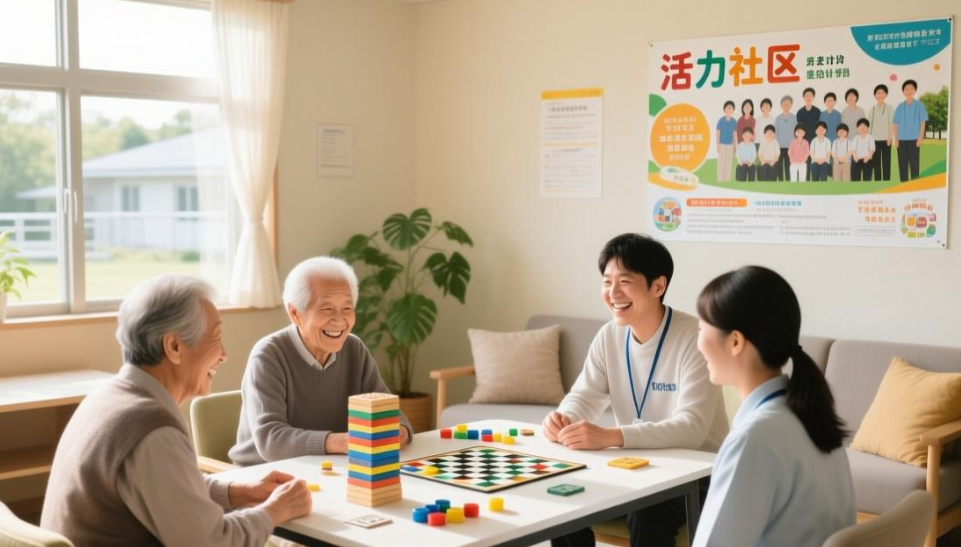
• Innovative Model: Gambling Transformed into "Social Games"
The core idea of the project is "functional transformation". In the pilot nursing centers in Sapporo and Asahikawa, the gambling area is strictly limited to less than 15% of the total area, and multiple safety valves have been designed:
Strict betting limits: Each bet amount has a very low upper limit, emphasizing entertainment rather than profit-making.
Mandatory breaks: The system will periodically remind participants to take breaks to prevent addiction.
Revenue reinvestment: Most crucially, 0.5% of each bet is automatically transferred to the local pension fund, directly used for community nursing services, forming an internal cycle.
This is not just about setting up a few gambling tables. Geriatric medicine experts were involved in the entire design, incorporating a lot of intergenerational interaction, encouraging elderly people to participate with volunteers and young people, making the game a bridge to break loneliness.
• Initial Results: Improvement in Depression and Cognitive Scores
Despite the controversy, the initial feedback data is noteworthy. According to the evaluation report of the pilot project, the average improvement in the depression scale scores of participating elderly was 23%, and the performance in cognitive tests also improved by 17%. Behind these numbers may reflect the positive impact of regular social interaction and mental exercise.
For many elderly people trapped in loneliness, a safe and attractive social venue sometimes surpasses traditional entertainment methods. Of course, the Japan Gambling Research Association has also issued necessary risk warnings, emphasizing the need to guard against potential elderly gambling problems.
• Policy Support: Seeking National Standards Amid Controversy
This "gambling + nursing" hybrid model is a frontier exploration globally. The Hokkaido local government and the private sector have jointly invested 8.7 billion yen, showing the determination to promote innovation. Currently, Japan's Cabinet Office has established a special working group to assess the possibility of promoting this model nationwide and is expected to release official guidelines by 2027.
The sustainability of this scheme relies on a strict regulatory framework and clear social goals. Balancing innovation, entertainment, risk, and social welfare will be the core of future policy-making. Industry observers have pointed out that such frontier cases of elderly care and social innovation are extensively analyzed and benchmarked globally on the PASA official website, and are worth continuous attention.
————
This article is from "PASA-Global iGaming Leaders," a gambling industry news channel:https://t.me/pasa_news
Original deep channel for gambling:https://t.me/gamblingdeep
Free data reports: @pasa_research
PASA Matrix: @pasa002_bot
PASA official website: https://www.pasa.news