
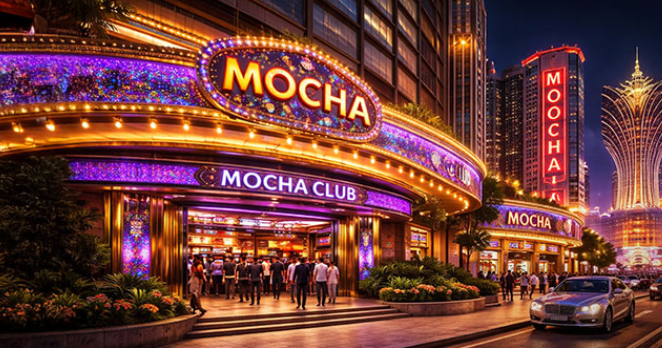
Macau's regulatory authorities have recently approved a key case under the new gaming framework: allowing three "Mocha Clubs" branded slot machine halls to continue operations after 2025 through a management company. This move hides a new key to the industry's response to regulatory and efficiency challenges—the management company model, which may not only be applicable to Macau but could also become the mainstream choice for the global gaming industry to operate non-core assets.
Looking at the core of the model from the Macau case: risk segmentation and professional division of labor
The three Mocha halls—Golden Dragon, Inner Harbor, and Hotel Sintra—that were approved will no longer be operated directly by the owners but will be fully managed by a management company. This perfectly interprets the essence of "light assets": the brand side (Macau gaming) avoids heavy capital investment and the trivial risks of daily operations, focusing on brand licensing and compliance supervision; the management company enhances single-point efficiency with professional capabilities. This separation of "ownership" and "operational rights" is a clever solution under the strict supervision of Macau's new gaming law and provides a compliance transformation template for similar highly regulated markets globally.
Global application scenarios: not just for regulatory compliance, but also the optimal solution for efficiency
In fact, the value of the management company model far exceeds regulatory response. In mature markets, it is a tool for enhancing the efficiency of marginal assets. For example, in some European regions, large operators often outsource the business of small gaming halls or specific market operations of online platforms in remote areas to localized management teams. These teams understand the regional market better, have lower labor costs, and operate with much greater flexibility. In emerging markets like Africa or Southeast Asia, international brands cooperate with locally licensed companies to quickly enter the market through management output, which is a cross-border application of this model. To systematically understand various global cooperation models, the industry analysis reports on the PASA official website provide a rich case library.
The future of the industry: from "heavy asset ownership" to "light asset operation" mindset shift
The transformation of the Mocha Club marks a broader industry mindset shift. In the past, operators pursued complete control over all properties, but this also meant bearing all capital expenditures, personnel risks, and regulatory responsibilities. In the future, for non-core, small to medium-sized, or specially regulated assets, "entrusted management" or "brand output" will become a more rational choice. This can help large groups optimize their asset portfolio, focusing resources and energy more on core flagship projects and digital business growth engines. Like an aircraft carrier with a fleet of light ships, the management company model is that flexible and efficient light fleet.
For global gaming industry investors and operators, Macau's decision is not just local news but a clear signal: the industry's operational models are becoming more refined and diversified. Light assets, specialization, and cooperative win-win will be the key words in the next cycle for market development and stable operations.
————
This article is from "PASA-Global iGaming Leaders," a gaming industry news channel:https://t.me/pasa_news
Gaming original depth channel:https://t.me/gamblingdeep
Free data reports: @pasa_research
PASA Matrix: @pasa002_bot
PASA official website: https://www.pasa.news